


The RealReal Competitors: 10 Best Sites for Luxury Buyers
The RealReal competitors ranked by Pickup Point — find 10 luxury resale sites with better fees, wider selection, and faster payouts.

Finding the right resale platform makes a real difference, whether selling a barely worn Chanel bag or searching for a pre-owned Rolex at a fair price. The best luxury resale sites differ significantly in how they authenticate items, what fees they charge, and how quickly they pay sellers. Choosing the wrong platform can cost both time and money, so comparing options carefully before committing is worth the effort.
The RealReal's top competitors each bring distinct strengths, from stronger seller payouts to faster turnaround times and more rigorous buyer protections. Knowing where each platform excels helps narrow the decision without wading through pages of fine print. For a practical starting point, shoppers and sellers alike can explore second hand designer to size up leading authenticated marketplaces in one place.
Table of Contents
What Is The RealReal and What Does It Offer?
Why Are Luxury Buyers Looking for Competitors to The RealReal?
What Should You Look for When Choosing an Alternative to The RealReal?
10 Best The RealReal Competitors for Luxury Buyers
How to Choose the Right Alternative to The RealReal
Why PICKUPPOINT Is a Trusted Choice for Luxury Buyers
Get your Next Luxury Purchase from PICKUPPOINT
Summary
The luxury resale market has grown significantly, but buyer confidence has not kept pace. The Better Business Bureau logged 1,751 complaints against The RealReal across three years, with product and service issues leading the count. When resolution offers amount to store credit worth a fraction of the original loss, buyers begin questioning whether managed consignment platforms are actually managing anything on their behalf.
Authentication claims carry more legal and financial weight than most buyers realize. A 2021 shareholder settlement of $11 million confirmed that The RealReal's authentication practices fell short of what was publicly described lawsuit, and a Chanel over counterfeit handbags sold under a "100% authenticated" banner remained active as of September 2026. A badge on a listing page is a marketing claim until a named third party with liability on the line stands behind it.
The risk structure of a resale platform matters more than its brand recognition. A US Government Accountability Office investigation in 2018 found that 20 of 47 branded goods purchased from third-party sellers on major shopping sites were counterfeit. Platforms that consign through unnamed third parties can issue a refund policy and push financial loss onto sellers buyers have never met, no matter how familiar the platform logo looks.
Category specialization in authentication is not interchangeable. A watch authenticator and a handbag authenticator do not share a checklist. A review of US Customs and Border Protection seizure announcements from January to June 2026 found Louis Vuitton and Rolex each appearing in 13 separate announcements across different ports and product categories, confirming that counterfeiters follow demand across categories at the same time.
Headline commission rates rarely reflect actual seller payouts. Rebuilding the real figure requires accounting for commission percentage, card processing fees, return reserves, authentication charges, and the specific date cash transfers. Platforms that pay on a monthly batch cycle after the sale month effectively convert a confirmed sale into a 30 to 45-day interest-free loan extended by the seller.
Purchasing frequency for luxury goods is rising across the Asia-Pacific region according to a July 2024 Statista and Rakuten Insight survey, which means the demand counterfeiters track is expanding alongside legitimate resale growth. Buyers across all budgets are increasingly applying the same authentication and provenance standards that ultra-high-net-worth consumers, defined as individuals with net worth exceeding $30 million, have long treated as non-negotiable.
PICKUPPOINT's second hand designer addresses this accountability gap by sourcing exclusively through a closed network of fashion contacts and handling authentication, condition grading, and buyer communication within a single team before any listing goes live.
What Is The RealReal and What Does It Offer?
The RealReal is a managed consignment marketplace for authenticated pre-owned luxury goods . It handles every step from intake to sale , eliminating concerns about misrepresentation and the need to negotiate directly.
💡 What This Means: Unlike selling independently, The RealReal acts as your full-service partner, handling authentication , pricing , photography , and buyer communication .
" The RealReal operates as a fully managed consignment platform, meaning sellers hand off all responsibility the moment an item is received." — The RealReal

Unlike peer-to-peer platforms , every item passes physical inspection , receives a condition grade , is professionally photographed , and is priced using a proprietary algorithm that weighs demand , scarcity , and comparable sales history . This structure eliminates the anxiety typical of second-hand purchases.
Feature | The RealReal | Peer-to-Peer Platforms |
|---|---|---|
Authentication | ✅ Physical inspection by experts | ❌ Seller self-reported |
Condition Grading | ✅ Standardized grading system | ❌ Inconsistent or absent |
Photography | ✅ Professional, handled for you | ❌ DIY by seller |
Pricing | ✅ Proprietary algorithm | ❌ Guesswork or manual research |
Buyer Confidence | ✅ Guaranteed authenticity | ⚠️ Varies by seller |
⚠️ Warning: On peer-to-peer platforms , there is no guarantee of authenticity — making The RealReal's managed model a critical advantage for both buyers and sellers.
🔑 Takeaway: The proprietary pricing algorithm — which factors in real-time demand , scarcity , and sales history — means items are priced strategically , not arbitrarily, maximizing seller returns and buyer trust .
What actually moves through the platform
The inventory includes women's and men's clothing, handbags, shoes, fine jewelry, watches, kids' pieces, and home and art. Brands like Chanel , Hermès, Louis Vuitton, Cartier, and Rolex appear regularly. Each listing shows condition grade (fair to pristine) and a retail price comparison, making the discount transparent before purchase. The pricing model draws on 13 years of sales data covering more than 37 million authenticated items, grounding the algorithm in evidence rather than guesswork.
How does the authentication process set The RealReal apart from competitors?
Most shoppers focus on that comparison point as the whole story, but the authentication infrastructure deserves separate attention. More than one million items move through The RealReal's centers each month, reviewed by over 100 in-house specialists trained in their categories.
Three tools support human review: TRR Shield flags high-counterfeit-risk items on arrival, TRR Vision captures microscopic images for database comparison, and XRF machines read metal-alloy compositions in jewelry and watch hardware. The company has kept more than 250,000 inauthentic items off the market, a record of rejection rather than a marketing claim.
Each authenticated sale extends the life of a piece that would otherwise sit unused or be discarded. Shoppers can use Pickup Point's second hand designer tool to compare The RealReal against other authenticated resale options, consolidating consignment rates, authentication policies, and buyer protections across leading platforms.
What do consignors and buyers actually get from the platform?
For sellers, the commission structure increases with sale price, reaching up to 85% on the highest levels for handbags, branded fine jewelry, watches, and men's sneakers. A Get Paid Now option provides upfront cash on qualifying items rather than waiting for a sale to complete. Returns are accepted within 14 days of purchase or ship date, with items returned within 21 days; however, handbags, swimwear, and items discounted 40% or more cannot be returned. But knowing what The RealReal offers is only half the picture. The more revealing question is why so many luxury buyers actively seek something different.
Why Are Luxury Buyers Looking for Competitors to The RealReal?
Luxury buyers are not leaving The RealReal because they no longer want to buy resale items . They are leaving because the difference between what was promised and what actually arrived —both literally and figuratively —has become too big to ignore .
"The gap between promised quality and delivered reality is the defining reason luxury resale shoppers are actively seeking better alternatives ." — Market Insight
🎯 Key Point: This isn't a rejection of the resale market but a rejection of a broken trust model that has failed to meet the expectations of discerning luxury buyers.
⚠️ Warning: Platforms that underestimate the loyalty threshold of luxury consumers risk permanent customer loss. High-end buyers have zero tolerance for repeated disappointment.

What customer service failures are pushing buyers toward The RealReal competitors?
The complaints tell a consistent story: a $700 bracelet arrives corroded, a $260 tote bleeds dye onto a coat, and the resolution offered is store credit worth a fraction of the loss. The Better Business Bureau logged 1,751 complaints against The RealReal across three years, with product and service issues leading the count. When you buy pre-owned luxury, you accept some uncertainty about condition. What you should not accept is customer service that treats your loss as a negotiation.
How deep does the authentication problem really run?
The authentication concern runs deeper than any single complaint. A 2019 CNBC investigation found copywriters clearing items under daily quotas using slideshows rather than hands-on inspection. The Chanel lawsuit, still active as of September 2026 per NPR reporting, centers on handbags Chanel identified as counterfeit being sold under a "100% authenticated" banner. These patterns surfaced across employees, investors, and federal court. When the $11 million shareholder settlement in November 2021 confirmed that authentication fell short of public claims, buyers discovered the badge on the listing page was a marketing claim, not a verified outcome.
What do buyers actually want from The RealReal competitors?
Most buyers searching for luxury resale options want to pay a fair price for what they are buying. They want confidence that someone knowledgeable about authenticity has verified the product before it ships. This shift in buyer expectations drives them toward platforms built on honesty rather than high-volume sales. Shoppers browsing second hand designer options increasingly prioritize responsibility, treating pre-owned luxury as a thoughtful purchase rather than a transaction processed in bulk.
Why does the consignor experience matter as much as the buyer experience?
The seller experience adds another layer. When a $3,650 bag sits in review for nearly two months without resolution, the seller questions whether the platform respects what they entrusted to it. Pre-owned luxury carries emotional weight. These are not surplus goods but pieces people saved for, gave as gifts, or inherited. A platform that handles them like warehouse inventory loses something no authentication badge can replace. Buyers are not simply comparing prices for better deals on designer goods. They seek a resale experience that treats the item and the person buying or selling it as something worth caring about.
Related Reading
What Should You Look for When Choosing an Alternative to The RealReal?
Choosing the right alternative starts with one critical question: who loses money if the item is fake? That single test cuts through every marketing claim — and it's the most important filter you can apply before trusting any resale platform with your hard-earned money.
"The single most important question when evaluating any resale platform: who bears the financial risk if an item turns out to be counterfeit?" — Resale Industry Best Practice
🎯 Key Point: If the platform absorbs the loss on a fake, their authentication incentives are real. If you do, their promises are just marketing.
💡 Tip: Before committing to any alternative, check their buyer protection policy , return window , and authentication guarantee — these three factors reveal exactly how much the platform stands behind its listings.
Factor to Evaluate | What to Look For | Red Flag |
|---|---|---|
Authentication Risk | Platform bears the loss | Buyer responsible for disputes |
Return Policy | Clear, enforceable window | Vague or seller-dependent terms |
Buyer Protection | Money-back guarantee | No recourse on fake items |
Verification Process | In-house expert review | Crowdsourced or unverified |
⚠️ Warning: Never assume a platform's authentication process is rigorous just because it's well-known — always verify who carries the financial risk before you buy.

Who actually owns the risk?
The failure point is usually invisible until after you've paid. A platform that takes title before listing an item has skin in the game. A platform that consigns through unnamed third parties can issue a refund policy, keep the transaction record, and quietly push the financial loss onto a seller you've never met. The US Government Accountability Office found in 2018 that 20 of 47 branded goods purchased from third-party sellers on major shopping sites were counterfeit, and all 13 cosmetics in that sample failed authentication. Size and reputation did not restore the money.
What does the inspection record actually show?
An in-house badge tells you someone looked. It does not tell you what they measured, who trained them, or whether a named third party will pay if the check was wrong. Ask for a record you can open independently: one that names the authenticator, documents specific physical attributes like hardware weight or date-code placement, and comes from a party with liability on the line. A stamp you cannot contest is not protection; it is paperwork.
How do The Real Real competitors handle buyer habits differently?
Most shoppers scan headlines, check star ratings, and click buy—a habit that works for headphones but not for a Chanel flap bag or vintage Rolex. Platforms like second hand designer treat each piece as a fashion object with a story, not warehouse inventory. Our detailed product descriptions and authentication processes ensure future owners know exactly what they are receiving.
Does the Seller Have a Name You Can Use?
The GAO's 2018 investigation failed partly because investigators could not identify who stood behind the listings. A luxury resale platform that hides consignors behind a branded storefront creates that same problem. Before you pay, ensure the platform verifies a bank account, tax document, and physical address, and that this information appears on the listing. A verified seller gives you a real person to hold responsible if the item doesn't match the description.
Can you rebuild the payout math yourself?
Sellers face a similar problem. The headline commission rate is rarely what you actually receive. Determine the true cost from the contract: commission percentage, card processing fee, return reserve, authentication charge, and cash transfer date. A platform that pays on a monthly batch cycle after the sale month effectively turns your "sold" confirmation into a 30- to 45-day interest-free loan to them. An outright purchase model pays this week and transfers title immediately, so the quoted price is the complete deal. pay date are not on the same screen, the missing number determines your actual deposit.
Does brand-specific authentication separate The Real Real competitors from generalists?
One category specialist and one generalist badge are not the same thing. A watch authenticator and a handbag authenticator do not share a checklist, and The Fashion Law's review of US Customs and Border Protection seizure announcements from January to June 2026 found Louis Vuitton and Rolex each appearing in 13 separate announcements across different ports and product categories. Counterfeiters demand, which does not stay in one lane. A trustworthy platform assigns named specialists by brand house, not by shift follow availability.
Related Reading
10 Best The RealReal Competitors for Luxury Buyers
The RealReal is one option for buying used luxury items , but it's far from the only one . Different resale platforms focus on different things like authentication and curated inventories , global selection , direct buying , personalized service , or in-person shopping . For luxury shoppers worried about fake items , hidden wear , limited selection , or difficult returns , comparing alternatives helps find a platform that matches what they care about most.
💡 Tip: Before committing to any single resale platform, always compare authentication policies , return windows , and buyer protections — these details can make or break your luxury purchase experience .
"The luxury resale market is expanding rapidly, giving buyers more choices than ever to find authenticated, high-end goods across a growing range of specialized platforms."
⚠️ Warning: Not all luxury resale platforms offer the same level of authentication — shopping without comparing your options could leave you exposed to counterfeit risk or poor return policies .
What You Care About | Best Platform Focus |
|---|---|
Authentication & Curation | Dedicated authentication-first platforms |
Global Selection | International resale marketplaces |
Direct Buying | Peer-to-peer resale platforms |
Personalized Service | Boutique or concierge resellers |
In-Person Shopping | Local consignment or brick-and-mortar resale |

1. Pickuppoint
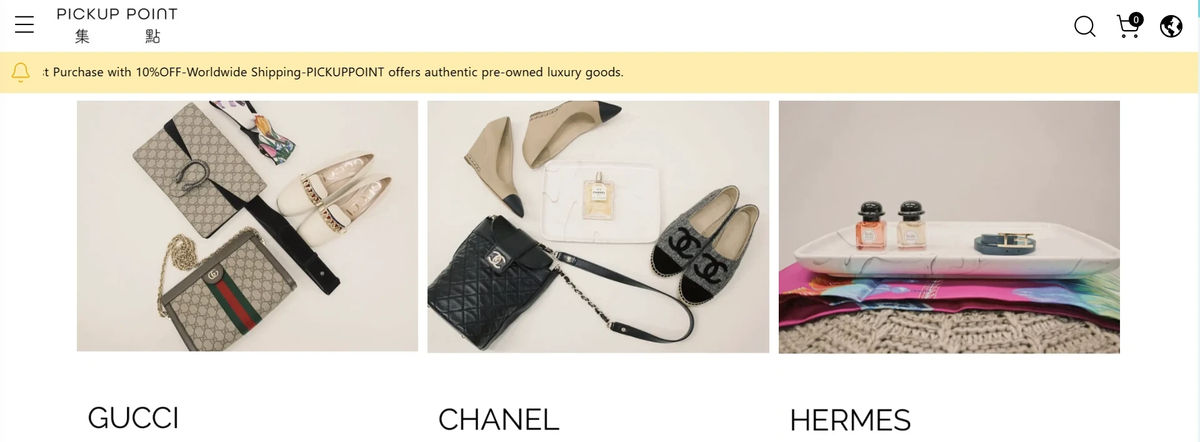
Pickuppoint is a curated secondhand designer marketplace at pickuppoint.mo for shoppers who want inspection before a listing goes live. It connects pre-owned Chanel, Hermès, Gucci, and Dior pieces with buyers, and it handles authentication, condition reporting, photography, and buyer communication in one place. That directly answers the gap between a marketing line and a hands-on check: the site describes a known sourcing path, documented ownership history, and a physical inspection of hardware, stitching, date codes, and provenance before a piece is offered.
Features
Physical authentication on every piece before it is listed, so the buyer is not the inspector
Source check before an item enters the system, from a closed network rather than open submissions
Unverified pieces refused outright, including watches that failed the internal review
Authenticity guarantee stated on the shop
Condition printed on every item, including grades such as New, Excellent, and Great Condition
Authentication, condition reporting, photography, and buyer communication handled in one place
Pre-owned Chanel , Hermès, Gucci, Dior, Louis Vuitton, Balenciaga, Celine, Bottega Veneta, Valentino, Saint Laurent, Prada, Miu Miu, Fendi, Burberry, and Givenchy
Bags, accessories, ready-to-wear, sunglasses, and pre-owned watches in the catalog
Consignment path that authenticates, values, lists, and pays an agreed percentage of the sale
Worldwide shipping
First-order 10 percent off with code PUPFIRST
Checkout in MOP, USD, or HKD, with English, Traditional Chinese, and Simplified Chinese
Best for
Buyers who want a named source, a hands-on check, and a condition line before they pay, and owners who want the platform to photograph, price, and talk to buyers.
Pros
The inspection happens before the listing, which closes the gap between a slogan and a real check
A doubtful piece is refused, so a failed authentication does not become the buyer's problem
Condition sits on the item page, which is the fix for a listing that hides wear
Source verification replaces an anonymous private seller
One desk covers authentication, photos, and buyer messages
Worldwide shipping plus a first-order code, PUPFIRST
Payment stays on the site, not in a wire or an off-platform chat
Cons
The catalog is limited to that closed contact group, so a one-off private find outside the network is not listed
Accessibility
Shop and consign at pickuppoint.mo . The site has account, cart, favorites, and contact pages, and it links to Facebook, Instagram, TikTok, WeChat, Rednote, and Douyin.
2. Fashionphile

Fashionphile buys and consigns handbags and accessories, and it will not list a piece until an in-house specialist has checked it. The help center says authenticators review stamping, stitching, hardware, date codes, serial numbers (where they exist), materials, and craftsmanship, and the company offers a lifetime return of the purchase price if an item it sold is later proven not authentic. Eligible purchases also come back within 15 days of delivery if the certificate tag is still on, unlike a handbag marked final sale the moment it ships.
Features
In-house, brand-specific authentication before the item is posted or sold in a boutique
Lifetime authenticity refund of the purchase price if the piece is proven not authentic
15-day return window from delivery, in-store purchase, or online pickup, tag still attached
Prepaid UPS return label for $14.99, or a free in-store return at a Fashionphile location
Buyout payment after the item is received and certified, so you are not waiting on a stranger's sale
Consignment fee of 30% up to a $3,000 sale price and 15% on the portion above $3,000, per seller terms revised April 10, 2026
Store credit or a Neiman Marcus gift card with a 10% bonus, or direct deposit, PayPal, wire, or check
Pros
Two safety nets: a 15-day change-of-mind return and a lifetime fake refund
Buyout pays after authentication, which avoids the weeks-long “we still have your bag” stall
The commission split is published, so a $4,000 bag is not a surprise percentage
Cons
The lifetime promise is a refund of the purchase price, not a brand certificate from Chanel or Hermès
A failed seller submission costs a $75 authentication fee, or $125 on a Birkin or Kelly, before the bag comes back
Fine jewelry , watches, and Birkin or Kelly returns take up to 10 days to process
3. Vestiaire Collective
Vestiaire Collective is a global peer-to-peer marketplace, and the buyer-protection step is a hub check rather than a seller's word. Items on Authenticated Shipping go to a Vestiaire hub, where a team checks brand criteria plus condition, color, and size before the parcel continues to you. The published authentication fee is $15. If the team cannot approve the item, the order is canceled, and the refund is issued in full. That is the mechanism the earlier pieces called for: someone other than the The seller compares the bag to the listing before you are stuck with it.
Features
Physical hub inspection on Authenticated Shipping before the item reaches you
A $15 authentication fee that covers the brand check and a quality-control match to the description
Full refund and a canceled order if the hub does not approve the piece
Direct shipping only when that path is offered; otherwise the physical check is included in the buyer service fee
International catalog, which is where rare European sizes and older Hermès stock show up
Seller-set prices, so you compare the same style across private listings
A report path if you doubt authenticity after delivery
Pros
The item is stopped at a hub when Authenticated Shipping applies, which cuts the “pay first, discover later” risk
A failed check cancels the order instead of offering a $40 site credit
The fee is a flat $15, published on the help center, not a surprise at the door
Cons
Not every listing uses the same shipping path, so you have to confirm Authenticated Shipping before you pay
Returns on individual-seller items are tighter than a store return window, and a professional-seller return is the clearer 14-day path
You are buying from a member, so photos and description quality vary until the hub sees the piece
4. Rebag
Rebag is a handbag specialist with its own quote tool, Clair, and a short, priced return window. US buyers request a return online within 7 days of delivery or an in-store purchase for a refund to the original payment. The bag must still wear the Rebag tag and match the listed condition. Return fees run $25 under $1,000, $50 from $1,000 to $2,999, $75 from $3,000 to $7,999, and $100 above $8,000. Final-sale items are excluded. For sellers, proceeds stay pending 15 to 25 days, then land in the Rebag wallet and stay there even if the buyer returns later.
Features
Clear quote before you ship, so the offer is a number, not a guess after intake
7-day US return request window, with the fee printed by price tier
Returns ship to the warehouse for inspection; stores do not take returns
Tag-on, same-condition rule, which blocks the worn-and-returned bag from being your problem
Seller payout locked after the 15- to 25-day pending period
Rebag assumes buyer-return risk once that payout is final
Final-sale tag is stated up front, so you do not discover it after the strap fails
Pros
The return fee is on a chart, unlike a credit offer of $40 or $50 after a bad delivery
Sellers get a firm payout date instead of an open wait while a buyer decides
Handbags are the whole business, so condition language is built around bags
Cons
Seven days is a short window if you travel or need a third-party opinion
International returns are not accepted, and a high personal return rate above 30% in 12 months doubles the fee
In-store purchases still have to be shipped back
5. eBay
eBay's handbag program sends eligible bags to a third-party authenticator before they ship to you. On the published handbag program, a blue check applies to eligible bags at $500 and above, and eBay covers that authentication cost for the buyer and seller. Qualifying bags from $200 to $499.99 can add the service at checkout for a fee. Returns that are not as described go back to the authentication center, which rechecks condition and accessories before a refund. You still pay on eBay, under the Money Back Guarantee, instead of wiring a private seller.
Features
Third-party physical inspection before the bag is forwarded to you
No seller fee for the guarantee; eBay covers it at $500 and above
Optional add-on for qualifying bags priced $200 to $499.99
Not-as-described returns routed back through the authenticator, not a private address
Seller protection if the buyer claims a mismatch the center does not support
Money Back Guarantee on the purchase path
Wide brand range beyond a single retailer's buyout list
Pros
An outside inspector sees the bag after the seller ships and before you do
Payment stays on eBay, which closes the fake-invoice and wire-transfer trap
A condition fight goes back to the same center that cleared the bag
Cons
Coverage depends on price and category, so a $150 bag is outside the standard badge
The authenticator is not the brand, and a passed check is not a Chanel or Louis Vuitton certificate
Seller return windows still govern change-of-mind returns
6. 1stDibs
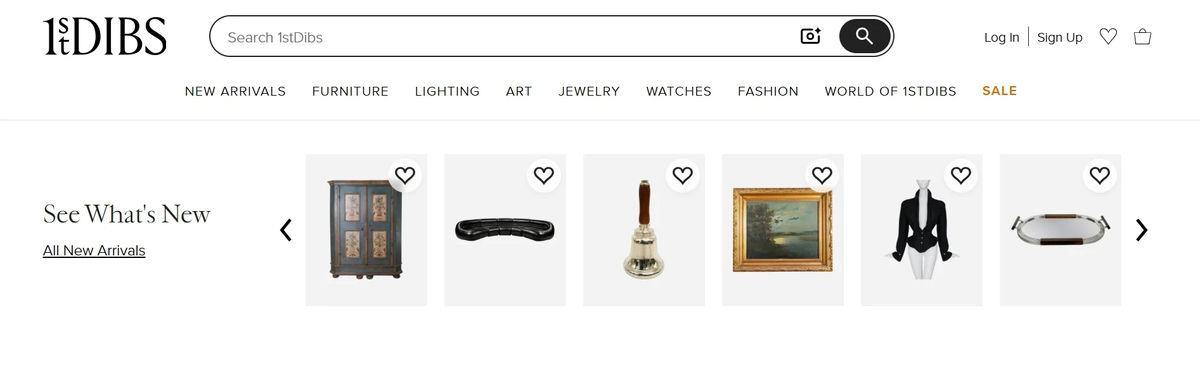
1stDibs is a dealer marketplace for furniture, art, jewelry, and vintage fashion, and its Authenticity Guarantee is a written reimbursement, not a line on a product photo. If an item bought on the site is found inauthentic, the guarantee offers up to $100,000 toward the purchase price and related shipping, provided you contact 1stDibs within one year of the order confirmation and supply written opinions from two independent experts in the field. The guarantee covers the named creator or brand. It does not cover pieces listed as “attributed to,” “circle of,” “in the style of,” or “after.” Change-of-mind returns follow the dealer's own policy, which is printed on the item page.
Features
Authenticity reimbursement up to $100,000 for purchase price, tax, duties, and related shipping
One-year window from the order confirmation date to open a claim
Two independent expert opinions required, with the item returned in the same condition
Guarantee limited to the creator or brand named on the listing
Seller return terms shown on the item page before you pay
EU and UK 14-day return right regardless of the dealer's policy
Separate Money-Back path for damage and items that do not match the description
Pros
The dollar cap and the expert-opinion rule are published, so a fake claim has a process
“In the style of” is excluded in plain language, which stops a vague listing from posing as the real maker
Damage and mismatch sit outside the dealer's change-of-mind rules
Cons
You supply the expert letters, and 1stDibs decides whether the claim qualifies
A US change-of-mind return exists only if that dealer offers one
Insured international returns are quoted and approved by 1stDibs, and the quote must be accepted within 14 days
7. Chrono24
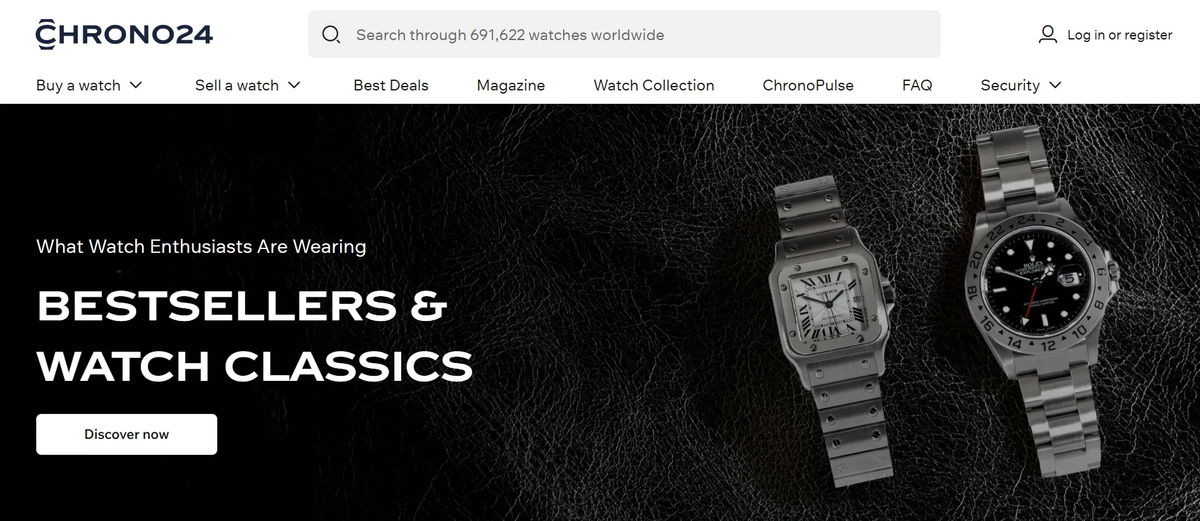
Chrono24 is a watch marketplace with an escrow checkout and a 14-day authenticity window on dealer listings. Pay through the Chrono24 escrow service, and the money stays held while the watch ships. Professional dealers must verify authenticity and list only original watches, and every new or used watch bought from a professional dealer carries a 14-day right of withdrawal with no reason required. The lifetime cap on those reimbursements is 50,000 euros per person. A dealer without Trusted Seller status is capped at 7,500 euros per buyer per calendar year. Opening the case yourself voids the commitment.
Features
Escrow checkout so payment does not go straight to a private seller
14-day withdrawal on watches from professional dealers, no reason required
Commitment to Authenticity for 14 days from receipt
Dealer duty to list known modifications and non-original straps
Reimbursement of the purchase price if the claim stands and the watch is returned
50,000-euro lifetime cap, and a 7,500-euro yearly cap on non-Trusted dealers
Private-seller complaints accepted within 7 days, without the same withdrawal right
Pros
Escrow plus a dated authenticity window closes the pay-and-pray gap on a five-figure watch
The caps are printed, so you know the ceiling before you bid
A professional-dealer purchase has a no-reason return for 14 days
Cons
The commitment dies if you open the watch or remove parts without written consent
Private sellers do not carry the same 14-day withdrawal
Coverage is a Chrono24 reimbursement, not a Rolex service-center certificate
8. The Luxury Closet
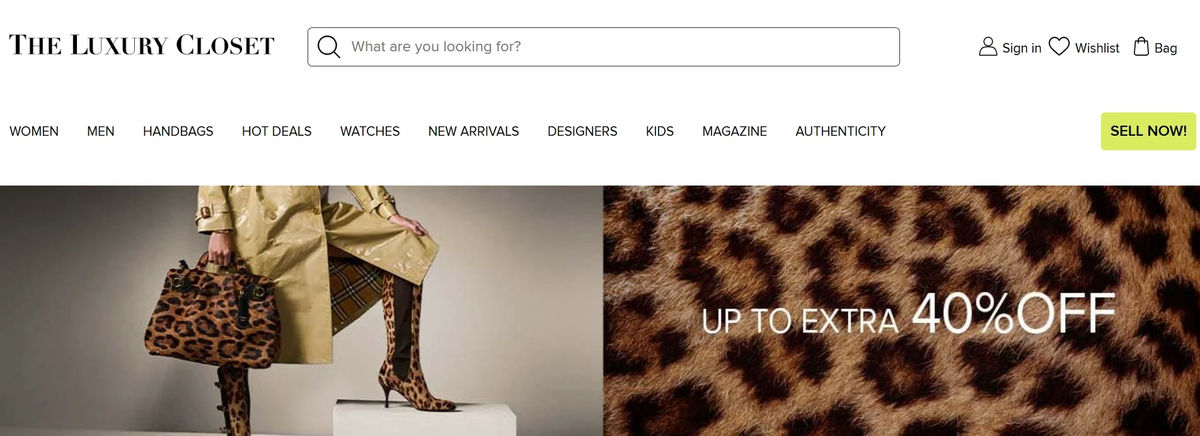
The Luxury Closet sells pre-owned bags, clothing, and accessories and has a 3-day return rule on eligible items. You must raise a return request within 3 days of delivery from the account page. The company arranges collection, checks quality and condition, and processes the refund within 7 business days after the item passes that check. Customer-initiated returns lose a processing fee of $5 plus VAT per item outside the UAE, or 20 AED plus VAT inside the UAE. Items marked “No returns on this item” are excluded. The delivery page states a lifetime authenticity guarantee on the inventory it sells. Prices on international orders are charged in US dollars.
Features
3-day window to request a return on eligible items
Company-arranged collection, then a quality check before the refund
Refund within 7 business days after the item inspection passes
Printed return fee of $5 plus VAT per item for rest-of-world orders
Non-returnable pieces labeled on the item page
Lifetime authenticity guarantee claimed on the pieces it sells
Make an Offer on listed items, with status visible in the account
Pros
The return clock, the fee, and the non-return label are on the page before you pay
A failed quality check blocks the refund only after the company has the item, which is a clearer path than a $40 credit offer
International checkout in dollars removes a currency surprise at the bank
Cons
Three days is a tight window if the bag is still in transit to you or you need a second opinion
The lifetime authenticity line is the company's claim; the page does not publish an expert-letter process or a dollar cap
Original packaging and cards are not guaranteed with every piece
9. Grailed
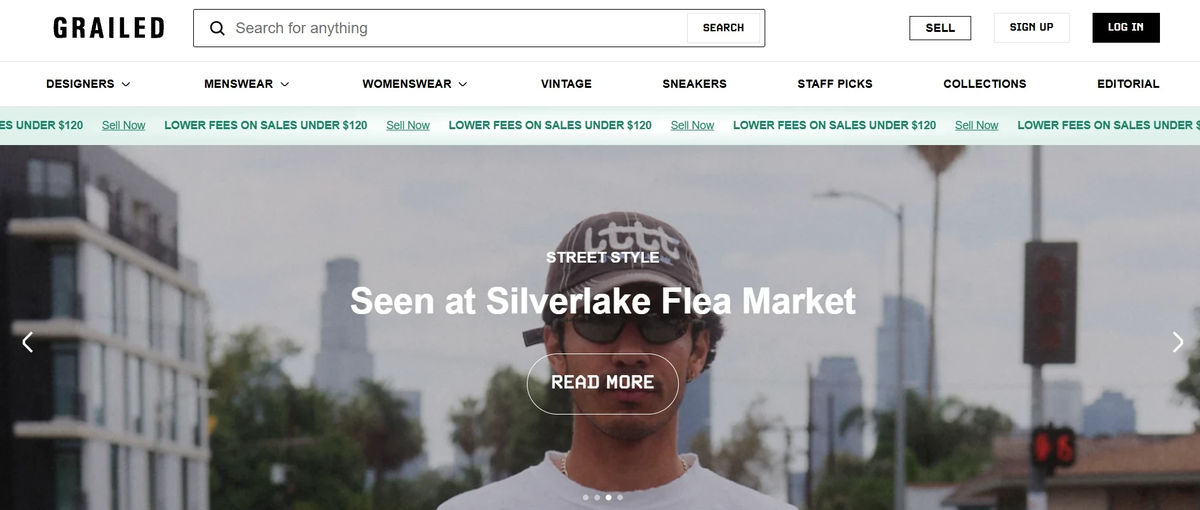
Grailed is a peer marketplace for menswear, archive fashion, and streetwear, and the safety net is Purchase Protection rather than a general return desk. A qualifying order is covered if Grailed finds that the authenticity cannot be verified, the item materially differs in color, condition, fabric, or measurement, or you were sent the wrong item. Returns are available only for those mismatches. If the listing was accurate, or if it never stated measurements, the seller does not have to take it back, and fit is your check before you pay. That rule rewards buyers who read the measurements and penalizes listings that hide wear.
Features
Purchase Protection when authenticity cannot be verified
Coverage for a material mismatch in color, condition, fabric, or measurement
Coverage if the wrong item arrives
Case-by-case review by Grailed support
Seller feedback visible on the profile before you pay
Relist path if the piece was as described and you simply changed your mind
Buyer duty to confirm fit when measurements are missing
Pros
A fake or a wrong-condition piece has a named protection path
The measurement rule makes a thin listing your signal to walk away
Payment stays on Grailed instead of a direct transfer to a stranger
Cons
No change-of-mind return if the description was accurate
Authentication is a dispute review, not a hub inspection before the parcel ships
Sizing disputes die if the seller never posted measurements
10. Bob's Watches
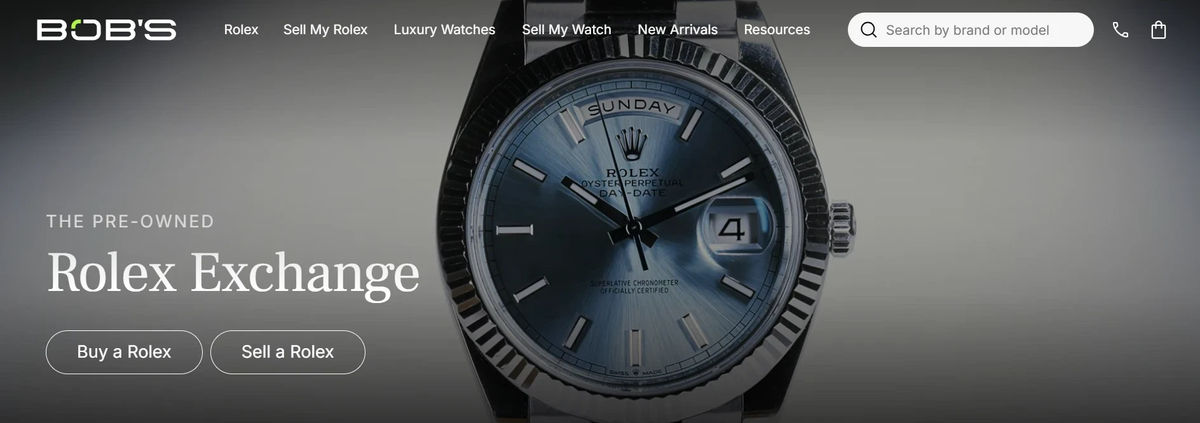
Bob's Watches sells new and pre-owned Rolex and other luxury watches and backs Rolex purchases with a full-price refund if a watch is found to be inauthentic. If a part rather than the whole watch fails the recheck, Bob's reserves the right to replace that part. Online sales also carry a no-questions-asked 3-day refund if the watch is unworn, unaltered, and complete with boxes, papers, and tags. We do not accept worn, altered, or damaged watches. for a full refund. In-store sales and international sales are final. Rolex factory stickers must stay on stickered watches, or you will lose your full refund.
Features
Rolex authenticity pledge with a 100% refund of the purchase price plus shipping and insurance if the watch is not authentic
Return authorization required, with the watch due back within 30 days of the RMA
Option to replace a non-authentic part rather than refund the whole watch
3-day no-questions-asked refund on online sales that come back in the sold condition
Refund minus return shipping, insurance, and transaction fees
Free overnight shipping stated on the policy page
Factory-sticker rule for unused Rolex, so the sticker is part of the return condition
Pros
A fake Rolex has a phone number, an RMA, and a full-price refund path
The 3-day window is short but unconditional if the watch is untouched
Papers, boxes, and tags are part of the return checklist, which stops a stripped watch from becoming your loss
Cons
Three days is easy to miss, and international and in-store sales are final
You insure the return shipment; Bob's is not responsible for a lost package
The pledge is Bob's re-authentication, not a Rolex service-center extract
How to Choose the Right Alternative to The RealReal
A good alternative to The RealReal should offer ways to check that items are real , clear details about how items look, fair prices , safe ways to pay , helpful options if you want to return something , and a shopping experience that works for what you need .
"The best resale platforms combine authentication , transparency , and buyer protection — without these core pillars, no marketplace can truly be trusted." — Resale Industry Best Practices
Feature to Look For | Why It Matters |
|---|---|
Authentication checks | Confirms items are genuinely real before you buy |
Clear item descriptions | Shows exactly what condition the item is in |
Fair pricing | Ensures you're getting real value for your money |
Safe payment methods | Protects your financial information at checkout |
Return options | Gives you a safety net if something isn't right |
Tailored shopping experience | Matches the platform to your specific needs |
🎯 Key Point: The most important factor when choosing a RealReal alternative is authentication — without it, you have no guarantee that what you're buying is genuine.
⚠️ Warning: Never shop on a resale platform that lacks clear return policies or buyer protection — these are essential safeguards that separate trustworthy platforms from risky ones.

Start With the Last Bag That Failed You
Write down what went wrong. The photos hid the wear. The return rule was final. Support sent a small credit. A seller you never met still held your item. Keep that list next to every new shop. If the page fails the same test, it is not a fresh start: it is the same risk with a new name.
Pick a Shop That Checks Before It Lists
The safer path is a curated desk, not an open feed. A person with luxury retail experience should inspect hardware, stitching, stamps, and serials before the listing goes live. If the check fails, the item should never reach you. This shifts the burden from you to the shop. A badge after payment is a weaker promise than refusing the sale before the page exists.
Read the Condition on the Item, Not in a Caption
Every listing should have a clear grade and a note you can check against the photos. New, excellent, and great condition mean something only when the page describes scratches, a loose clasp, or a missing card. Examine the corners, inside, and hardware in the photos. Take a screenshot of the full page before you pay; that file is what you send if the box doesn't match the words.
Keep One Desk for the Whole Sale
Pick a shop that verifies authenticity, photographs items, sets prices, and communicates with buyers in one place. With Pickup Point, one desk means one record. Keep payment on the site to eliminate wire transfers, gift card links, and chat-based transactions.
Match the Catalog to What You Actually Buy
Look for used bags and fashion from the brands you already wear, with watches and accessories in the same checked catalog. A closed supply list is smaller than a public marketplace, which is the point. Worldwide shipping matters if you're not in the shop's city. A first-order code is a bonus.
Confirm the Guarantee Is Tied to a Real Check
An authenticity line is useful only when the shop explains what it did: source confirmed, item inspected, doubtful pieces refused. Ask who examined the piece and whether a failed check stops the sale. The shop keeps its own inspection records, not the maker's serial file. Buy where that inspection is complete, documented, and already passed.
Buy After the Page Clears Your List
Go back to the failure you wrote down. The next shop must meet these written requirements: a known source, inspection before listing, documented condition, on-site payment, and responsive contact. If two shops qualify, choose the one that refused weak pieces rather than posting them. Pay, keep tags on until you've matched the item to the screenshot, and contact the shop the same day if the box doesn't match.
Why PICKUPPOINT Is a Trusted Choice for Luxury Buyers
Knowing what a trustworthy platform looks like is one thing. Watching it work that way when things get tough, with real items from real homes , is another entirely .
"A platform's true trustworthiness is never proven in perfect conditions — it's proven when the stakes are high and the items are irreplaceable." — Luxury Resale Industry Insight
🎯 Key Point: PICKUPPOINT doesn't claim trustworthiness — it demonstrates real-world reliability when it matters most, with genuine luxury items from genuine sellers .
✅ Best Practice: When evaluating any luxury resale platform , look beyond marketing promises and focus on verified performance under real conditions, where true trust is built.

How does PICKUPPOINT's authentication process set it apart from The RealReal competitors?
The pattern that breaks trust in luxury resale is almost always the same: a platform grows fast, volume overtakes process, and the buyer absorbs the cost of that gap. Pickup Point was built with the opposite sequence. Authentication happens before a listing exists, not after a complaint arrives. Every bag undergoes physical inspection. Every pre-owned watch clears an internal review. If authenticity is in doubt, the piece does not sell. That rule has no exceptions for inventory pressure or seasonal demand.
What separates Pickup Point from most resale alternatives is not what it checks, but what it refuses. Stock comes from a closed network of long-standing fashion contacts and designers clearing seasonal inventory, not from anonymous sellers uploading photos at midnight. Co-founders Kathryn and Rainbow bring years of luxury retail experience to every sourcing decision, meaning each piece carries the judgment of someone with a name and track record. According to a survey conducted in July 2024 across Asia-Pacific on luxury goods purchasing frequency by country, published by Statista and Rakuten Insight, luxury goods purchasing frequency is rising across the region, and the demand counterfeiters follow is growing too. A closed sourcing network is a structural defense.
How does end-to-end accountability close the gap between listing and delivery?
Most resale platforms list first and resolve disputes later. Pickup Point handles authentication, condition reporting, photography, and buyer communication from one desk, so the same team that examined the piece answers your questions. Platforms built this way, where second hand designer sourcing and authentication sit inside the same accountable process, narrow the gap between what a listing promises and what arrives in the box. Pickup Point grades every item as New, Excellent, or Great Condition, pairing each grade with photography of hardware, corners, and interior. You compare the grade to the photos before paying, not after opening the package. Most resale platforms reverse this order.
Why does provenance matter to the buyers PICKUPPOINT serves?
Affluential's 2024 analysis of how luxury brands attract ultra-high-net-worth consumers notes that UHNWIs have a net worth over $30 million. This group prioritizes provenance and authenticity. Authenticated pre-owned Chanel, Hermès, Gucci, Dior, Louis Vuitton, and other brands on Pickup Point's site appeal to them as a smart choice: recycled fashion that honors both the artisans who created the pieces and the planet burdened by fast fashion. The question worth considering is what it feels like to buy from a platform that has already done the hard work before you arrive.
Get your Next Luxury Purchase from PICKUPPOINT
That structural commitment changes what buying feels like. When authentication, sourcing, and personal service are handled before you arrive, the decision shifts from anxious to considered. You are choosing something you genuinely want, not managing risk.
"When authentication, sourcing, and personal service are handled before you arrive, the decision shifts from anxious to considered : you are choosing something you genuinely want, not managing risk."
💡 Tip: The difference between a stressful purchase and a confident one is how much groundwork is done before you walk through the door.
⚠️ Warning: Skipping proper authentication and sourcing verification is the most common mistake luxury buyers make. Don't let anxiety drive your decision.

If that sounds like a better way to shop pre-owned luxury , second hand designer is worth exploring . Our authenticated collection lets you browse online , filter by brand or price , and — if you are in Macau — visit the PUP Studio or book a private appointment to see pieces in person . Recycled fashion , chosen with care, is a better decision .
🎯 Key Point: From online browsing to in-person private appointments , every step of the PICKUPPOINT experience is designed around your confidence and convenience.
Shopping Feature | What It Offers |
|---|---|
Online Collection | Browse authenticated pieces by brand or price |
PUP Studio (Macau) | View items in person at your own pace |
Private Appointment | Dedicated, personal service for a considered purchase |
Authentication Guarantee | Every piece verified before it reaches you |