


Fake Balenciaga Bag vs Real: How to Tell the Difference
Fake Balenciaga bag vs real: spot every difference fast. Pick Up Point shows you exactly what to check before you buy.
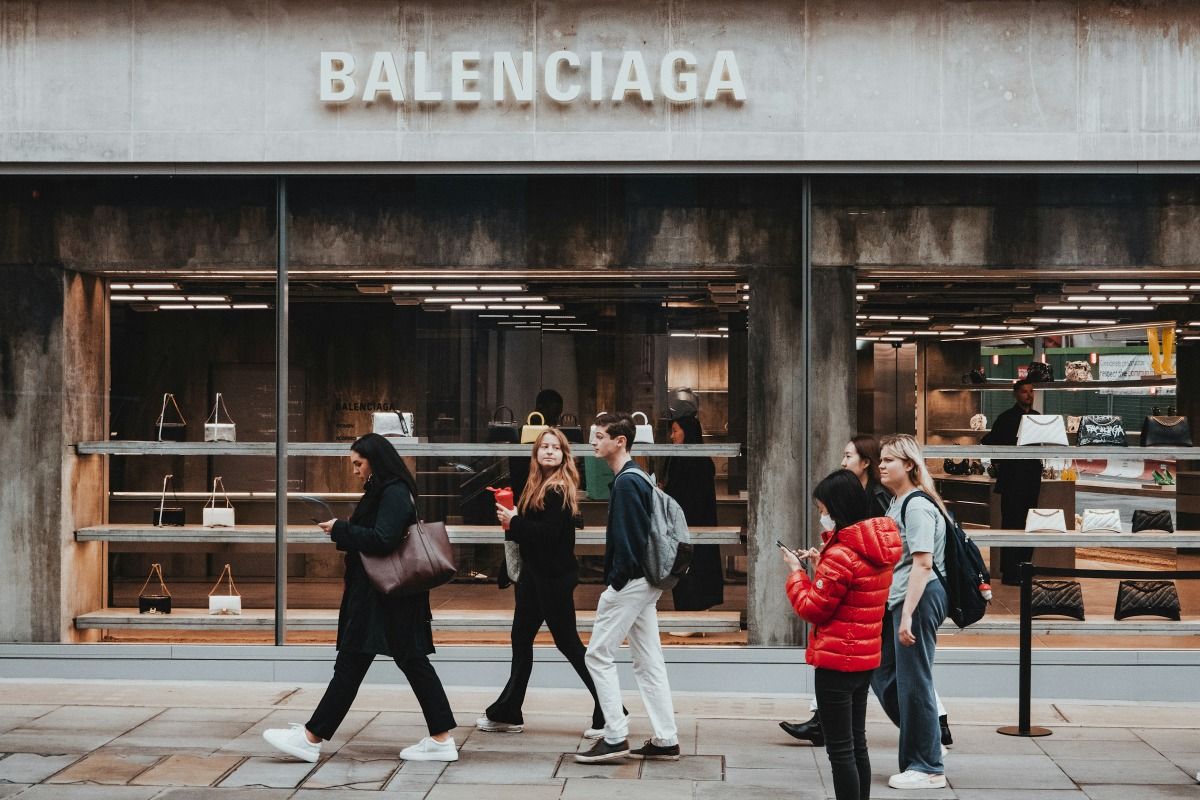
Buying a Balenciaga bag through a resale platform carries a real risk: convincing fakes are common, and a single oversight can mean losing hundreds or thousands of dollars. Knowing what to look for, from hardware quality and stitching consistency to logo font and serial number placement, is the most reliable way to protect that investment.
For buyers who want to skip the guesswork, authentication matters more than ever in the pre-owned luxury market. Platforms that verify every listing before it goes live remove the anxiety that typically comes with resale purchases, which is exactly what shoppers find when they browse second hand designer through Pick Up Point.
Table of Contents
Why Are Balenciaga Bags So Often Targeted by Counterfeiters?
Can a Fake Balenciaga Bag Have a Real-Looking Serial Number?
Can You Tell If a Balenciaga Bag Is Fake From Photos Alone?
10 Key Differences Between a Fake Balenciaga Bag and a Real One
Common Mistakes to Avoid When Checking a Balenciaga Bag
Why Choose PICKUPPOINT for Authenticated Pre-Owned Balenciaga Bags
Get your Next Luxury Purchase from PICKUPPOINT
Summary
Counterfeit handbags represent a structural problem in the luxury goods market, not a fringe concern. The OECD and EU Intellectual Property Office estimated global trade in counterfeit and pirated goods at roughly $467 billion in 2021, representing 2.3 percent of world trade, with leather goods and handbags among the most frequently targeted categories. Balenciaga alone generated over $106 million in handbag and wallet sales in a single year, making it a consistent target for criminal operations chasing margin rather than prestige.
Serial numbers offer far less protection than most buyers assume. A single plate number, N°0754 C115748, has appeared on counterfeit City bags for over a decade, copied directly from a genuine 2004 piece. Counterfeiters do not invent codes; they recycle existing ones and rely on buyer relief at a clean-looking engraving to end the inspection before it begins.
The full authentication kit that travels with a counterfeit bag, including Controllao cards, dust bags, leather swatches, and authentication cards, is itself among the most replicated elements in luxury faking. These accessories are included precisely because buyers treat them as final proof and stop looking further. The serial number and the kit together answer one narrow question while hiding every other one.
Photos cannot substitute for physical inspection, and the counterfeit supply chain is built around that gap. US Customs and Border Protection ranked handbags and wallets third among all seized counterfeit goods by manufacturer's suggested retail value in fiscal year 2024, at over $978 million. Factories invest in the exterior because that is where buyer scrutiny lands, leaving interior hardware threading, lining heat-stamp depth, and zipper tape color as the details that only proximity can confirm.
The material risks of counterfeit accessories extend beyond financial loss. A 2026 industry safety review found that more than 40 percent of tested counterfeit items failed chemical safety standards, with some samples carrying phthalate levels more than 650 times the permitted limit. Buyers who paid close to retail price for what appeared to be an authenticated bag often discovered cracking and peeling leather within two weeks, with no recourse once the dispute window closed.
Source transparency changes the risk profile in ways standard authentication alone cannot. A bag with a documented owner, a known intake process, and hands-on inspection before listing removes the anonymity that the counterfeit pipeline depends on. Authentication without source transparency is pattern-matching against a fake designed to match the same patterns.
PICKUPPOINT's second hand designer platform addresses this by sourcing pieces directly from personal closets, inspecting each item against decades of luxury retail experience, and grading condition in plain language before any listing goes live.
Why Are Balenciaga Bags So Often Targeted by Counterfeiters?
Counterfeiters follow demand , and Balenciaga sits at the intersection of global recognition , high retail pricing , and instantly photographable design. According to RETAILBOSS , Balenciaga pulled in over $106 million this year on handbags and wallets alone —a staggering figure that shows exactly why this category is a reliable target for criminal operations .
"Balenciaga pulled in over $106 million this year on handbags and wallets alone, showing the money stream that makes this category a reliable target for criminal operations." — RETAILBOSS
🔑 Takeaway: A $106 million+ revenue stream is not just a business milestone — it's a flashing signal to counterfeit networks that demand is massive , margins are high, and buyers are everywhere .
⚠️ Warning: The higher a brand's retail price point and cultural visibility , the more aggressively it will be targeted. Balenciaga checks both boxes — making authentication more critical than ever for buyers.
Factor | Why It Attracts Counterfeiters |
|---|---|
Global Brand Recognition | Instantly sellable to a worldwide audience |
High Retail Pricing | Massive profit margins on fake goods |
Iconic, Photographable Design | Easy to replicate visually for online listings |
$106M+ Annual Handbag Revenue | Proves demand is deep and consistent |

Why does Balenciaga's iconic silhouette make it so easy to fake?
The silhouette does most of the selling. A City bag's studded handles and drooping leather body, the Hourglass's curved base, the Le Cagole's buckle-heavy straps: each reads as Balenciaga from across a room . That instant recognizability is what counterfeiters need. Buyers chasing status respond to the shape, not the craftsmanship, and a convincing outline is far easier to copy than quality underneath. Copy the recognizable form, and you copy the desire.
Pricing creates the opening. A genuine Balenciaga City Small costs above $2,500 on the official site, while factory-made replicas cost a fraction of that to produce and ship. US Customs and Border Protection reported that in fiscal year 2024, seized counterfeit handbags and wallets carried a combined manufacturer's suggested retail value of over $1 billion, ranking third among all seized counterfeit goods by value. Counterfeiters chase profit, not prestige.
How do design details help a fake Balenciaga bag vs real pass at a glance?
The design details that make Balenciaga bags distinctive also enable counterfeits. The City's intentionally worn lambskin appears "distressed" even when the leather is cheap and stiff. Studs, oversized zippers, and layered buckles draw attention from crooked seams or lightweight hardware. A buyer shopping through photos cannot feel the spring of real lambskin or the cold poor weight of genuine metal. The visual complexity that makes these bags desirable is the same complexity that makes a copy harder to dismiss at a glance.
How do counterfeit operations exploit the way most buyers shop online?
Most buyers search for the bag they want, compare prices, and trust sellers with good photos and positive reviews. This approach fails with luxury goods, where counterfeit operations invest in professional photography, fake authentication cards, and manufactured seller credibility. Platforms that verify every listing before it goes live, like second hand designer at Pick Up Point , eliminate that uncertainty. Our authentication process happens before you see the listing, not after you've spent the money.
How big is the counterfeit handbag trade and why does it keep growing?
The fake goods trade is widespread and lucrative. The OECD and the EU Intellectual Property Office estimated global trade in counterfeit and pirated goods at roughly $467 billion in 2021, representing 2.3 percent of world trade, with leather goods and handbags among the most frequently faked categories. According to RETAILBOSS , the global luxury handbag market is headed for $35.83 billion in 2025, meaning the counterfeit ecosystem will expand proportionally with the legitimate market. Choosing verified pre-owned Balenciaga avoids funding a supply chain built on deception, unsafe labor conditions, and goods that a 2026 industry safety review found failed chemical-safety standards in more than 40 percent of tested items.
What you still cannot see from the outside is the one detail counterfeiters have gotten good at faking.
Related Reading
Can a Fake Balenciaga Bag Have a Real-Looking Serial Number?
A fake Balenciaga bag can have a convincingly accurate serial number because counterfeiters simply copy codes from real bags and stamp them cleanly onto replicas — making it critically unreliable to authenticate a bag by serial number alone .
"Counterfeiters don't invent serial numbers — they copy real ones , meaning a fake can carry the exact same code as a legitimate bag." — Authentication Experts
⚠️ Warning: Never rely on a serial number as your sole method of authentication. A convincing stamp does not guarantee a genuine Balenciaga product .
💡 Tip: Always cross-check multiple authentication points — including stitching quality , hardware weight , leather texture , and font consistency — rather than trusting the serial number alone.
Authentication Method | Reliability Against Fakes |
|---|---|
Serial Number Check | ❌ Low — easily copied |
Hardware Weight & Finish | ✅ High — hard to replicate |
Stitching Quality | ✅ High — tells a clear story |
Leather Texture & Smell | ✅ High — difficult to fake |
Font & Stamp Consistency | ⚠️ Medium — varies by counterfeit tier |
🔑 Takeaway: A real-looking serial number is not proof of authenticity — it's one of the easiest things for counterfeiters to replicate perfectly .

How does a recycled serial number expose a fake Balenciaga bag vs real?
The failure point is usually a number that has already fooled thousands of buyers before you. The plate N°0754 C115748 has appeared on counterfeit City bags for over a decade, corresponding to a 2004 season—a "new" bag wearing that code is already lying to you. On genuine pieces, the engraving is cut with precision; on fakes, the font sits thick and pressed, with BALENCIAGA.PARIS crowding too tightly around the central dot. That distinction is invisible in a listing photo and obvious only when the bag is in your hands.
What does the interior tag reveal about a fake Balenciaga bag vs real?
The tag itself tells a second story most buyers never read. A real inside label is sewn, not glued, and the back carries the same style code split across two lines. Season letters run backward through the alphabet, so a bag stamped with a letter from 2006 sold as current stock contradicts the tag. When a seller puts a City-style number onto a Giant hardware silhouette, the serial "confirms" a bag the factory never produced.
Why the full kit makes it worse
A pattern emerges among buyers who paid close to retail price for a verified bag, only to watch the leather crack and peel within two weeks. The Controllato card, dust bag, leather swatch, and authentication card travel with the fake because they are designed to stop you from looking further. Authentication accessories are among the most copied items in luxury goods, not because counterfeiters are thorough, but because shoppers treat them as proof and stop scrutinizing the bag.
How does a fake Balenciaga bag differ from a real one, and what does the kit reveal?
Most buyers want one clear sign that answers the question. Learning about leather texture, engraving depth, and season-letter sequencing takes time. A trusted second hand designer platform solves this differently: authentication happens before the bag reaches you, not after delivery when you've lost your chance to dispute. Verification covers construction, hardware, leather, and provenance, not just the tag.
What the number cannot tell you
The serial number does not confirm anything about the zipper pull brand, stitch color, hardware weight, or leather composition. A 2026 study by the American Apparel and Footwear Association, tested with Intertek, found that 41 percent of counterfeit accessories failed U.S. and international safety standards, with some samples carrying phthalate levels more than 650 times the permitted limit. The serial looked right; everything underneath it did not.
Why does a fake Balenciaga bag vs. real check go beyond the serial number?
Authentication requires cross-referencing the code against the official Balenciaga product page, checking that front and back tags match, confirming the season letter against the production year, and examining hardware and leather separately. The number is only the first step in the verification process.
With only a static photo, the challenge changes fundamentally.
Can You Tell If a Balenciaga Bag Is Fake From Photos Alone?
Photos lie by leaving things out. You can confirm a shape from a listing image, but you cannot confirm a bag is real. Treating these two acts of judgment the same way is exactly what the counterfeit supply chain depends on.
"You can confirm a shape from a listing image, but you cannot confirm a bag is real — and treating those two judgments as equal is exactly what counterfeit sellers rely on."
🚨 Warning: Never mistake visual familiarity with a silhouette for actual authentication. Counterfeit producers deliberately engineer fakes to pass photo-based scrutiny: the details that expose them are the ones no listing image will show you.
💡 Tip: When evaluating a Balenciaga bag from photos alone, treat every image as incomplete evidence. Physical inspection of stitching, hardware weight, and leather texture is the only standard that holds up.

What photos actually hide
The failure point is sensory, not visual. Authentic Balenciaga distressed lambskin has a specific give under pressure, a grain that shifts when flexed, and a smell that no synthetic can replicate at scale. Counterfeit factories reproduce the look—the matte surface, wrinkling, and tonal variation—because cameras capture these details. What they cannot reproduce cheaply is structural behavior: how real leather softens with age rather than cracking, or how a genuine Le Cagole claw zipper pull swings with actual brass weight rather than hollow zinc. A photo shows the costume, not the construction.
Why does the seller control what you see in a fake Balenciaga bag vs. a real listing?
The same issue shows up in real estate listings and online food menus: the seller controls what you see. A counterfeit handbag listing is a directed performance. Sellers shoot the logo plate straight-on in soft, diffused light because it converts browsers into buyers. The base of the bag, where stitching stress is highest and leather quality most exposed, almost never appears. The interior lining seam, where cheap bags separate within months, is cropped out. When you request unedited daylight shots of those specific areas and a seller hesitates or sends the same polished gallery again, that hesitation is data.
How does physical inspection change the fake Balenciaga bag vs real verification problem?
Most shoppers compare listing photos with boutique images, matching the curve of the Hourglass or the stud pattern on a City. That approach works for obvious fakes but fails against superfakes built to pass such tests. Platforms like second hand designer remove that friction by requiring physical inspection before a bag reaches a buyer, shifting the authentication burden from a screen to trained hands. Our authentication process protects buyers by ensuring experts verify every item before it ships.
When "good photos" still aren't enough
The critical difference between a careful buyer and a deceived one is often not attention but access. A buyer requesting ten photos instead of eight still evaluates only surfaces. CBP's FY2025 seizure data ranked handbags and wallets third by manufacturer's suggested retail price among seized counterfeit goods at $978 million, reflecting how sophisticated the surface game has become. Factories invest in the exterior because that is where buyer scrutiny lands. The interior hardware threading, lining heat-stamp depth, and zipper tape color require closeness, not pixels.
What a photo can and cannot prove
If you zoom in on a listing image and the Balenciaga font looks clean, the stud alignment looks consistent, and the leather texture looks right, you have proven one thing: the seller knew which angles to photograph. You have not proven the bag is real. Authentication requires a sequence of physical checks, and a photo can only substitute for the first and weakest one. The bag that passes a photo check and fails a physical one is not a surprise; it is the intended outcome of a factory that reverse-engineered your buying habit before you placed the order.
The real proof of authenticity lives elsewhere.
Related Reading
10 Key Differences Between a Fake Balenciaga Bag and a Real One
Look at how a Balenciaga bag is made overall instead of just checking one thing like the logo or serial number. Every detail matters — from the stitching quality to the hardware finish — because authentic bags reflect consistent craftsmanship across every element, not just one. Here are the first five ways to check if it is real.
"Counterfeit luxury goods account for billions in lost revenue annually — and fake Balenciaga bags are among the most commonly seized items worldwide." — Global Anti-Counterfeiting Experts
🎯 Key Point: Never rely on a single authentication check. A genuine Balenciaga bag must pass multiple verification points simultaneously — one clean logo means nothing if the stitching, hardware, or serial number is off.
⚠️ Warning: Counterfeiters are increasingly sophisticated. High-quality fakes can fool a casual eye on any single detail — which is exactly why a holistic inspection approach is essential.
Authentication Feature | Real Balenciaga | Fake Balenciaga |
|---|---|---|
Logo Engraving | ✅ Crisp, precise lettering | ❌ Blurry or uneven spacing |
Stitching Quality | ✅ Tight, uniform, consistent | ❌ Loose, uneven, or fraying |
Hardware Finish | ✅ Weighty, smooth, branded | ❌ Lightweight, rough, or unmarked |
Serial Number | ✅ Properly formatted & verifiable | ❌ Missing, smudged, or incorrect |
Leather Texture | ✅ Supplement, structured, premium feel | ❌ Stiff, plasticky, or inconsistent |
🔑 Takeaway: Authentic Balenciaga bags demonstrate flawless consistency across every feature. Use the comparison table above as your first-line checklist before moving on to the five key verification methods below.

1. Leather hand and finish
Real Balenciaga leather has life. City and Le Cagole styles in Arena lambskin feel soft, slightly wrinkled, and powdery; press a panel, and it gives, then springs back. Hourglass styles in box calf feel dense and hold their shape without going limp. Fakes use stiff, shiny, or plastic-like hide that stays rigid or collapses in one fold. Fake wear marks repeat the same stamp across the whole panel, while real wear clusters at corners, the base, and the handle drop.
2. Hardware weight and edges
Real hardware has weight. Studs, buckles, zipper pulls, and the Hourglass B closure feel heavy in your hand with clean, sharp edges. Engraving on the B logo and brand marks is thin and even, not bubbled. City rivets on later bags show deep notches, not shallow half-moons. Fake metal feels light, rattles or spins in its setting, with a finish that's either too shiny or covered with cheap antique wash that rubs off on your fingers.
3. Interior tag and serial stamp
A genuine bag has a sewn leather tag, never a glued patch. The typeface is even in weight. On older City bags, the plate reads Balenciaga.Paris with a clear dot and balanced spacing. The style number on the back matches the front. One recycled fake code, N°0754 C115748, appears on countless counterfeit City bags; the letters look thick and chubby with cramped spacing around the dot. A missing reverse stamp, glued tag, or season letter that doesn't match the claimed year indicates a counterfeit bag.
4. Shape that holds when you set the bag down
Put the bag on a table. A real Hourglass maintains its curved waist and does not slump into a sack. A real City is not a perfect box: the corners are slightly rounded, and the base sits flat without wobble. Fake Hourglass bags lose the cinch within minutes. Fake City bags lean, bulge at the sides, or show oversized corner pullers. Structure comes from the pattern and internal frame, not from stuffing paper for the photo.
5. Stitching on the body and on the tag
Stitch lines on authentic bags run straight, tight, and even. On classic City leather tags, the top thread is black, even when the tag leather is grey or beige. Counterfeit bags use matching-color thread on that tag, loose loops, skipped holes, or stitches that wander off the edge. Handle wraps and tassel joins on authentic City bags appear hand-finished and tight, while fakes look rushed, glued, or wrapped with thin cord that frays easily.
6. Zippers, pulls, and how they move
A genuine Balenciaga zipper slides smoothly without catching and fits flat in its tape. City bags feature a solid pull with a knotted leather tab that feels substantial, not thin and papery. Le Cagole styles use a claw-shaped pull, not a plain ring. Counterfeit zippers grind, skip teeth, or display a blank or incorrect brand on the slider. The pull on a fake is thin stamped metal that bends under pressure.
7. Handles, straps, and how they attach
Real City handles are made of tightly, evenly braided leather, with ends that fit cleanly into their rings. Straps on Hourglass and Le Cagole bags have finished edges, strong keepers, and hardware that doesn't twist in the stitching. Fake handles look puffy or loose in the braid, with glue marks where pieces join. Strap holes sit off-center, and the shoulder strap feels like cardboard wrapped in skin. After one week, the fake handle stretches into an oval while the real one retains its round shape.
8. Lining, pockets, and inside finish
Open the bag. Real lining is nappa lambskin or tight cotton canvas, cut square, with straight pockets and smooth inner zips. Fake lining is thin polyester that pills, smells like glue, and shows raw fabric at seams. Pockets tilt; glue blobs hide in corners. A real bag's interior is as carefully made as its exterior; a fake's is where the factory cut costs.
9. Smell, chemical finish, and what rubs off
Real leather smells like leather, low and clean. A new bag might have a light tannery note that fades away. Fake bags hit you with solvent, plastic, or perfume meant to cover both. Rub a hidden edge with a white cloth: dye that bleeds or a gray film from the "antique" hardware signals cheap metal painted to look aged. This coating will mark your clothes the first wet day.
10. Country stamp, feet, and the way the bag stands
A genuine Made in Italy stamp uses all caps on a sewn label with neat edges. Bottom feet are all the same height, set in a straight line, so the bag stands without rocking. Counterfeit stamps use the wrong font, sit crooked, or appear on styles the company never made in that country. Fake feet are tiny cones that lean or fall out. If the bag cannot stand on its own, the frame inside was not built to support it.
These checks work together: one "almost right" detail is insufficient. The real bag matches itself from leather to lining, while the fake only matches the photo.
Common Mistakes to Avoid When Checking a Balenciaga Bag
The biggest mistake when checking a Balenciaga bag is trusting one convincing detail instead of examining the bag as a whole. A proper authentication check evaluates construction, materials, branding, hardware, interior details, and provenance.
"A single convincing detail is the counterfeit maker's greatest weapon — true authentication requires evaluating every element of the bag together, never in isolation." — Authentication Expert Insight
⚠️ Warning: Counterfeiters deliberately perfect one or two standout features — like the logo stamp or hardware finish — to distract from flaws elsewhere. Never let one convincing detail end your inspection.
💡 Tip: Use the six-point checklist below to ensure you never miss a critical authentication marker when examining your Balenciaga bag.
Authentication Area | What to Check |
|---|---|
Construction | Even stitching, clean seams, no fraying |
Materials | Leather quality, texture, and smell |
Branding | Font accuracy, logo placement, stamp depth |
Hardware | Weight, finish, engravings, zipper smoothness |
Interior Details | Lining quality, serial numbers, inner stamps |
Provenance | Receipts, dust bags, authenticity cards |
🔑 Takeaway: Authentic Balenciaga bags hold up under scrutiny across all six areas — a genuine piece will never fail multiple checkpoints at once.

Stopping at the serial number
A stamp is not a passport. Fakes copy style numbers, season letters, and whole plates. The City code N°0754 C115748 has been pressed onto counterfeit bags for years: the letter C points to an old season, the font runs thick, and BALENCIAGA.PARIS sits cramped around the dot. Flip every tag—front and back must show the same style number, then match it to the bag in your hands. Style 115748 belongs on a Classic City, not on Giant hardware or a different shape. A correct-looking code on the wrong bag still fails.
Trusting listing photos and calling it done
Photos hide weight, smell, and spring. Sellers light the logo, crop the base, and skip the hardware on the back. Flash turns metal into a white blob. Warm bulbs shift black leather toward brown. You cannot feel whether lambskin compresses and returns, whether an Hourglass wall stays firm, or whether a zipper pull bends in your fingers. Ask for unedited daylight shots of the tag front and back, the feet, the zipper brand, and the raw edges. Treat every photo "yes" as incomplete until the bag is in your room.
Treating distressed leather as proof of age
City and Le Cagole bags use Arena lambskin designed to look worn, which counterfeiters exploit easily. Uniform "scratches" stamped across every panel differ from authentic wear, which appears at corners, the base, and handle drop. Press the hide: real lambskin yields and returns to shape, while fake hide stays stiff or deteriorates permanently. A seller claiming "it's vintage, that's why it looks beat" exploits the bag's design language to mask cheap material.
Believing the dust bag, card, and box
Counterfeiters ship the full kit: dust bag, care card, Controllato-style slip, leather swatch, ribbon. These extras exist to stop your hand before you reach the tag. Cards get copied as fast as serials. A matching card next to a matching stamp does not fix spinning studs, a glued interior label, or lining that smells like solvent. Judge the bag. Treat packaging as decoration.
Mixing up era details and calling the bag new
From 2001 to 2004, plates read Balenciaga_Paris with an underscore. From 2005 on, they read Balenciaga.Paris with a dot. Early plates used sterling silver; later ones moved to nickel. A "brand-new" City with a silver underscore plate doesn't match that era. Season letters run backward through the alphabet, so a bag sold as this year's drop with a letter from 2006 or 2009 is a mismatch. Cross-check the era against the hardware, leather type, and listing claim.
Assuming every “Made in China” stamp means fake
Balenciaga makes bags in Italy, Spain, Portugal, and China (for some accessories). A "Made in Italy" stamp in the wrong font, on a crooked label, or on a style the company didn't produce that way signals a fake. Country of origin is one verification point; check it alongside the leather, hardware, and tag to authenticate a bag.
Checking only the logo and the silhouette
Anyone can copy a slouch and a B. The real differences show up in smaller details: black top thread on a classic City leather tag even when the tag is grey, notched rivets instead of shallow half-moons, a claw zipper pull on a Cagole instead of a plain ring, feet that let the bag stand without a rock. Matching only the outline you saw online means you're passing the test the factory studied for.
Using the price as your only test
A bargain is a warning. A high price is not a shield. Fake bags sell in the same price range as used real bags because the seller knows you will relax once the number looks "serious." Compare the bag to the official product page for that exact model and size, such as the Hourglass Handbag Small or Le City Bag Small on Balenciaga's site. Then inspect the object. Price tells you what the seller is trying to do, not whether the hide is lambskin.
Skipping the inside of the bag
Fake bags spend the budget on the camera side. Open it. Real lining is nappa or tight canvas with square pockets and a clean inner zip. Fake lining is thin polyester with glue in the corners and a chemical smell. Rub a hidden edge with a white cloth: dye that bleeds or grey film from "antique" hardware is paint, not patina. The interior reveals where the factory cut costs.
Stopping after one good sign
One right detail does not save five wrong ones. A crisp B logo next to light hardware is still fake. A perfect slouch next to a glued tag is still fake. Check the bag in this order: leather hand, hardware mass and edges, tag construction and matching numbers, structure on a table, stitch color and tension, zipper and pull shape, lining and smell, feet and origin stamp. The real bag is consistent from skin to lining. The fake matches the photo.
Why Choose PICKUPPOINT for Authenticated Pre-Owned Balenciaga Bags
Proof that something is real lives in the supply chain, not the listing page. When a bag enters the market through a known source, a documented owner, and a hands-on inspection process, the risk profile changes completely. That is the structural difference between buying from a curated reseller and buying from a platform that brings together anonymous sellers.
"The difference between a trusted reseller and an open marketplace isn't just policy — it's provenance, documentation, and physical verification at every stage of the supply chain." — PICKUPPOINT Authentication Standard
🔑 Takeaway: A bag's authenticity guarantee is only as strong as the process behind it — not the words on a listing page.
✅ Best Practice: Always prioritize resellers who offer documented ownership history, a physical inspection process, and a known sourcing pipeline — these three factors alone dramatically reduce your risk of purchasing a counterfeit.
Buying Factor | Curated Reseller (PICKUPPOINT) | Open Marketplace |
|---|---|---|
Source Verification | Known, documented supply chain | Anonymous seller listings |
Physical Inspection | Hands-on authentication process | Seller-submitted photos only |
Ownership History | Documented provenance | Unverified claims |
Risk Profile | Significantly reduced | Substantially higher |

Why does fake Balenciaga bag vs real detection fail on open marketplaces?
Most buyers examine photos, check the serial number, and decide. This method works when the seller is honest, and the bag is authentic. The problem is that neither is guaranteed on open marketplaces, where a convincing product description is the only barrier between a buyer and a counterfeit bag designed to pass every visual test.
How does PICKUPPOINT shift the fake Balenciaga bag vs real risk upstream?
Pick Up Point shifts that responsibility upstream. Co-founders Kathryn and Rainbow built the shop on a narrow intake of closet clean-out pieces from clients who buy luxury for personal use, not resale arbitrage. They inspect each item against their combined decades of luxury retail experience before it appears in the catalog.
Listings grade condition in plain language: Great Condition, Excellent, or New, so wear is described rather than filtered. For buyers who want to inspect further, the Pick Up Point Studio at Calcada Central De S. Lazaro No. 11 in Macau accepts appointments by email or WeChat, so you can handle the actual leather before any money changes hands. Second hand designer built around physical inspection and a known source offers a structural alternative to a market that runs on speed and camera angles.
What makes source transparency different from standard authentication?
The fake product pipeline depends on anonymity. A bag with no ownership history can be anything. When a piece enters through a personal closet and an established seller relationship, the anonymity breaks. This makes every downstream check—the stitching review, the hardware weight, the lining smell—meaningful, not performative. Authentication without source transparency is pattern-matching against a fake designed to match those same patterns.
Why does choosing verified pre-owned matter when comparing a fake Balenciaga bag vs. a real one?
Buying a counterfeit funds a manufacturing chain built on labor conditions and material shortcuts no luxury buyer would endorse if they saw them directly. Choosing verified pre-owned through a source like Pick Up Point is not a compromise on luxury. The bag already existed, already absorbed its production cost, and moves through the world again without generating new demand for either the original or its illegal copy.
How does condition grading close the gap that counterfeit sellers exploit?
The condition grading system removes confusion that counterfeit sellers exploit. Lambskin and Agneau leather develop character with use, a quality counterfeit sellers call "authentic patina" when describing cracked coating. A written grade on a product card, attached to specific photos, describes what the bag looks like today and is backed by an inspection that already happened. You are reading a direct description, not decoding seller language.
Get your Next Luxury Purchase from PICKUPPOINT
A dedicated second hand designer marketplace like Pick Up Point removes sourcing and inspection friction entirely: the vetting work happens before listings reach you. If uncertainty lingers after evaluating hardware, stitching, interior tags, and condition, that doubt warrants attention.
"The vetting work happens before listings reach you — so you shop from confidence, not suspicion." — Pick Up Point
💡 Tip: When evaluating a pre-owned luxury piece, cross-check hardware quality, stitching consistency, interior tags, and overall condition before committing to a purchase.

Pre-loved is not a compromise. Buying genuine pre-owned Balenciaga through a trusted reseller is far more thoughtful than taking a chance on unverified listings — and it circulates real bags rather than feeding counterfeit demand. Our focus on recycled fashion reflects this: authenticity and sustainability perfectly align. Browse available pieces, filter by category and price, and shop with confidence rather than suspicion.
🎯 Key Point: Choosing a verified resale platform like Pick Up Point means every purchase supports genuine luxury circulation — not the counterfeit market.
✅ Best Practice: Use category and price filters on Pick Up Point to narrow your search instantly and find the exact pre-owned luxury piece you're looking for.
Shopping Method | Authenticity Guarantee | Sustainability Impact |
|---|---|---|
Pick Up Point (verified reseller) | ✅ Pre-vetted listings | ✅ Supports recycled fashion |
Unverified online listings | ❌ No guarantee | ❌ Risk of counterfeit demand |
Retail (new purchase) | ✅ Authentic | ⚠️Higher environmental footprint |