


Rebag vs The RealReal: Which Luxury Resale Site Is Better?
Rebag vs The RealReal compared by Pickup Point: fees, payouts, authentication, and which site gets you more for your luxury items.
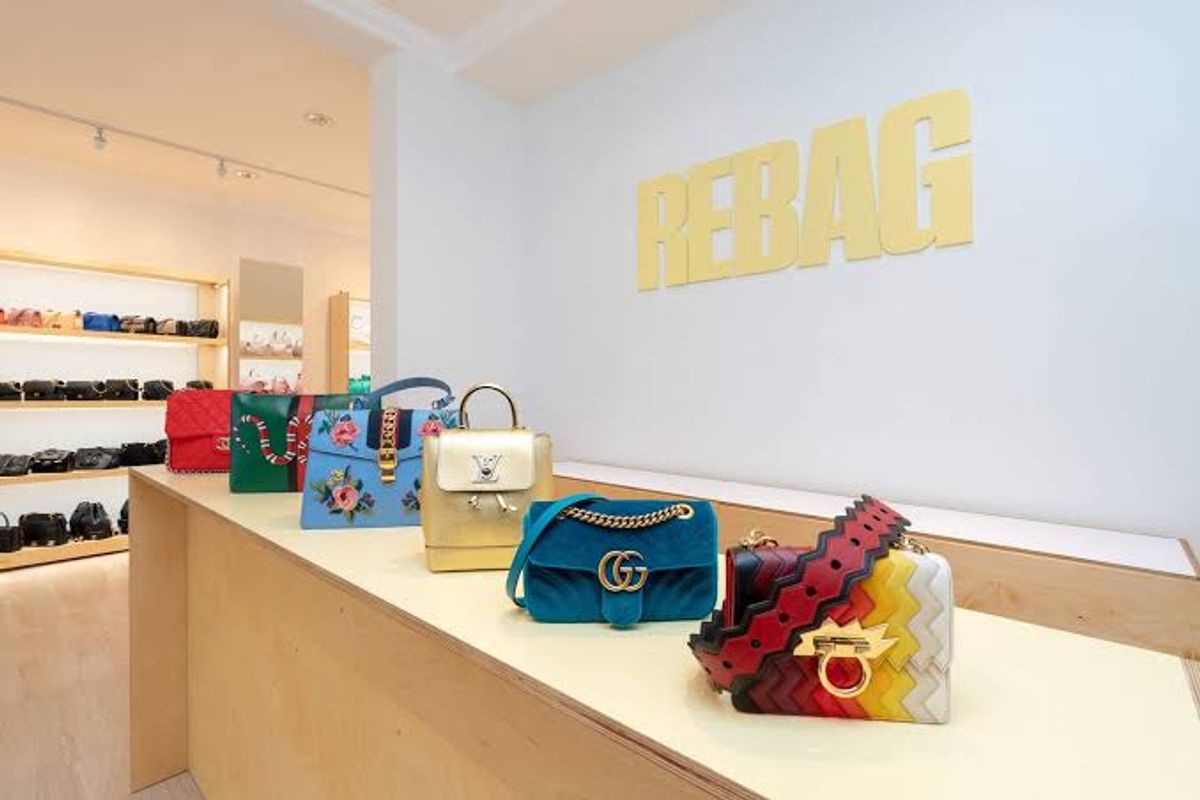
Rebag and The RealReal are two of the most recognized luxury resale sites, yet they operate in very different ways. Choosing between them affects everything from authentication confidence to seller payouts and buyer protections, so understanding those differences before committing to a platform is worth the effort.
Both sites have clear strengths and notable drawbacks depending on whether someone is buying or selling. Shoppers who want a curated alternative can also explore second hand designer options through Pickup Point, where authenticated pre-owned luxury goods are available without the friction that larger platforms sometimes bring.
Table of Contents
What Is Rebag and What Does It Offer?
What Is The RealReal and What Does It Offer?
Are Rebag or The RealReal Prices Better?
Rebag vs The RealReal: 9 Key Differences for Luxury Shoppers
Which Luxury Resale Site Is Better for Different Types of Buyers?
Why PICKUPPOINT Is a Trusted Choice for Authenticated Pre-Owned Luxury
Get your Next Luxury Purchase from PICKUPPOINT
Summary
The counterfeit problem in luxury resale is more significant than most buyers realize. Entrupy's 2026 State of the Fake report found that 8.1% of luxury goods scanned could not be confirmed as authentic, with Goyard posting an 18.92% fake rate and Prada at 13.10%. These numbers explain why authentication infrastructure, not just seller promises, is the meaningful differentiator between platforms.
Return and cancellation rates reveal how much buyers absorb after purchase uncertainty on consignment-heavy platforms. The RealReal reported a 24.2% return and cancellation rate against its 2025 GMV, reflecting the gap between how sellers describe items and what buyers actually receive. That gap costs time and, depending on return terms, sometimes money.
Pricing models on resale platforms follow the ownership structure, not just supply and demand. Rebag prices reflect the company's own inventory risk, since it purchases items outright and builds margin into to protect against market shifts. The RealReal's consignment model produces a wider price spread, with genuine bargains alongside listings where seller expectations don't align with what the market will pay. The 2025 average order value on The RealReal was $594, reflecting that mix across categories.
Where a platform sources its inventory shapes what buyers can reasonably expect at delivery. Open marketplaces that accept submissions from any seller create a verification problem no algorithm fully resolves, because an item's origin is only as reliable as the person who submitted it. Platforms that source from known sellers and apply hands-on inspection before listing close that gap before the listing exists, rather than managing disputes after the parcel arrives.
Consumer trust in resale is built through four dimensions identified in branding research: image, awareness, loyalty, and perceived value. A published literature review in Elementary Education Online found these factors foundational to purchase decisions, which helps explain why condition transparency and sourcing accountability matter beyond authentication alone. Buyers who care about where a piece has been are making a different kind of decision than buyers who are simply comparing sticker prices.
PICKUPPOINT's second hand designer marketplace addresses the sourcing and transparency gap directly by working exclusively with known sellers from luxury retail backgrounds and grading every item through hands-on inspection before it reaches a listing.
What Is Rebag and What Does It Offer?
Rebag is a technology-backed luxury resale marketplace where every item is checked, verified as real, and listed by the platform itself . You are not negotiating with a stranger or relying on seller descriptions . The platform handles handbags , fine jewelry , and watches from more than 50 designer brands across buying , consigning , trading , and selling . This platform-managed model —rather than peer-to-peer —eliminates the worry many shoppers feel with unmanaged resale channels .
"Every item on Rebag is checked, verified as real, and listed by the platform itself — not by individual sellers — covering 50+ designer brands across buying, consigning, trading, and selling."
Feature | Rebag | Peer-to-Peer Resale |
|---|---|---|
Authentication | Platform-verified | Seller-dependent |
Who Lists Items | Rebag itself | Individual strangers |
Negotiation Required | ❌ No | ✅ Yes |
Brands Covered | 50+ designers | Varies |
Services Offered | Buy, Sell, Trade, Consign | Typically buy/sell only |
🎯 Key Point: Rebag operates as a fully managed marketplace — meaning the platform authenticates, lists, and stands behind every single item, removing the guesswork from luxury resale .
💡 Tip: If you've ever felt nervous about buying a designer handbag or luxury watch from an unknown seller, Rebag's platform-controlled model is specifically designed to solve that problem.

The Pricing Tool That Changes the Conversation
Rebag's most important innovation is Clair, the Comprehensive Luxury Appraisal Index for Resale—a pricing tool that uses millions of data points to generate real-time resale values for over 15,000 styles. You photograph a bag in the app, and Clair provides a pre-approved offer that remains fixed as long as the item matches your description upon arrival. Buyers often struggle to determine whether listed prices reflect actual market value or seller aspirations. Clair eliminates this uncertainty for both parties.
How does Rebag structure its three selling options?
Rebag gives sellers three paths: Buyout, Consignment, and Trade. Buyout prioritizes speed, with funds landing in your Rebag Wallet 30 business days after inspection. Consignment targets higher payouts through commission, with rates as low as 8 percent on high-demand pieces and most items between 15 and 25 percent. Trade applies the sale toward a new purchase, with trade credit worth up to 5 percent more than a standard offer.
What do buyers really look for in Rebag vs. The RealReal?
Most shoppers buying used luxury items want assurance: the piece is authentic, the return window is genuine, and the process is transparent. Platforms like Pickup Point build that confidence by sharing their values, connecting buyers with carefully curated pre-owned designer pieces while positioning secondhand buying as more than cost savings. For shoppers who believe how you buy matters as much as what you buy, that approach transforms the entire decision.
What does Rebag's membership and Infinity program actually do?
Rebag's paid membership, Rebag+, costs $50 a month and converts entirely into R+ Credit for purchases. Active members receive up to 5 percent off purchases, free standard domestic shipping, free returns, and early access to new arrivals through VIP Preview. On the selling side, membership adds up to 5 percent to Buyout and Consignment offers. The Infinity program offers flexibility: buy a piece, carry it for up to 12 months, and exchange it for Rebag Credit at a preset floor—70 percent in the first three months, stepping down to 50 percent by month twelve. These programs serve buyers who want to rotate through pieces without absorbing full depreciation.
How does Rebag vs. The RealReal handle authentication and pricing accuracy?
Rebag's 7-day return window and in-house authentication team address the core fear of luxury resale : paying for a Birkin and receiving a fake. Every item passes multilayered evaluation before listing, and if a purchased item is proven inauthentic by a verified authenticator, Rebag honors a full refund. Rebag publishes its comprehensive luxury appraisal index annually, tracking market shifts rather than relying on static assumptions. This matters because resale values for a Chanel Classic Flap can move significantly within a single quarter. But once you understand how Rebag is built, the more interesting question becomes how a completely different platform solved the same problem differently.
Related Reading
What Is The RealReal and What Does It Offer?
The RealReal built its business model around one uncomfortable truth: the pre-owned luxury market has a trust problem that photographs alone cannot solve. Where Rebag engineered its platform around pricing intelligence and seller flexibility , The RealReal engineered its platform around authentication at scale , creating a managed consignment marketplace where every single item is physically examined before reaching a buyer.
"The pre-owned luxury market has a trust problem that photographs cannot solve — and The RealReal was built from the ground up to fix it." — Core Business Premise
💡 What Makes It Unique: Unlike peer-to-peer resale platforms, The RealReal operates as a fully managed consignment marketplace , meaning their team of expert authenticators physically inspects, photographs, and prices every item on your behalf — removing the guesswork for both buyers and sellers.
🔑 Key Takeaway: The RealReal's entire value proposition rests on trust through authentication — a critical differentiator in a market where counterfeit luxury goods are a multi-billion-dollar problem .
Feature | The RealReal | Typical Resale Platform |
|---|---|---|
Authentication | Physical expert inspection | Photo-based or none |
Consignment Model | Fully managed | Seller-managed |
Pricing Control | Platform-set | Seller-set |
Buyer Trust Level | High — verified items | Variable — unverified |

How the authentication system actually works
Fake items plague peer-to-peer luxury resale. Entrupy's 2026 State of the Fake report found that 8.1% of luxury goods scanned could not be identified as real, with Goyard at 18.92% and Prada at 13.10%. The RealReal addresses this through a layered verification system rather than a single checkpoint. TRR Shield flags high-risk brands upon intake. TRR Vision compares microscopic images against millions of earlier XRF machines analyze metal alloys in hardware, jewelry, and watches. More than 100 in-house specialists physically examine every piece, and over 13 years, the platform has kept more than 250,000 inauthentic items off its marketplace.
This institutional record matters to buyers in a way individual seller reputation cannot replicate. When shoppers find a Chanel bag or Rolex and question its authenticity, The RealReal offers not a promise but a documented system with a paper trail.
How does the commission structure work for consignors?
The commission structure is published and tiered: items sold between $0 and $99 return 20% to the consignor, while items above $5,000 return 65%. Handbags, branded fine jewelry, watches, and men's sneakers operate on separate tables, with certain rare items reaching up to 90%. Commission is calculated on the net selling price after any sitewide promotion is applied, not the listed price. A 20% off sale reduces your percentage base. Choosing site credit over direct deposit adds a 5% bonus .
Does scale and sourcing matter when comparing Rebag vs. The RealReal?
The RealReal lists more than 15,000 unique items daily across women's fashion, men's fashion, fine jewelry, watches, art, and home. For shoppers who prioritize sustainability and provenance, platforms like second hand designer make these values transparent, not secondary to authenticity verification. Where you buy increasingly matters as much as what the platform can confirm.
What buyers need to know before checkout
Return windows are firm and category-specific. Buyers have 14 days from the original ship date to file a return request, and must return items within 21 days. Handbags, swimwear, luggage, beauty products, and items marked As Is or discounted 40% or more are final sale. In-store returns incur a $6.95 restocking fee unless you make a purchase during the same visit.
First Look at $12 per month offers 24-hour early access to new arrivals, while First Look Platinum at $49.95 per month adds unlimited free upgrades to 2-day shipping on eligible domestic orders. For frequent buyers, Platinum often pays for itself within two or three orders.
Are Rebag or The RealReal Prices Better?
Rebag prices reflect ownership risk. When a company pays cash for every item it stocks, it builds margin into the listing price to protect itself if the market shifts . Rebag's handbag prices tend to run closer to — and sometimes above — secondary market benchmarks , particularly for Hermès and Chanel styles where the Clair index tracks real-time demand . A buyer paying that price gets a graded item the company has already committed capital to , which changes the reliability of what arrives at the door .
"Rebag's Clair index tracks real-time demand for luxury handbags, meaning prices for Hermès and Chanel styles are benchmarked against live market data — not guesswork."
Factor | Rebag | The RealReal |
|---|---|---|
Pricing Model | Ownership-based margin built in | Consignment-based, seller-influenced |
Price vs. Market | At or above benchmark | Varies by consignor |
Item Grading | Company-graded before listing | Authenticated at intake |
Capital Commitment | Company owns inventory | Seller retains ownership |
Demand Tracking | Clair index (real-time) | Market-driven, less structured |
🎯 Key Point: Rebag's higher price points aren't arbitrary — they reflect the real cost of a company that buys outright and absorbs market risk so the buyer doesn't have to.
💡 Tip: If price consistency and grading reliability matter more to you than finding the lowest possible number, Rebag's ownership model offers a meaningful advantage — especially for high-demand Hermès and Chanel styles .

How does The RealReal's consignment model affect pricing compared to Rebag?
The RealReal's pricing works differently. Consignors set asking prices within a suggested range, and the platform takes its commission when something sells. Because the company does not own the inventory, it has less reason to enforce strict price discipline across the catalog. The result is a wider spread: genuine bargains exist, especially on apparel and accessories where consignors price to move, but so do listings where seller expectations have not caught up with market value. The 2025 average order value of $594 , reported in The The RealReal's February 2026 earnings release on Nasdaq, reflects that mix of high-ticket and entry-level pieces across categories.
Does a lower listing price in Rebag vs. The RealReal tell the whole story?
A lower listing price on a consignment platform does not account for the 24.2% return and cancellation rate The RealReal reported against its 2025 GMV. A piece that ships, disappoints on condition, and returns carries real costs in time and, depending on return shipping terms, sometimes in money. Rebag's owned-inventory model prices that friction returns into listings before they go live, since hit Rebag's balance sheet directly.
Shoppers who buy pre-owned luxury because they believe the choice should reflect something beyond price often find that the lowest sticker is the least useful comparison point. Second hand designer platforms built around conscious consumption tend to price with transparency about condition grading and provenance, because a buyer who cares about where a bag has been differs from one simply hunting for the cheapest Chanel. The real cost of a purchase includes what you learn after it arrives, and that is where pricing models diverge most sharply.
Where does Rebag vs. The RealReal create the best deals by category?
For watches and fine jewelry, The RealReal's scale creates genuine price competition. Thousands of items across brands like Rolex and Cartier let buyers compare multiple listings for the same model and find lower prices, especially for items in the catalog longer. For handbags in the top resale tiers, Rebag's prices are more consistent because Clair sets the lowest price based on five years of sales data across 10,000 styles. Consistency differs from affordability, but for buyers who've experienced misrepresented condition in consignment listings, consistency holds distinct value.
How should you weigh price against return risk when choosing a platform?
The platform that wins on cost depends entirely on what you're buying and how you weigh return risk against a lower price.
Related Reading
Rebag vs The RealReal: 9 Key Differences for Luxury Shoppers
Rebag and The RealReal both offer used designer goods , but they differ in critical ways — from item availability and condition quality to return policies and post-purchase options .
"Knowing the key differences between Rebag and The RealReal can save luxury shoppers both time and money before making a high-stakes purchase." — Luxury Resale Market Insight
Difference | Rebag | The RealReal |
|---|---|---|
Item Availability | Focused on luxury handbags | Broader category selection |
Item Condition | Strict grading system | Variable condition standards |
Return Policy | Defined return window | Limited return options |
Post-Purchase Options | Trade-in & store credit | Standard resale only |
🔑 Takeaway: Both platforms serve the luxury resale market, but your best choice depends on what you're buying, how much condition certainty matters to you, and what flexibility you need after purchase.
💡 Tip: If you're shopping for luxury handbags specifically, compare authentication processes and return windows on both platforms before committing to a purchase.
⚠️ Warning: Never assume both platforms offer the same level of condition transparency — the difference in grading standards can significantly impact the value of your purchase.

1. Rebag Edits the Case. The RealReal Fills the Closet.
Rebag specializes in handbags, accessories, fine jewelry, and watches from 50+ designer brands including Louis Vuitton, Chanel, Hermès, Rolex, and Cartier, with hundreds of new arrivals weekly. The RealReal offers a wider selection across women's and men's fashion, kids, shoes, handbags, fine jewelry, watches, art, and home, featuring top designers including Cartier, Chanel, Dior, Gucci, Hermès, Louis Vuitton, Prada, Rolex, Saint Laurent, Tiffany & Co., Van Cleef & Arpels, and Bvlgari. A buyer seeking a single Kelly or Tank chooses Rebag; one seeking a jacket, bag, and lamp in one cart chooses The RealReal.
2. Rebag Owns Most of What It Sells. The RealReal Lists What Consignors Send.
Rebag buys stock through Buyout, prices it with Clair (which covers 15,000+ styles and returns instant offers or quotes in 3–4 business days), and sells it as Rebag-approved inventory. The RealReal takes goods on consignment, authenticates them, photographs them, sets the price, and pays the consignor after the sale. U.S. consignors can use a prepaid label, store, in-home visit, or van pickup. The key difference: Rebag owns its inventory and bears the risk, while The RealReal acts as a selling agent for consignors' pieces.
3. Rebag Gives Seven Days. The RealReal Blocks Handbags.
Rebag offers a 7-day return window on all purchases. Trusted Partner pieces from vetted outside sellers qualify for returns but are excluded from expedited shipping, international shipping, Trade, and Infinity. The RealReal allows return requests within 14 days of purchase or the original ship date, with items due back within 21 days. Handbags, swimwear, luggage, beauty products, items marked 40% off or more, and As Is items are final sale unless customer service determines the description was inaccurate. In-store returns incur a $6.95 restocking fee unless you make a purchase during that visit.
4. Rebag Pays on a Quote. The RealReal Pays After the Sale.
Rebag sellers can choose Buyout, Consignment, or Trade. Buyout provides a set price with payment 30 business days after inspection. Consignment lists items in 5–10 business days and pays within 15 days of sale. Trade applies the quote to a new purchase with up to 5% bonus in Rebag Credit. The RealReal pays only after items sell via direct deposit, check, or site credit (which adds 5%). Funds left in your Wallet past the cash-out window earn Premium Payouts: 1% monthly for up to 9 months.
5. The Commission Math Does Not Match.
Rebag's consignment fee starts at 8% on high-value pieces, with most items at 15–25%. The RealReal's earnings scale varies by category: clothing, shoes, and accessories pay consignors 20% on $99 sales, 30% on $149, 45% on $199, 55% on $299, 60% on $749, 65% on $4,999, and 70% above $5,000. A $300 dress returns $180. Handbags, branded jewelry, watches, and men's sneakers use separate tables, with rare finds paying up to 90% on certain luxury items. Loyalty bonuses add 1% at $4,999 in net sales, 2% at $9,999, and 5% above $10,000 on items of $200 and up. Both sites calculate commission on the discounted price, not the original tag.
6. Both Inspect In-House. The Tools and the Refund Rule Differ.
Rebag runs every item through an in-house, multi-layered review before listing. If a verified authenticator later proves a purchased item is fake, Rebag refunds the full price upon return. Certificates come from Rebag, not the brand. The RealReal processes over one million items monthly through its authentication centers, staffed by 100-plus specialists with hundreds of hours of brand training. Its lab uses TRR Shield to flag high-risk styles at intake, TRR Vision to compare microscopic photos with earlier images, and XRF machines to read metal alloys in jewellery, watches, and hardware. The company's 13-year database covers more than 37 million authentic items and more than 250,000 fakes kept off the site.
7. Rebag+ Turns the Fee Into Credit. First Look Buys a Head Start.
Rebag+ costs $50 a month and converts 100% into R+ Credit for purchases. Members receive up to 5% off (capped at $300 per item), free standard U.S. shipping, free returns, early access to new arrivals, and earlier sale notices. Sellers earn up to 5% on Buyout and Consignment offers (also capped at $300 per item), though this doesn't apply to Trade or Infinity. The RealReal's First Look costs $12 a month and provides 24-hour early access to 10,000+ daily new arrivals and member sales. First Look Platinum ($49.95/month) adds unlimited free upgrades from ground to 2-day shipping, excluding art and international orders. VIP consignors with $10,000+ in net sales receive complimentary First Look ($144 value).
8. Rebag Locks in an Exit Price. The RealReal Does Not.
Rebag Infinity sets the credit before you wear the bag. Buy on the site, in the app, or in a store, keep the item in the same condition, and exchange it within 12 months for 70% of the purchase price (first 3 months), 60% (3–6 months), or 50% (6–12 months) in Rebag Credit. If the current credit offer is higher, Rebag uses the higher amount. If you miss the window, Infinity ends, and you receive a standard resale offer. The RealReal has no matching exchange floor: bags are final sale, so the only recourse is later consignment at whatever the market pays after commission.
9. Stores, Shipping, and Who Is Allowed to Sell.
Rebag sells online, in the app, and in boutiques in California, Florida, Nevada, and New York, plus select Bloomingdale's locations. You can drop off sales in-store or ship with a prepaid label. The RealReal ships U.S. orders in 3–5 business days for $15.95 or 2-day express for $39.95 ($5 extra for Hawaii and Alaska). International shipping reaches 60+ countries: $45 to Canada, Mexico, and Puerto Rico; $75 to Australia and New Zealand. Consignment is accepted only from within the United States. Retail counters operate in Chicago, Dallas, Greenwich, Houston, Los Angeles, Manhasset, and Marin, with a Glendale, California store opening 1 October 2026.
Which Luxury Resale Site Is Better for Different Types of Buyers?
Neither Rebag nor The RealReal is the best choice for everyone. The better option depends on exactly what you're buying, how much money you want to spend, and your post-purchase flexibility needs.
"The right luxury resale platform isn't universal — it's personal, shaped by what you're buying, your budget priorities, and how much flexibility you need after the sale." — Key Insight
🎯 Key Point: Your ideal platform comes down to three critical factors — product type, budget, and return flexibility. No one-size-fits-all answer exists in luxury resale.
💡 Tip: Before committing to either Rebag or The RealReal, map out your must-haves — whether that's a wider category selection, stricter authentication, or flexible post-purchase policies — so you choose the platform that actually fits your needs.
Factor | Choose Rebag | Choose The RealReal |
|---|---|---|
Product Focus | Handbags & accessories only | Broad luxury categories |
Budget Clarity | Transparent pricing upfront | Variable, negotiated pricing |
Post-Purchase Flexibility | Check return policies | Check return policies |
Authentication Confidence | Highly specialized | Broad but thorough |

The Buyer Who Wants One Bag and a Way Back
Rebag offers handbags, accessories, watches, and fine jewelry from Louis Vuitton, Chanel, Hermès, Rolex, and Cartier. The curated catalog adds hundreds of new items weekly and includes a 7-day return policy. Infinity provides an exit plan: reselling the same item in the same condition yields 70% of the purchase price in Rebag Credit within 3 months, 60% from 3 to 6 months, and 50% from 6 to 12 months. This buyer seeks a bag they may trade in later, not dresses.
The Buyer Building a Whole Closet
The RealReal helps buyers assemble complete outfits across women's and men's fashion, kids, handbags, watches, art, and home. Its fiscal 2025 filing names Cartier, Chanel, Dior, Gucci, Hermès, Louis Vuitton, Prada, Rolex, Saint Laurent, Tiffany & Co., Van Cleef & Arpels, and Bvlgari among top-selling designers. First Look ($12/month) grants early access to new items 24 hours before general release, while Platinum ($49.95/month) adds free 2-day shipping on eligible orders. The tradeoff: handbags, swimwear, luggage, beauty, items at 40% off or more, and As Is pieces cannot be returned unless the description was incorrect.
The Buyer Who Sells and Shops in the Same Trip
Rebag Trade quotes your bag and applies credit toward a purchase—worth up to 5% more than standard offers. Buyout pays a set price into your Wallet 30 business days after inspection. Consignment pays within 15 business days after sale, with fees as low as 8% (typically 15–25%). The RealReal pays after sale via direct deposit, check, or site credit (site adds credit 5%). Payout rates vary by category: clothing pays 20% under $100 and 70% above $5,000; handbags, branded jewelry, and watches have separate tables, with certain rare finds reaching 90%. Choose Rebag for a guaranteed price before shipping. Choose The RealReal if you'll wait for a higher sale price.
The Buyer Who Will Not Guess on a Fake
Both sites inspect before listing. Rebag offers full refunds for items later proved fake by a verified authenticator. The RealReal processes over one million items monthly through authentication centers with 100-plus specialists, using TRR Shield, TRR Vision, and XRF metal testing; it has kept more than 250,000 inauthentic items off the market. Pickup Point authenticates every bag before listing and withholds pieces when authenticity is uncertain, sourcing stock from a closed group of fashion-industry contacts.
The Buyer Outside a US Consignment Lane
The RealReal accepts consignments from the US only and ships to more than 60 countries ($45 to Canada, Mexico, and Puerto Rico; $75 to Australia and New Zealand). Shipping within the US costs $15.95 and takes 3–5 business days. Rebag operates online and has locations in California, Florida, Nevada, and New York, plus select Bloomingdale's stores. Pickup Point accepts MOP, USD, and HKD, and ships worldwide, making it ideal for buyers in Macau, Hong Kong, or similar areas seeking Celine, Loewe, Gucci, or Chanel without US shipping costs. First-time customers receive 10% off with code PUPFIRST.
Why PICKUPPOINT Is a Trusted Choice for Authenticated Pre-Owned Luxury
What most comparison guides skip entirely is whether the platform stands behind what it believes — not what it sells. This critical difference separates a mere transaction from a lasting relationship built on trust, accountability, and genuine expertise in authenticated pre-owned luxury.

🎯 Key Point: PICKUPPOINT doesn't just list luxury items — it commits to every piece it sells, backing each product with rigorous authentication standards and transparent buyer protection that go far beyond the industry norm.
"The real measure of a trusted resale platform isn't the inventory it holds — it's the accountability it owns when a buyer puts their confidence on the line." — PICKUPPOINT Brand Philosophy

💡 Tip: When evaluating any pre-owned luxury platform , always ask: does this marketplace stand behind its authentication process after the sale? With PICKUPPOINT , the answer is an unequivocal yes — because trust isn't a feature , it's the foundation .
What Most Platforms Offer | What Pickuppoint Delivers |
|---|---|
Transaction-focused listings | Relationship-driven service |
Basic item descriptions | Rigorous authentication standards |
Limited post-sale support | Full buyer accountability |
Generic resale experience | Genuine luxury expertise |

What makes origin matter more than price
The main problem with most luxury resale is the gap between when someone submits an item and when it gets delivered. Open marketplaces let anyone with a camera and a description submit items, creating a verification problem that no computer program can fully solve. Pickup Point closes that gap before items are listed. Co-founders Kathryn and Rainbow worked in luxury retail before starting the company. They source items exclusively from sellers they have known for years in the fashion industry, including people clearing their closets for environmental and charitable reasons. If an item's provenance is unclear, it does not move forward.
How does a sourcing model work as a values filter?
The sourcing model serves as a values filter. According to a comprehensive literature review on branding and consumer purchase decisions published in Elementary Education Online, four factors shape buyer response: image, awareness, loyalty, and personality. Pickup Point's sourcing story addresses all four. Buyers participate in a chain of custody that begins with a known seller, includes hands-on inspection, and arrives with a condition grade reflecting what the team observed, not what a consignor claimed.
Why a no-return policy is actually a sign of confidence
Most shoppers see a strict return policy as a warning sign. With Pickup Point, it works the opposite way. A policy that limits returns to shipping errors works when inspection is rigorous enough to prevent surprises after checkout. Condition grades covering Great, Excellent, and New across bags, clothing, shoes, and accessories from Chanel, Hermès, Louis Vuitton, Celine, and Loewe are printed on listings because the team has physically handled every piece. Studio visits are available before purchase, and the team answers questions before you place an order.
How does pre-purchase transparency set Rebag vs. The RealReal apart from consignment platforms?
The common approach on broader resale platforms is to list first and resolve disputes after, pushing risk onto the buyer and driving return rates up to 24.2% on consignment-heavy sites. Elementary Education Online's branding research found that brand trust and perceived value underpin purchase decisions. Pickup Point builds both by resolving uncertainty before checkout, not after arrival.
Shoppers who believe how and where they buy matters as much as what they buy will find that second hand designer platforms structured around known sellers, hands-on authentication, and pre-purchase access represent a fundamentally different category from high-volume consignment sites. Each piece carries a history before it reaches you. Pickup Point treats that history as part of the product, not a footnote.
What makes the logistics experience practical for international buyers?
We ship worldwide in MOP, USD, and HKD. New customers receive a 10% discount with code PUPFIRST, and we dispatch orders within seven days. However, shipping convenience is secondary to trust, which begins before we pack your order. Trust is the difference between confidence in your purchase and uncertainty.
Related Reading
Get your Next Luxury Purchase from PICKUPPOINT
When comparing luxury resale platforms, the decision comes down to authentication, condition transparency, and whether the seller values items beyond just inventory. Not all platforms are created equal — the best ones treat every piece as curated, not merely cataloged.
"The decision comes down to authentication, condition transparency, and whether the seller values items beyond just inventory." — Key Buying Criteria, Luxury Resale
🎯 Key Point: The three pillars of a trustworthy luxury resale platform are authentication, condition clarity, and genuine item care — settle for nothing less.
⚠️ Warning: Platforms that treat luxury goods as pure inventory often skip rigorous authentication steps — putting your investment at risk.
Platform Factor | What to Look For | Why It Matters |
|---|---|---|
Authentication | Expert verification before listing | Protects against counterfeits |
Condition Transparency | Clear, detailed condition descriptions | No surprise disappointments |
Item Value Philosophy | Curated, not just cataloged | Ensures quality over quantity |
Buyer Access | In-person inspection options | Full confidence before purchase |

Second hand designer at Pickup Point picks out and authenticates all pieces before listing , states condition details clearly , and lets Macau shoppers visit the PUP Studio to examine and try selected items before purchase . For international buyers , worldwide shipping in MOP , USD , and HKD , plus a 10% first-order discount with code PUPFIRST , makes buying effortless. Buying pre-owned luxury this way is smarter and more intentional : keeping quality pieces in circulation rather than in a landfill.
💡 Tip: Use code PUPFIRST at checkout to unlock your 10% first-order discount — the smartest way to start your pre-owned luxury journey.
🔑 Takeaway: Choosing Pickup Point means choosing authenticated quality , full condition transparency , and a sustainable approach to luxury — available in MOP , USD , and HKD with global shipping included.