


What is the Best Way to Buy a Second-hand Watch Online?
What is the Best Way to Buy a Second-hand Watch online? Pick Up Point reveals the steps to avoid scams and find real value.
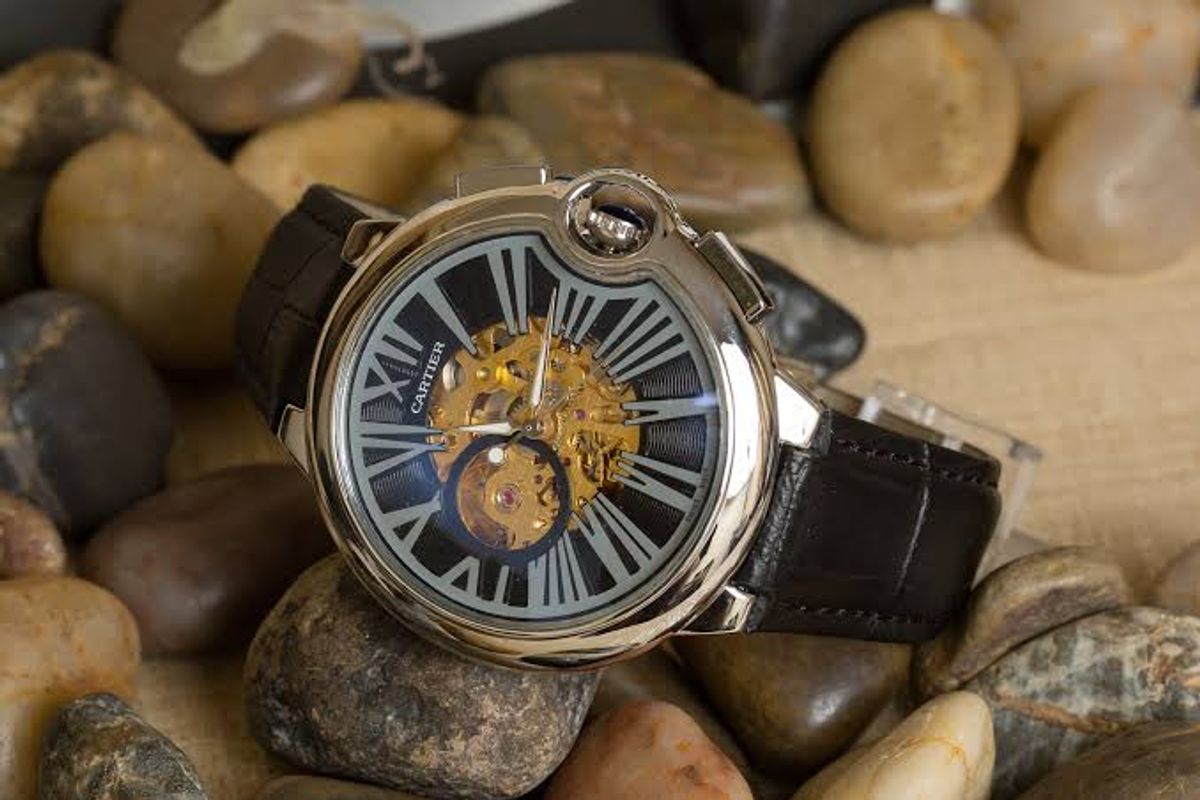
Buying a pre-owned luxury watch sounds simple until a listing looks perfect but feels slightly off. Prices vary wildly, authentication is rarely straightforward, and choosing the best luxury resale sites to trust can feel like guesswork. A clear, practical approach makes the difference between a confident purchase and a costly mistake.
Pick Up Point is a curated marketplace designed to remove the uncertainty from this process. Every timepiece is sourced from trusted sellers, so buyers spend less time worrying about counterfeits and more time finding a watch worth wearing. For anyone ready to explore verified pre-owned pieces, second hand designer is a reliable place to start.
Table of Contents
What Makes Buying a Second-Hand Watch Worth It?
Is It Safe to Buy a Second-Hand Watch Online?
What Should You Check Before Buying a Second-Hand Watch Online?
How to Buy a Second-Hand Watch Online With Confidence
How to Evaluate a Seller Before Buying a Second-Hand Watch
Why PICKUPPOINT Stands Out for Authenticated Second-Hand Designer Watches
Get your Next Luxury Purchase from PICKUPPOINT
Summary
Pre-owned luxury watches often represent better value than new purchases because the steepest depreciation has already occurred. Data from the WatchCharts Overall Market Index, cited in Knight Frank's 2026 Wealth Report, showed the Patek Philippe Market Index up 12.1 percent over the prior year, with gains concentrated in pieces that had already left retail. Buyers who enter after the first sale often step into assets that have found a stable floor or are quietly appreciating.
The scale of counterfeit risk in the luxury watch market is larger than most buyers realize. U.S. Customs and Border Protection recorded a lost retail value of $1.44 billion in counterfeit watches seized in fiscal year 2024, and the International Chamber of Commerce estimates that 40 million counterfeit watches are sold each year globally. Those figures reflect only what was caught or reported, meaning the actual exposure for buyers transacting without authentication is considerably higher.
Stolen watch registrations create a legal risk that buyers rarely anticipate. The Watch Register logged 10,000 luxury watches as lost or stolen in 2025, bringing its total database to 114,000 pieces valued at £1.7 billion, with Rolex accounting for 51 percent of those registrations. A buyer who unknowingly purchases a stolen piece holds no legal claim to it, regardless of what they paid.
Consumer interest in pre-owned luxury has grown substantially over the past several years, and the shift appears to reflect changing values rather than purely economic calculation. Deloitte's 2024 Swiss Watch Industry Insights, drawn from surveys of more than 6,000 consumers across major markets, found that global interest in buying pre-owned doubled between 2020 and 2024. Buyers are increasingly framing second-hand purchases as a more considered way to engage with luxury, since the piece already exists and no new production is required.
Fraud in private watch marketplaces tends to follow a consistent pattern. A California jeweler was charged in May 2026 after collecting nearly $1.5 million from 22 buyers who wired funds for Rolex watches that never existed. Payment methods that offer no dispute mechanism, such as wire transfers and cryptocurrency, are a consistent feature of these schemes and function as a reliable warning sign before any transaction is completed.
Platform-level authentication before listing is the most reliable way to reduce buyer risk, since it moves verification away from the individual buyer and into a structured process that happens before money changes hands. PICKUPPOINT's second hand designer marketplace addresses this by authenticating every piece before publication, so condition grades and serial verification are standard steps rather than left to the buyer to pursue independently.
What Makes Buying a Second-Hand Watch Worth It?
Buying a second-hand watch is worth it because the first owner already took the biggest price drop — meaning you inherit instant value without absorbing the steepest part of the depreciation curve. The model you want may no longer be available in any store, making the pre-owned market your only realistic path to ownership. And perhaps most importantly, the open market has already confirmed what the piece is really worth — giving you transparent, real-world pricing that no retail tag can match.
💡 Tip: Always check recent sold listings on the secondary market before buying — this reveals the true market value of a watch, not just what sellers hope to get.
"The first owner absorbs the steepest depreciation — second-hand buyers step in after the hardest financial hit has already been taken." — Pre-Owned Watch Market Insight
⚠️ Warning: Just because a watch is second-hand doesn't mean it's a bargain by default. Condition, provenance, and service history are critical factors that directly impact whether you're getting genuine value or an expensive mistake.
Reason to Buy Second-Hand | Why It Matters |
|---|---|
First owner took the price drop | You avoid the steepest depreciation hit |
Discontinued models available | Access watches impossible to find in retail |
Market-confirmed pricing | Real-world value, not inflated retail markups |
🔑 Takeaway: The pre-owned watch market isn't a compromise — it's often the smarter, more strategic way to acquire the exact piece you want at its true, proven value.

The price you pay reflects reality, not retail ambition
When a new luxury watch leaves the store counter, its markup reflects the brand's position, store location, and prestige pricing—not what buyers actually pay each other. Data from the WatchCharts Overall Market Index, cited in Knight Frank's 2026 Wealth Report, showed the Patek Philippe Market Index up 12.1 percent over the prior year, with gains concentrated in pieces that left retail years earlier. The real value conversation happens after the first sale. You step in once the price has found its lowest point, and often into something quietly appreciating from there.
The second-hand market is where discontinued references live
Brands discontinue certain models without announcement. Watch faces change, sizes shift, and case styles that collectors spent years hunting quietly vanish from production. The used market becomes the only source for these watches. When you buy a discontinued model through a trusted used channel, you acquire something the market has chosen to preserve. Most buyers start by searching private listings across multiple platforms, comparing unclear photos, and checking authenticity without expertise. A second hand designer marketplace built around verification removes that difficulty, connecting you with authenticated watches rather than requiring you to become an expert first.
Buying pre-owned is also a choice about what you value
Choosing a pre-loved watch means you're not adding demand for new production. The movement, materials, and assembly already exist. Wearing it again shows care for the people and planet connected to production. Deloitte's 2024 Swiss Watch Industry Insights found that global interest in buying pre-owned doubled between 2020 and 2024. Buyers are changing how they think about ownership.
Does buying pre-owned give you better value for the same budget?
The same budget that buys a mid-tier new watch often buys a higher-tier pre-owned one. You get the same movement quality, case finishing, and brand heritage without the waitlist, markup, or immediate depreciation that follows most new purchases.
What is the best way to buy a second-hand watch when trust is the real challenge?
But knowing a watch is worth buying pre-owned is only half the question. The harder part is deciding whether you can trust the transaction itself.
Is It Safe to Buy a Second-Hand Watch Online?
Buying a second-hand watch online is absolutely safe when you think carefully about the purchase. The risk isn't that the watch is used—it's the gap between what a seller claims and what you can verify for yourself.
"The greatest risk in the pre-owned watch market isn't condition — it's the gap between a seller's description and a buyer's ability to independently verify it." — Pre-Owned Watch Market Insight
💡 Tip: Before committing to any purchase, always cross-check the seller's claims against third-party sources — including serial number databases, authentication services, and verified buyer reviews.
⚠️ Warning: Never skip due diligence simply because a price looks attractive. A suspiciously low price is often the clearest red flag that something is wrong with the listing.
Risk Factor | What to Check |
|---|---|
Seller credibility | Reviews, ratings, and platform history |
Watch authenticity | Serial numbers and authentication certificates |
Condition accuracy | High-resolution photos and independent appraisals |
Return policy | Buyer protection and refund guarantees |
How serious is the counterfeit and theft risk when buying a second-hand watch?
That gap has a measurable cost. U.S. Customs and Border Protection recorded a lost retail value of $1.44 billion in counterfeit watches seized in fiscal year 2024, with Rolex Submariner and Daytona models leading the list. Those numbers reflect only what officers stopped; pieces that reached buyers without inspection left no official record. A convincing fake arrives in proper packaging with a believable story and passes casual inspection every time.
What happens if you unknowingly buy a stolen watch?
Stolen watches create a different problem. The Watch Register logged 10,000 luxury watches as lost or stolen in 2025, bringing its total database to 114,000 pieces valued at £1.7 billion, with Rolex accounting for 51 percent of those registrations. If a serial number on a watch you purchased matches that database, the original owner holds the legal claim. You lose both the watch and your money, with no recourse against a disappeared seller.
What makes a transaction trustworthy?
Most fraud follows the same pattern: payment requested outside the platform, stock photos instead of real images, no return policy, and fake urgency. A California jeweler collected nearly $1.5 million from 22 buyers who sent money for Rolex watches that never existed, a scheme the Attorney General's office charged in May 2026. Wire transfers and cryptocurrency are one-way doors, not reversible payment methods.
What is the best way to buy a second-hand watch safely online?
Safe online purchases have four clear signs: the seller has the physical item, an independent party verifies it before payment, the serial number can be checked against a theft list, and the payment method allows disputes. Many shoppers apply this approach to used luxury fashion, choosing platforms that verify items before listing and stand behind their sales. A second-hand designer marketplace built on honesty eliminates the confusion of private listings, since verification happens before the item reaches you, not after.
The Parcel Problem Nobody Mentions
Size matters. The OECD's 2025 mapping of global trade in fakes placed counterfeit goods at $467 billion in 2021, or 2.3 percent of world trade. A companion OECD study found that 97 percent of seized fake watches arrived in parcels of fewer than ten items—a shipping method built for online checkout rather than boutique counters. Choosing a platform that physically inspects and certifies each piece before dispatch is the only reliable way to break that chain.
What is the best way to buy a second-hand watch when risks are this specific?
Knowing the risks and understanding how to avoid them are different things. Real protection lives in the specific details you check before payment.
Related Reading
What Should You Check Before Buying a Second-Hand Watch Online?
Five checks separate a smart used watch purchase from an expensive lesson: confirm the serial number against documentation in person or on unedited video, inspect the case and bracelet for polish damage and stretch, verify the full service history rather than accepting "runs fine" assurances, test every movement function, and transact through a platform that physically inspects the piece before shipping.
"A single overlooked detail — a mismatched serial number, a stretched bracelet, or an undisclosed service gap — can turn a pre-owned watch deal into a costly mistake that's difficult to reverse." — Pre-Owned Watch Buying Best Practices
Check | What to Look For | Red Flag |
|---|---|---|
Serial Number | Matches all documentation | Scratched, altered, or missing |
Case & Bracelet | Original finish, no over-polishing | Heavy buffing, stretched links |
Service History | Full records with dates | Vague "runs fine" claims |
Movement Functions | All complications working | Sluggish winding, erratic timekeeping |
Platform Verification | Physical inspection before shipping | No authentication process |
💡 Tip: Always request an unedited, uncut video of the watch — especially the serial number engraving — before committing to any purchase.
⚠️ Warning: Never accept "runs fine" as a substitute for documented service history. A watch that appears to run well may be months away from a costly movement failure.
Does the serial number actually match?
The engraved serial number on the watch case or case back serves as the watch's ID. Read it yourself on a continuous video without stops or jumps, then verify it against the warranty card, service receipts, and the brand's records if accessible. A card with the correct number next to the wrong watch proves nothing. According to the International Chamber of Commerce and OECD, approximately 40 million counterfeit watches are sold each year globally, indicating a well-funded supply chain producing convincing fakes. The serial number is your first checkpoint and must pass inspection before proceeding.
What does the case shape tell you?
Side-on photos of the lugs reveal more than a front-facing glamour shot. Over-polishing softens the crisp edges that define a watch's original geometry, and once those lines are gone, they cannot be restored without a full case refinishing that costs significant money. A hanging bracelet shot shows stretch as visible gaps between links, signaling heavy daily wear and an immediate need to replace the links. These details directly affect resale value and service center quotes.
Why service history matters more than a running movement
A watch that keeps time today is not mechanically sound. Lubricants break down, gaskets harden, and a movement running on dry oil will need a full overhaul sooner than the price reflects. Ask for the date of the last full service, the watchmaker or authorized center that performed it, and whether they replaced the seals. If that information doesn't exist or the seller deflects with "it keeps perfect time," deduct the cost of a complete service from the asking price.
What is the best way to buy a second-hand watch without verifying every seller yourself?
Most buyers chase sellers for video and judge condition from compressed JPEGs. A second hand designer marketplace that physically inspects each piece before listing removes that burden entirely. Our inspection process happens before listing, so buyers focus on choosing the right watch rather than verifying the seller's honesty.
Can you test every function before committing?
The Federation of the Swiss Watch Industry reports that tens of millions of fake Swiss watches are sold annually. In October 2025, the federation seized 7,500 fakes in Köniz, Switzerland (1.5 tonnes of metal), with approximately 75 percent arriving via mail packages through online listings. A serial number invisible on the metal is not authentic. Ask the seller to demonstrate the crown in every position, the date change at midnight, hacking seconds if applicable, and every button on a chronograph. Request a timegrapher printout for any expensive watch. A large daily rate deviation signals a repair bill you will incur.
Why is running all five checks harder than it sounds?
Running all five checks in a single sitting without pressure or seller urgency is harder than it sounds. That gap between knowing what to check and being able to check it is where most costly mistakes live.
Related Reading
How to Buy a Second-Hand Watch Online With Confidence
Buy second-hand watches online safely by checking the seller's reputation, watch condition, paperwork, payment method, and return terms before you buy. Confidence comes from evidence, not convincing listings.
"The pre-purchase checklist is your single greatest defence against fraud in the pre-owned watch market — every step skipped is a risk multiplied." — Pre-Owned Watch Buyer's Guide
What to Check | Why It Matters | Red Flag to Watch For |
|---|---|---|
Seller Reputation | Establishes trust and track record | No reviews, new account, or vague history |
Watch Condition | Confirms authenticity and wear level | Blurry photos, refused close-ups |
Paperwork & Provenance | Validates ownership and origin | Missing box, papers, or serial numbers |
Payment Method | Protects your money if things go wrong | Wire transfer or crypto only requests |
Return Terms | Gives you an exit if the watch misrepresents | No returns, "all sales final" policies |
💡 Tip: Always request additional photos — including the caseback, crown, and serial number — before committing to any purchase. A legitimate seller will never hesitate to provide them.
⚠️ Warning: If a listing feels too good to be true — a luxury timepiece at 50%+ below market value with no paperwork — treat it as a scam until proven otherwise. The pre-owned market rewards the patient and prepared buyer.
Choose a Seller Who Inspects Before You Pay
Private ads sell photos. A serious channel sells a watch that has passed human inspection. Dealer vaults, brand-certified pre-owned programs, and marketplaces with escrow place the object in a workshop or holding account before payment transfers. This structure eliminates fake listings and bait-and-switch boxes. If the seller won't disclose who inspected the watch, walk away.
Match the Serial on the Watch to Every Paper
The engraved number between the lugs or on the case back is like a fingerprint: it must match the warranty card, service invoice, and any paperwork the seller mentions. Ask for a live video that starts with the seller, then moves to the engraving in one continuous shot. Stolen and counterfeit watches can come with authentic-looking cards. The Federation of the Swiss Watch Industry reports that tens of millions of fake Swiss watches are sold annually, so a card alone isn't proof.
Read Condition From the Edges, Not the Hero Shot
Front-facing photos hide polish and stretch. Ask for side shots of the lugs, a hanging bracelet, and an angled view of the crystal and dial. Rounded lug tips indicate metal loss. Gaps in a hanging bracelet signal worn links. Spots or fog on the dial indicate moisture. These details affect how you can wear the watch and its resale value. A listing that refuses extra angles is hiding the watch.
Treat Service History as Part of the Price
A watch that ticks is not a serviced watch. Oils dry and gaskets fail. Rolex states that parts and labor stay available for at least 35 years after a model leaves the catalog, and an official World Service overhaul carries a two-year international guarantee on parts and labor. Ask for the last full service date, the workshop name, and whether seals were replaced. If the answer is unclear, subtract a full overhaul from the asking price before agreeing.
Keep Payment on a Rail You Can Reverse
Wires, crypto, and "pay me off the app" enable fake Rolex schemes and fake-token deals. Use a credit card, platform checkout, or escrow that releases money only after delivery. Chrono24's Trusted Checkout provides that hold-and-release protection. A dealer invoice with a stated return window offers equivalent safeguards. If the only option is an irreversible transfer, the deal is unsafe.
Buy From Platforms That Authenticate What They List
You feel more confident when the store, not a stranger in the chat, owns the listing. Pick Up Point is a verified pre-owned luxury site for designer bags, fashion, accessories, and watches, with authenticity screening before items go live, graded condition on each piece, and worldwide shipping. On watch-first dealers, our platform inspects, grades, and ships, so you avoid authenticating listings from new accounts.
Confirm Functions Before the Return Clock Runs Out
When you receive the watch, check the crown in every position, the date change, hacking seconds if applicable, and every chronograph pusher. Rolex's Superlative Chronometer standard is −2 to +2 seconds per day; large daily drift indicates the movement needs service. Photograph the serial number and condition on day one, and use the written return window if the watch doesn't match the listing.
Walk Away From the Classic Traps
A price significantly below market value, a seller who refuses to video the serial number, missing or mismatched papers without explanation, and pressure to decide within an hour are recurring red flags. Box and papers help, but forged papers exist. Completeness matters only after the metal, movement, and payment rail check out. Buy the watch the way a dealer does: inspect, document, pay under protection, then verify on the wrist. This order transforms an online listing into a watch you keep.
How to Evaluate a Seller Before Buying a Second-hand Watch
The seller is just as important as the watch itself. Before buying a used watch online, look at the seller as carefully as you look at the timepiece.
"In the secondhand watch market, who you buy from can matter more than what you buy — a trusted seller is your first line of defence against fraud, fakes, and costly mistakes." — Watch Industry Insight
Seller Signal | What to Check | Red Flag |
|---|---|---|
Reputation & Reviews | Verified buyer feedback, ratings history | Few or no reviews, sudden influx of positives |
Transaction History | Volume of completed sales | New account with zero track record |
Communication Quality | Response speed, detail, transparency | Vague answers, reluctance to share extra photos |
Return & Refund Policy | Clear, written terms | No returns accepted, no guarantees offered |
💡 Tip: Always research the seller's profile before engaging — check how long they've been active, how many successful transactions they've completed, and whether their feedback is consistent over time.
⚠️ Warning: Never skip seller due diligence just because a deal looks attractive. A suspiciously low price is often the clearest sign something is wrong— either with the watch's authenticity or the seller's intentions.
Start With Who Holds the Watch
A dealer with a vault, a certified pre-owned counter, and a marketplace that takes physical possession all stand between you and a stranger with a stolen photo set. A private seller can be honest, but has no shop to lose and no inventory desk that already opened the case. Ask where the watch is tonight. If the answer is "I'll ship from a friend" or "it's with my cousin," you are not evaluating a seller—you are evaluating a story.
Read the Record, Not the Compliment
Look for a trail you can verify independently: years in business, a physical address, independent reviews with specific references, and completed sales of the same brand. A new account offering a steel sports Rolex at a sharp discount signals phantom listings and bait-and-switch boxes. The California Attorney General's 2026 case against a jeweler who took nearly $1.5 million from 22 buyers for Rolex watches that never arrived illustrates this risk: buyers transferred money in trust, and the watches never arrived.
Watch How They Answer Simple Asks
A reliable seller sends extra close-up shots, a photo of the hanging bracelet, and a continuous video of the serial number without narration. A problematic seller delays, reuses stock images, or moves the chat off-platform. Ask one clear question about when the item was serviced and another about whether any parts were replaced. Vague answers, copied text, and sudden pressure ("another buyer is waiting") signal a rushed purchase. You are testing the process, not the seller's charm.
Demand a Payment Path You Can Reverse
Sellers who insist on wire transfer, crypto, gift cards, or "friends and family" payment eliminate your only protection. Use a credit card, dealer invoice, or marketplace escrow that releases funds after delivery. A legitimate dealer accepts protected checkout. A seller who refuses signals they won't cover losses if the package is empty or the item is wrong.
Confirm Returns, Warranty, and Who Pays If It Fails
Ask for the return window in writing, who pays return shipping, and whether authenticity is guaranteed after arrival. Brand certified pre-owned programs and established dealers provide written warranties. Rolex World Service issues a two-year international guarantee on parts and labor after an official overhaul, which proves useful when a seller claims "recently serviced" without an invoice. No written return policy is a red flag.
Check the Serial Against More Than the Card
Ask the seller to run the engraved serial number through a stolen-watch check before you pay. The Watch Register lets buyers and dealers check whether a luxury watch was reported lost or stolen. A seller who refuses to share the serial number until after payment is protecting the listing, not you. Papers can be copied; the engraving on the case must match the card and database.
How do you separate a fair price from a trap?
Compare the asking price with current sales of the same reference, year, and completeness. Don't compare it with retail prices or unusual listings. A price much lower than the market is the biggest warning sign in every scam guide: real sports watches don't need steep discounts to sell. A seller who cannot explain a significant discount in one clear sentence (missing papers, heavy polish, pending service) is offering risk, not a good deal.
What is the best way to buy a second-hand watch by evaluating the seller?
Evaluate the seller as you would the watch: identity, record, process, payment, and exit. When those five elements align, the listing warrants closer examination. When one fails, the seller is the problem.
Why PICKUPPOINT Stands Out for Authenticated Second-Hand Designer Watches
Knowing what to check is one thing. Having a place that already checked it for you is another — and that distinction is everything when it comes to buying authenticated second-hand designer watches with confidence.
"The difference between knowing what to verify and having it verified for you is the difference between risk and peace of mind." — PICKUPPOINT Authentication Standard
🎯 Key Point: PICKUPPOINT removes the guesswork by handling the rigorous authentication process before the watch ever reaches your hands — so you shop with certainty, not anxiety.
What Buyers Face Alone | What PICKUPPOINT Provides |
|---|---|
Manual authentication checks | Pre-verified, expert-authenticated watches |
Risk of counterfeit purchases | Guaranteed authenticity on every piece |
Hours of independent research | Streamlined, trusted buying experience |
Uncertainty at every step | Full confidence from browse to purchase |
💡 Tip: When shopping for second-hand luxury watches, always prioritize platforms that offer built-in authentication — it's the single most important factor in protecting your investment.
What is the best way to buy a second-hand watch without the usual uncertainty?
The familiar approach is to check multiple marketplaces, build a checklist, message the seller for extra photos, cross-reference serial numbers by hand, and then feel unsure when it comes time to pay. As value increases, so does the cost of a missed detail. Most buyers lack authentication training and proper lighting and tools.
The failure point is usually trust: the absence of any party that stands behind the listing before money changes hands. A seller review score does not equal authentication. A clear photo does not equal a condition grade. A PayPal transfer does not equal a traceable order record tied to a verified item. That gap is where expensive mistakes happen.
How does pre-listing authentication close the gap for buyers?
Our platform solves that problem before the listing goes live. We check every piece to ensure it is authentic, with hardware, materials, serial numbers, and manufacturing reviewed as standard. Plain-language condition grades sit alongside actual product photos. You are not building trust from scratch with a new account. Pick Up Point already did that work.
Buying a pre-loved designer piece through a structured, authenticated channel reflects a thoughtful approach to how luxury should circulate. The first owner absorbed the steepest price drop. Choosing it over a new boutique purchase means one fewer object manufactured and one more kept in active use. Pick Up Point frames pre-loved luxury not as a fallback but as the more deliberate path, connecting personal style to responsibility without sacrifice.
What does the full buying experience look like on Pick Up Point?
For first-time buyers, the code PUPFIRST takes 10 percent off the first order. Pick Up Point combines authentication, grading, secure checkout, and worldwide tracked shipping into one experience. Your order record stays in your account, providing a written trail if something goes wrong—not a deleted chat.
Get your Next Luxury Purchase from PICKUPPOINT
You already know the worst way to buy a second-hand watch online: a new account, a price that looks too good to be true, a wire transfer request, and photos that deliberately hide the wear. The best way is the exact opposite — a seller that authenticates first, grades the condition clearly, keeps checkout on its own site, and ships the exact listing you paid for.
"The safest luxury resale experience is built on four non-negotiables: authentication, condition grading, secure checkout, and verified shipping — not promises from a stranger."
🎯 Key Point: If a listing skips any of these four steps, it's a red flag — no matter how good the price looks.
Red Flags to Avoid | What to Look For Instead |
|---|---|
New seller account | Established platform with verified listings |
Price too good to be true | Fair market pricing with condition context |
Wire transfer requests | Secure on-site checkout |
Photos hiding wear | Clear condition grading with honest imagery |
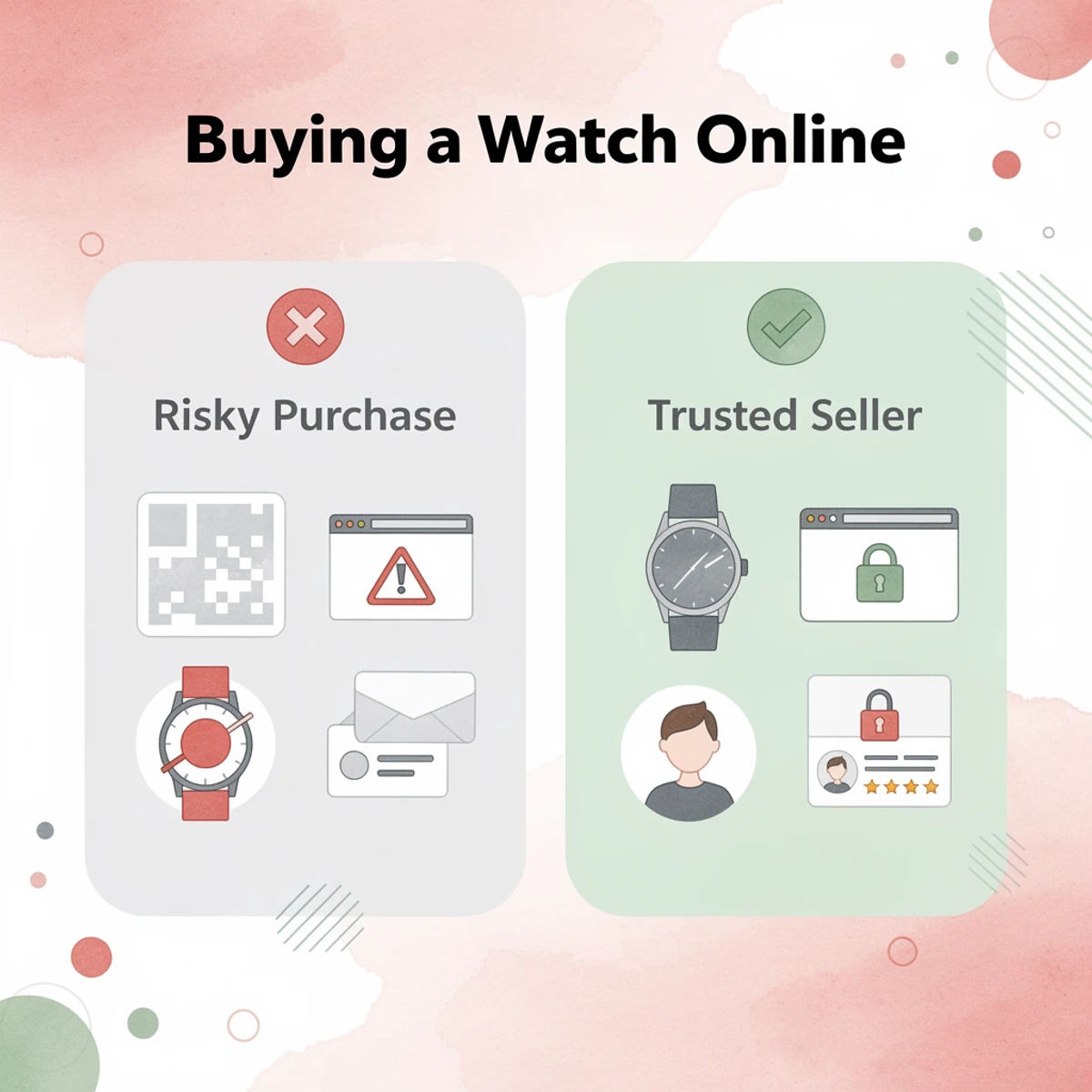
Pick Up Point is built around a trusted sequence: every listing is authenticated before going live, graded with a clear condition label, and shipped directly by the store, not a third party. First-time buyers can use code PUPFIRST for 10% off their first order. The piece you receive is the one the platform has already accepted and verified, with your complete order record stored safely in your account.
💡 Tip: Use code PUPFIRST at checkout to unlock 10% off your first luxury purchase on an already-authenticated piece.
✅ Best Practice: Pick Up Point guarantees the piece you see is the piece you receive, with a permanent account record as proof.