


Where to Buy Used Luxury Bags: 10 Best Resale Sites in 2026
Where to buy used luxury bags? Pick Up Point ranks the 10 best resale sites of 2026 with real prices and trusted sellers.
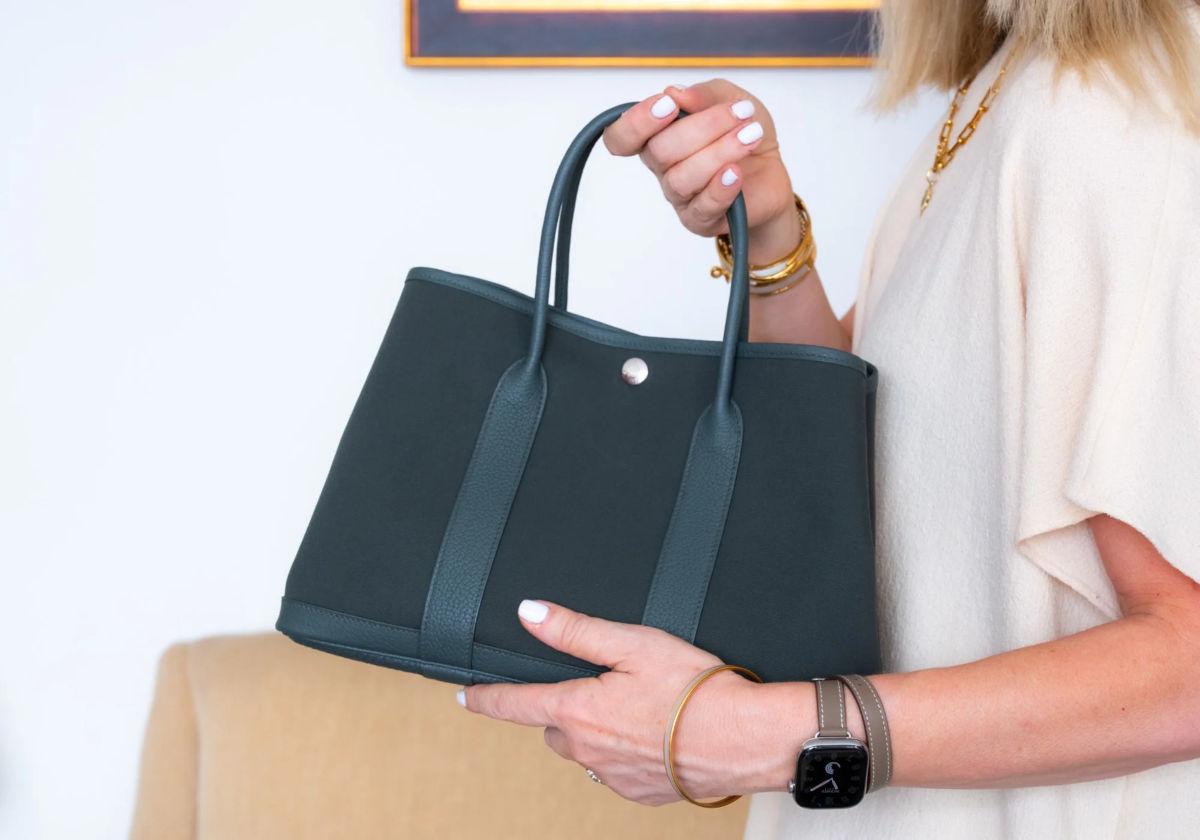
Spotting a Chanel flap bag or a Louis Vuitton tote at a fraction of retail price is exciting until questions about authenticity and seller reliability get in the way. That hesitation keeps many buyers from acting, even when the deal looks genuinely good. The best luxury resale sites address this by combining verified sellers, authenticated inventory, and transparent pricing in one place.
Not every resale platform offers the same level of trust or selection, so choosing the right one matters. Pick Up Point connects buyers with verified sellers offering pre-owned luxury handbags from top brands, making it a practical first stop for anyone exploring the second hand designer market.
Table of Contents
Are Used Luxury Bags Worth Buying?
Is It Safe to Buy Used Luxury Bags Online?
How Can You Tell If a Used Luxury Bag Is Authentic?
10 Best Resale Sites to Buy Used Luxury Bags in 2026
How to Evaluate a Seller Before Buying a Used Luxury Bag
Why Fashion Lovers Choose PICKUPPOINT for Authenticated Pre-Owned Luxury Bags
Get your Next Luxury Purchase from PICKUPPOINT
Summary
The pre-owned luxury bag market has grown 5 times faster than the primary luxury market, according to Luxury Lifestyle Awards. That growth signals a fundamental shift in how informed buyers approach designer purchases. The secondhand channel is no longer a niche workaround but a deliberate first stop for shoppers who want quality without absorbing first-owner depreciation.
In Bain's 2026 update of the same luxury study, about half of luxury shoppers look at the secondhand market before they buy a new piece, and online searches for vintage bags more than doubled year over year. The first owner absorbs the steepest depreciation the moment they leave the boutique. By the time a bag reaches a verified resale listing, what remains is the construction, brand equity, and sustained demand that define lasting value.
The global resale market is projected to reach up to $360 billion by 2030, up from roughly $210 billion today (CNBC). That scale attracts both serious buyers and serious fraudsters, which makes platform accountability the deciding factor in whether a purchase goes well. Private listings on social platforms place all verification responsibility on the buyer, with no recourse if the bag arrives misrepresented or fake.
Counterfeiters now target exactly what buyers check first: logo placement, date codes, and serial stickers. The European Union Intellectual Property Office reported in 2023 that counterfeit handbags, jewelry, and watches cost genuine brands approximately 2.7 billion euros in lost EU sales annually. A single correct detail surrounded by inconsistencies is still a wrong bag, and authentication works as a system of agreements across the entire object, not a single stamp.
Over 70% of luxury consumers identify authenticity verification as their top concern when buying pre-owned bags, according to Jind Luxury. The price advantage of secondhand is clear, but the emotional cost of getting it wrong is what stops most people from acting. Platforms that build authentication into the listing standard, rather than treating it as optional, answer that concern before the buyer has to ask.
Condition assessment matters more than most buyers anticipate. Every scuff on a base corner, crack in handle coating, or worn lining represents either future repair costs or lost resale value. Requesting close photos of base corners, strap attachments, zipper pulls, and interior pockets before committing is a basic filter that separates accountable sellers from those hiding something.
PICKUPPOINT's second-hand designer marketplace addresses this directly by connecting buyers with verified sellers and adding condition grading, photos of the actual piece, and a product ID to each listing, removing the guesswork that can turn an otherwise good deal into a regrettable one.
Are Used Luxury Bags Worth Buying?
Used luxury bags are worth buying. Bain & Company and Altagamma estimated secondhand luxury goods sales at approximately €50 billion in 2025 , up 4% to 6% , growing faster than new luxury goods . Shoppers now see pre-owned items as a genuine choice, not a backup plan.
"Secondhand luxury goods sales are estimated at €50 billion in 2025 , growing at 4% to 6% — outpacing the new luxury goods market." — Bain & Company & Altagamma
🔑 Takeaway: The pre-owned luxury market is a €50 billion industry that outgrows traditional retail, signaling a fundamental shift in how consumers assign value and desirability to luxury goods.
💡 Tip: Buying used luxury bags lets you access premium brands at a fraction of the cost while participating in one of the fastest-growing segments in the global luxury economy .
⚠️ Warning: As demand for pre-owned luxury surges, so does the risk of counterfeits. Buy from authenticated, reputable resellers to protect your investment.

What actually makes a used bag worth it
The first owner takes the biggest hit in value the moment they leave the store. By the time a bag appears on a verified resale listing, that initial drop has already occurred, and what remains is the real value: how well it's made, the brand's reputation, and how much other buyers want it. A Chanel Classic Flap that collectors have pursued for decades doesn't lose its appeal simply because someone else carried it first.
What does the data say about where to buy used luxury bags?
In Bain's 2026 update of the same luxury study, about half of luxury shoppers consult the secondhand market before buying new pieces, and online searches for vintage bags more than doubled year over year.
Why do serious buyers question paying first-owner prices?
Shoppers often circle the same listing repeatedly because new retail feels like a second rent payment. That hesitation is not irrational—it reflects market signals worth heeding. The pre-owned channel exists because serious buyers recognized that paying first-owner prices for a bag carried daily warrants financial scrutiny. Luxury Lifestyle Awards reports that the luxury resale market has grown 5 times faster than the primary luxury market, making it where informed shoppers now go first.
Where most buyers go wrong
The failure point is treating condition as secondary to price. Every scuff, crack, and worn detail costs money later or reduces resale value. Request close photos of the base, strap attachments, zipper pull, and interior pockets before committing. A seller who hesitates is telling you something important.
Why does where to buy used luxury bags matter more than price?
Most shoppers on general marketplaces encounter the same obstacles: unverified sellers, inconsistent condition descriptions, and no authentication process. Our Pick Up Point second hand designer marketplace removes this friction by connecting buyers with verified sellers offering pre-owned luxury pieces. Choosing secondhand through a structured, accountable platform eliminates the guesswork that can turn a good deal into a regrettable purchase.
The one thing that separates a smart buy from a costly mistake
Classic styles in neutral colors from well-known brands remain popular over time. Trend-driven bags with prominent logos and seasonal shapes lose buyers quickly, as resale numbers demonstrate. Choose the model people will search for two years from now, not the one that dominated last season. That single filter eliminates most risk. Knowing what to buy is only half the equation; the other half is knowing where to buy it safely.
Is It Safe to Buy Used Luxury Bags Online?
Buying a used luxury bag online is safe when the platform checks that it is real before delivery . The risk is not the secondhand market itself — it is sellers who are not responsible and platforms that treat checking if something is real as optional .
"The risk is not the secondhand market itself — it is sellers who are not responsible and platforms that treat authentication as optional ." — Key Industry Insight
💡 Tip: Always prioritize platforms that offer mandatory authentication before a bag ships to you — never settle for marketplaces where verification is a bonus feature, not a baseline requirement.
⚠️ Warning: A low price tag on a luxury bag is not a deal — it is often the first sign of a counterfeit or misrepresented item . If the platform does not authenticate, walk away .
Platform Type | Authentication Policy | Safety Level |
|---|---|---|
Verified Resale Platforms | Mandatory pre-delivery authentication | ✅ High |
General Marketplaces | Optional or seller-declared only | ⚠️ Medium |
Unvetted Private Sellers | No authentication process | 🚨 Low |

Who is actually responsible for what you receive when you buy used luxury bags?
Safety depends on one question: who is responsible for what you receive? Private listings on social platforms place that responsibility entirely on you. A sponsored post with a Chanel flap at 70% below retail tests how quickly you'll move without thinking. According to CNBC , the global resale market is expected to reach $360 billion by 2030, up from roughly $210 billion today. That growth attracts buyers serious and serious fraudsters in equal measure. Platforms that build authentication into their process are worth trusting.
What separates a safe platform from a risky one?
Safe platforms close the gap between what sellers say and what buyers can verify through authentication, condition grading, and payment protection before the transaction completes. Risky ones leave verification as your problem after the money moves. When you shop for pre-owned designer bags through a structured marketplace rather than a private channel, you buy a documented accountability layer that protects you if something goes wrong.
What does a real-world gap in buyer protection look like?
In 2025, CNN reported on a shopper who spent $2,600 on a designer bag from a known retailer, then worried the item was fake. She took it to a Saks Fifth Avenue store in Beverly Hills and received a gift-card refund. If buying from a branded checkout left her uncertain, a private listing with three photos and a "final sale" line offers even less protection.
Where to buy used luxury bags without absorbing the hidden cost of no recourse?
The familiar approach is to search broadly, compare prices across every channel, and assume a lower price on a private listing is a better deal. What that misses is the hidden cost of no recourse. If the bag arrives damaged, misrepresented, or fake, a private seller with a "final sale" policy leaves you holding a dispute with no guaranteed outcome. Platforms like Pick Up Point offer pre-loved designer pieces with sourcing and curation that eliminate the guesswork most buyers navigate alone in private transactions.
Does payment method actually matter?
Credit card purchases let you dispute charges, whereas wire transfers, peer-to-peer apps, and crypto payments cannot be reversed once sent. If a seller pushes you toward an irreversible payment method, they likely know the item won't meet your expectations. Buying pre-owned luxury items extends the life of well-made objects, keeps them out of landfills, and rewards craft over volume. But that intention works only when the platform behind the purchase takes the same care. Where you buy matters as much as what you buy.
Related Reading
How Can You Tell If a Used Luxury Bag Is Authentic?
A used luxury bag is authentic when every part tells the same story —from thread tension on seams to zipper pull weight . Authenticity isn't determined by a single element like a stamp or code , but by how all components align in perfect, unmistakable harmony.
"Authenticity isn't determined by a single element like a stamp or code, but by how all components align ." — Core Principle of Luxury Authentication
Authentication Factor | What to Examine | Red Flag |
|---|---|---|
Thread Tension | Even, consistent stitching on all seams | Loose, uneven, or fraying threads |
Zipper Pull Weight | Solid, heavy-feeling hardware | Lightweight or hollow-feeling pulls |
Stamps & Codes | Crisp, evenly spaced font | Blurry, misaligned, or shallow impressions |
Overall Alignment | All elements tell the same story | Any single component that feels "off" |
💡 Tip: Never rely on one detail alone — always cross-check multiple authentication points before making a purchasing decision.
⚠️ Warning: The most convincing fakes pass the single-element test. A correct serial number means nothing if the stitching, hardware, and lining don't all match the same quality standard.

What counterfeiters copy first
The failure point is usually where buyers check first: logo placement, date codes, serial stickers. Factories producing fakes know exactly where shoppers look, so they invest there. The European Union Intellectual Property Office reported in 2023 that counterfeit handbags, jewelry, and watches cost genuine brands approximately 2.7 billion euros in lost EU sales annually. A date code that photographs well is not proof; it is the opening move in a longer con.
Why does one correct detail still mean a wrong bag?
The same issue shows up across high-ticket resale categories: buyers treat one visible marker as a verdict when authentication is a system of agreements. Louis Vuitton dropped visible date codes from new production in March 2021, replacing them with an embedded chip. A "2024" bag with a stamped tab is already wrong for that era, and a chip alone does not settle the matter, because counterfeit production now includes chips. One correct detail surrounded by wrong ones remains a wrong bag.
Where fakes actually break down
Most platforms that sell used designer pieces authenticate items before listing them, removing that burden from you. When you buy through private channels or unverified listings, authentication falls entirely on you—and most people underestimate the gap between what looks right and what is right. Pick Up Point treats authentication as integral to the sale, not an afterthought, so we evaluate items as a complete system rather than a single stamp.
The physical tells that matter most
Construction details are harder to fake at scale than surface markings. Hermès saddle stitching slants consistently and uses waxed thread. Louis Vuitton monogram trim uses a specific mustard-toned thread, not bright yellow. Genuine hardware feels dense, shares a consistent finish across every component, and carries sharp, correctly aligned engraving. A peeling plate, mixed gold tones, or a zipper brand the house never used in that production year can reveal cost-cutting. Coated canvas should feel coated, not like printed paper, and vachetta leather should darken gradually with light and oil instead of looking uniformly treated.
The photos and documentation that protect you
Before paying for any used luxury bag through a private or peer-to-peer channel, ask for unedited close-up photos of the heat stamp, interior pockets, zipper teeth and pull backs, corner reinforcements, strap attachments, and hardware engravings. Request a short video showing those spots in a single take. A seller who owns a real bag will send unflattering angles without hesitation.
What documentation actually matters when you buy used luxury bags?
Papers like authenticity cards or hologram stickers matter only when the format matches the model's time period. A Chanel card from the wrong era or a "certificate" that omits the bag's ID does not help. When every part of the item fits together, you have a strong chance of authenticity. A single "perfect" code doing all the work is the biggest warning sign.
Related Reading
10 Best Resale Sites to Buy Used Luxury Bags in 2026
Buying used luxury bags online gives you access to designer pieces that are no longer sold in stores . The best sites give you clear product details , authentication measures , condition information , and protective policies .
"The global pre-owned luxury goods market is projected to grow significantly, driven by demand for authenticated , hard-to-find designer pieces that are simply unavailable through traditional retail channels."
🎯 Key Point: Not all resale platforms are created equal — the right site offers buyer protection , expert authentication , and transparent condition grading so you shop with total confidence .
💡 Tip: Before committing to any resale platform, always verify that it offers authentication guarantees , a clear return policy , and detailed condition descriptions — these are the three non-negotiables for buying pre-owned luxury bags safely.
Feature | Why It Matters |
|---|---|
Authentication Measures | Protects you from counterfeit bags |
Condition Information | Sets accurate expectations before purchase |
Protective Policies | Ensures buyer recourse if something goes wrong |
Clear Product Details | Helps you make an informed , confident decision |

⚠️ Warning: Skipping due diligence on a resale platform can cost you hundreds or thousands of dollars — always prioritize sites with verified authentication processes and strong buyer protections over those offering simply the lowest price .
1. PickupPoint
PickupPoint is a luxury reseller that takes in pre-owned designer bags, authenticates them, grades the wear, and sells the piece under its own listing, not a stranger's social post. It is built for shoppers who want one platform accountable for authenticity, honest condition, and delivery instead of a cheap inbox deal that vanishes after payment. You buy a named bag in a named grade, with worldwide shipping on eligible orders, so the risk of a fake, a hidden wreck, or a no-return wire transfer is handled before the box ships.
Features
Authenticity-protected secondhand shopping: the site presents itself as a marketplace with a genuine-goods guarantee on listed luxury pieces.
Verified listings backed by authentication work, not a seller's selfie and a “trust me” caption.
Condition reporting in the title and product copy, so wear is disclosed before checkout.
Photography handled as part of the listing process, which cuts stock-photo and one-angle listing tricks.
Worldwide shipping called out on category banners and official blog pages.
First-purchase code PUPFIRST for 10% off, which lowers the cost of an authenticated bag versus full retail.
Bag-focused catalog with houses bag buyers search: Chanel, Hermès, Louis Vuitton, Gucci, Dior, Celine, Loewe, Fendi, Jacquemus, Bottega Veneta, and Saint Laurent.
English condition labels on bag listings such as New, Excellent, and Great Condition, plus Chinese grades such as 馨 (new), 99新 (new), 95新 (new), 9成新 (new), and 85新 (new).
Specific wear notes on product pages (for example, hardware rub) instead of a vague “good used” line.
Material, size, brand, product ID, and barcode on item pages so you can match the exact piece.
Checkout in MOP, with USD and HKD display options; listed prices note that payment settles in MOP at the payment-platform rate.
Order tools for payment and delivery status, plus favorites and cart, so you can track your purchase instead of chasing a private chat.
Best for
Shoppers who want an authenticated designer bag with the condition listed, global delivery, and a first-order discount, without buying from a social ad or an unverified inbox seller.
Pros
Authenticity is a stated site promise, which answers the fake-bag fear.
Condition sits in the product name, which answers hidden corner and lining damage.
Worldwide shipping is stated on the official site, which answers “I cannot inspect this in a US store.”
PUPFIRST takes 10% off the first buy, which answers boutique-price shock.
Brand range covers the icons used-bag shoppers actually type into search.
Listings include construction details (leather, size, wear), so a date code photo isn't the only proof.
The platform handles authentication, photos, and buyer communication in one place, so you are not negotiating with a disappearing account.
Cons
Some individual product pages mark pickup-only and “no delivery,” so you must read the shipping line on that exact bag.
Accessibility
Open https://pickuppoint.mo/ . Switch currency if needed. Browse bags under Leather Goods / All Bags. Read the condition line and the shipping note on the item. Apply PUPFIRST on a first purchase. Create an account to save favorites and follow payment and delivery status after you order.
2. Fashionphile
Fashionphile is a US luxury reseller that buys bags, authenticates them in-house, and sells them with a Certificate of Authenticity tag . It is built for shoppers who want one company on the hook if the bag is fake. Eligible returns run 15 days from delivery if the authenticity tag stays attached and the bag comes back in the same condition.
Features
In-house, brand-specific authentication of textiles, hardware, fonts, and construction.
Money-back authenticity guarantee on items Fashionphile sells.
15-day return window from delivery or in-store pickup.
Detailed photos and written condition notes that show corners, hardware, and extras.
Inventory owned by the company, not a rotating peer seller who vanishes after checkout.
US stores plus online checkout for people who want to see a bag in person.
Prepaid return label option in the US (fee applies); international buyers self-ship returns.
Pros
Strong authenticity process, a real return window, and bag-focused inventory that matches what most used-luxury shoppers want.
Cons
Prices sit higher than raw peer-to-peer listings. International returns ship at the buyer's expense. Fine jewelry, watches, and Hermès Birkin and Kelly refunds take longer to process.
Accessibility
Shop on the website. Filter by brand, model, and condition. Keep the COA tag on until you are sure you are keeping the bag.
3. Rebag
Rebag is a handbag-first reseller. It purchases bags outright, authenticates them, grades them, and lists them under its own name. You buy from the company, not an anonymous account. That structure answers the “who is responsible if this is fake?” question.
Features
Company-owned inventory after buyout, so one party stands behind the listing.
In-house authentication and condition grades on handbags and small leather goods.
Clair-style valuation tools that help you see how a model trades after retail.
Physical stores in major US cities for drop-off and in-person shopping.
Trade-in and store credit paths if you rotate bags instead of hoarding them.
No mystery peer seller between you and the bag.
Return terms published on the purchase; read the current window before you pay.
Pros
Bag-specialist catalog, clear ownership of inventory, and tools that show resale context so you do not overpay versus current comps.
Cons
Selection is narrower than full-closet consignment sites. Popular icons sell fast. Store access is US-centric.
Accessibility
Shop on the website. Search by brand and silhouette. Confirm shipping country coverage and the return deadline on the product page.
4. The RealReal
The RealReal is a US luxury consignment platform with handbags plus clothing, jewelry, and watches. Scale is the draw: more sizes, more colors, more price rungs. Authentication is in-house before items go live. Handbag return rules are stricter than Fashionphile's 15-day window, so read the category policy on every listing.
Features
Huge authenticated catalog across bags and the rest of a luxury closet.
An in-house authentication team reviews items before they go public.
Frequent site events and markdowns that drop prices after the first listing period.
Condition notes and multiple photos on each item.
App and web filters for brand, price, and category.
Physical locations in some US cities.
Buyer fees built into the listed price on standard checkout.
Pros
Breadth, entry-level price points on lesser-known pieces, and regular sales if you watch a saved search.
Cons
Handbags are often final sale or have limited returns. Consignment volume means you still need to study photos of corners and lining. High-demand icons disappear quickly.
Accessibility
Shop on the website. Create an account, save searches for the exact model, and screenshot the return line before you buy.
5. Vestiaire Collective
Vestiaire Collective is a global peer-to-peer luxury marketplace with a strong European catalog. Listings come from individual sellers. Higher-value items go through the platform's authentication flow. Checkout may add a buyer service fee, so the listed price isn't always the price you pay.
Features
International supply of heritage and archive bags you won't find in a single US warehouse.
Authentication on items above the platform's value threshold (confirm the current cutoff at checkout).
Seller profiles and item history on each listing.
Offers on some listings if you want to negotiate.
App alerts for saved brands and models.
Buyer protection tied to paying on the platform, not off-app wires.
Wide brand mix beyond the same five icons.
Pros
Global finds, vintage depth, and room to bid when sellers are flexible.
Cons
Checkout fees raise the real price. Authentication is not identical on every low-price listing. Shipping times vary by seller country. You still need to request extra photos of stamps and hardware.
Accessibility
Shop on the website. Stay inside the site's checkout. Add the buyer fee and duties.
6. eBay Authenticity Guarantee
eBay is a peer-to-peer market . The safe lane for used luxury bags is the Authenticity Guarantee badge, not a random listing. Eligible handbags (in the US, select luxury bags at $500 and up) ship first to an authentication facility. Experts run a multi-point check against the listing, then forward the bag with a verification card. Skip any bag without that badge.
Features
Blue-check listings that force a physical inspection before the bag reaches you.
Multi-point review of the bag, plus the dust bag, box, and extras, against the photos and title.
Failed items go back to the seller; you do not receive a rejected piece.
eBay Money Back Guarantee still applies when the item is not as described.
Returns on guaranteed bags go back through the authenticator so the piece is checked again.
Wide price range, including older and oddball models the boutique-style sites miss.
No extra authentication fee charged to the buyer on covered listings.
Pros
Real physical check on eligible bags, deep catalog, and a refund path if the listing was wrong.
Cons
Bags under the price threshold have no pre-ship inspection. Seller return windows vary. Shipping takes longer because the bag stops at a facility first.
Accessibility
Shop on the website. Filter for Authenticity Guarantee. Read the seller's return line. Never pay off-platform.
7. Luxury Promise
Luxury Promise is an independent pre-owned luxury seller with locations in London and Dubai, plus worldwide delivery. At least two human authenticators check every piece, then an AI layer reads microscopic surface images. Bags ship with a Luxury Promise authenticity card. Online purchases that are not as described, defective, or fail to perform as described are eligible for exchange or refund within 14 days if tags stay on.
Features
Triple-check process: two experts plus AI imaging.
Authenticity card with every handbag.
Full refund language if authenticity fails.
14-day online return window when the item is not as described and tags remain.
Worldwide shipping (import tax depends on your country).
In-person viewing at listed locations, with Hermès viewings scheduled ahead.
Mix of classic and sought-after European pieces.
Pros
Layered authentication, a written authenticity refund, and a return clock that gives you time to inspect stamps and hardware.
Cons
Auction, live-show, and some international or personal-shopper orders are final sale. Buyers pay return shipping. A 3% restocking fee applies in some authorized returns. Processing of returns takes up to seven working days because the bag is authenticated again.
Accessibility
Shop on the website. Confirm whether the listing is standard online stock or final-sale auction stock before you pay.
8. What Goes Around Comes Around (WGACA)
WGACA has sold luxury vintage since 1993. In-house authenticators review each piece through a multi-tier process before it goes live. The company guarantees authenticity on items it sells and is not a brand-authorized boutique. That vintage focus is the point: older Chanel, Hermès, and archive ready-to-wear that never hit the big consignment apps.
Features
Multi-pass in-house authentication before listings go public.
Authenticity guarantee on WGACA purchases.
Deep vintage and collectible catalog, not only current-season icons.
Retail stores plus the website for people who want to see wear in person.
Reference libraries built from years of intake, used to catch era mismatches.
FedEx shipping on outgoing orders.
Condition described as vintage wear, so you know you are buying age, not a pretend-new bag.
Pros
Long track record in vintage, specialist eyes on older serial systems, and pieces you will not find in a fresh-buyout warehouse.
Cons
Original brand boxes and dust bags are not always included; WGACA supplies its own dust bag. Prices sit at collector level. Online returns exclude final-sale and in-store purchases. Keep platform tags on if you plan to return.
Accessibility
Shop on the website. Read the condition notes twice on vintage leather. Confirm return eligibility on the product page.
9. 1stDibs
1stDibs is a dealer marketplace, not an open peer free-for-all. Professional sellers are vetted before they list. Handbags sit next to jewelry, watches, and design objects. The Authenticity Guarantee covers claims made within one year of purchase (up to $100,000 of purchase price and related shipping if the claim meets the policy). The Money-Back Guarantee covers items not as described, damaged in transit, or never delivered when you report them in the stated window.
Features
Vetted dealers only; no random consumer accounts.
One-year authenticity claim window under the published guarantee.
Money-back option if the bag doesn't match the listing or arrives damaged.
Strong vintage and rare-dealer inventory.
Secure checkout that keeps buyer protection attached.
Global specialist shipping options.
24-hour cancellation grace on purchases.
Pros
Dealer-grade vintage supply and a long authenticity window if a later expert review contradicts the listing.
Cons
1stDibs does not physically re-check every fashion item the way a buyout warehouse does. Some authenticity claims require written opinions from independent experts. Prices run high. Pay only on 1stDibs.
Accessibility
Shop on the website. Read seller history and the exact guarantee language. Complete checkout on the site.
10. Yoogi's Closet
Yoogi's Closet is a US pre-owned luxury retailer that inspects every item in-house and promises authenticity or a full refund. Authenticators check stampings, stitching, hardware, materials, and date or serial systems, then compare the bag with reference pieces. Only items that pass receive the tag. That setup is for shoppers who want one store, one guarantee, and a catalog of bags rather than a social feed of strangers.
Features
In-house inspection of construction, marks, and hardware against reference bags.
“Authentic or 100% of your money back” guarantee on items it sells.
Authenticity tag on pieces that pass.
Free domestic shipping on many orders (confirm at checkout).
Return policy for eligible purchases; keep tags on.
Brand guides on the site that explain serial eras so you can cross-check photos.
Focused handbag and accessory inventory.
Pros
Clear money-back authenticity language, physical inspection before listing, and educational brand pages that help you verify what you see.
Cons
Catalog is smaller than eBay or The RealReal. High-demand models sell out. International shipping and duties depend on the destination.
Accessibility
Shop on the website. Use brand filters, read the condition grade, and leave the authenticity tag attached until you decide to keep the bag.
How to Evaluate a Seller Before Buying a Used Luxury Bag
The bag is only half the purchase. A real seller answers hard questions , shows the exact bag in hand , and gives you a way back if the listing was wrong. A weak seller hides photos , rushes payment , and leaves you with no proof and no refund . Check out the seller first. Then look at the bag.
"The seller is the transaction — a bag is only as trustworthy as the person selling it. No accountability means no protection. "
Seller Signal | Strong Seller ✅ | Weak Seller ⚠️ |
|---|---|---|
Photo transparency | Shows exact bag in hand, multiple angles | Stock photos, blurry images, or hidden details |
Hard questions | Answers directly with evidence | Deflects, delays, or goes vague |
Payment terms | Offers a secure, traceable method | Rushes payment , demands wire transfer or gift cards |
Recourse policy | Clear return or dispute process | No refund , no proof, no paper trail |
🚨 Warning: If a seller pressures you to pay quickly or refuses to show the actual bag on hand , treat it as a non-negotiable red flag — walk away immediately.
💡 Pro Tip: Before you ever look at the bag's hardware, stitching, or date codes, run a full seller check first . A perfect bag from a bad seller is still a losing deal .

Confirm who you are actually buying from
Ask whether you are dealing with a private owner, a reseller, or a business that checks stock before listing. A real business has a name, contact information, and published terms. Private sellers can be honest, but you assume more risk if the bag is misdescribed. Before paying, verify the seller's contact details, refund policy , and dispute resolution process. If you cannot identify the seller or reach them in writing, do not proceed.
Read the track record, not the star rating
A high score with three generic comments is not history. Look for repeated notes about condition accuracy, authenticity, shipping, and dispute resolution. Scan recent reviews, not just the oldest five-star ratings. New accounts, copied praise, and silence after complaints are warning signs. Cross-check the seller name across multiple sites when possible. Consistency over time beats a polished bio.
Demand a clear authentication process
"100% authentic" is a claim, not a method. Ask who checked the bag, what they examined, and what recourse exists if another expert disagrees. Strong sellers explain the hardware, stitching, stamps or chips, materials, and papers in simple language. Weak sellers demand trust or refuse extra photos of serial numbers and interiors. Buy only when someone inspects the item before payment, or budget for your own expert review.
Judge the listing by the photos and the condition notes
A serious seller photographs the bag from multiple angles: front, back, bottom, inside, corners, handles, hardware close-ups, stamps, and signs of wear. Stock images from boutiques, heavy filters, and photos without interior views can hide damage or suggest the seller doesn't own the bag. The condition description must match the photographs. Labeling a bag "Excellent" when corners are rubbed and the lining is stained reflects a seller problem, not a lighting issue. Request one additional photograph of the most damaged area. If the seller refuses, that refuse says a lot.
Compare the asking price to recent sales of the same bag
Look up the same model, size, leather, hardware, and condition. Active listings show what is available. Completed sales show what buyers paid. A price significantly lower than that range signals fake copies, stolen goods, or bags that will not pass authentication. A price significantly higher than that range needs justification: a rare color, a full set, or proof of professional service. If the seller cannot explain the premium, that price is a warning sign.
Pay only through a method you can dispute
Wire transfers, gift cards, crypto, and peer-to-peer apps offer almost no recourse if the item never arrives or is fake. Credit cards and established platform checkout provide a paper trail and chargeback protection. The FTC advises using a safe payment method and keeping written records. Anyone pushing you off-platform "to save fees" is removing your protection.
Read the return and authenticity terms before you click buy
Find the return window, return shipping costs, and refund policy for failed authentication. Note the exact terms: inspection period, required proof, and refund method. "Final sale" means you accept all listing errors. If terms are missing, treat the sale as is.
Test how the seller handles real questions
Ask about production year, leather name, hardware finish, repairs, odor, and included items (strap, lock, keys, dust bag, box, receipt). A prepared seller answers with specifics and extra photos; a risky seller becomes vague, irritable, or urgent. Slow replies on high-value listings reveal how they'll handle disputes. Keep all answers in writing as evidence if the delivered bag doesn't match what was sold.
Walk away from pressure and gaps you cannot close
Rushed language, off-app payment, stock photos, no returns, no stamps shown, and a story that doesn't match the codes on the bag are warning signs. One firm refused to document the item is enough. The right seller makes the bag easier to verify; the wrong seller makes you feel rushed. Take your time. The bag you skip today costs less than the fake bag you cannot return.
Why Fashion Lovers Choose PICKUPPOINT for Authenticated Pre-Owned Luxury Bags
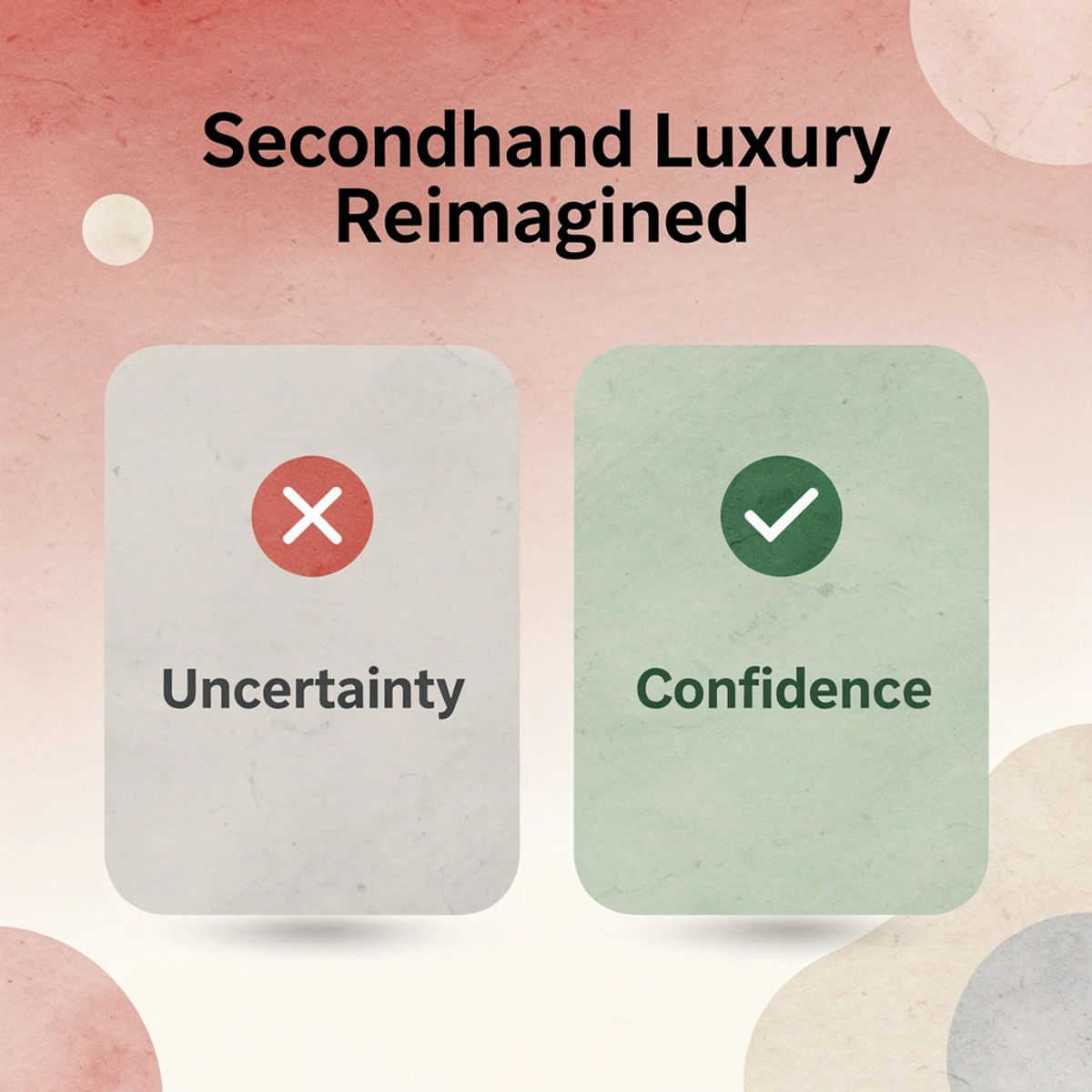
Fashion lovers choose Pick Up Point because the platform removes the two things that make secondhand luxury stressful: uncertainty about what you are getting , and uncertainty about who you are dealing with . Authentication is the listing standard , not an optional add-on. Condition is written into the title , not buried in a seller's caption.
"Authentication is the listing standard, not an optional add-on — condition is written into the title, not buried in a seller's caption." — PICKUPPOINT Platform Standard
🔑 Takeaway: PICKUPPOINT eliminates the two biggest pain points of pre-owned luxury shopping — authenticity doubt and seller trust — by making verified standards non-negotiable from the moment a bag is listed.
💡 Tip: When shopping for authenticated pre-owned luxury bags , always look for platforms where authentication is built into the listing process by default — not offered as an optional upgrade. That distinction is everything .
What Stresses Buyers Elsewhere | How Pick Up Points Solves It |
|---|---|
Authenticity uncertainty | Authentication is a mandatory listing standard |
Condition surprises | Condition stated in the title — fully transparent |
Seller trustworthiness | Verified sellers , not anonymous captions |
Why is the secondhand luxury market harder to navigate than ever?
The pre-owned luxury market has grown fast enough that the question is no longer whether to buy secondhand. According to Naluda Magazine , the secondhand fashion market is growing 11 times faster than traditional retail. This creates pressure on buyers to distinguish authentic, graded pieces from convincing counterfeits—pressure that private-sale channels fail to address by placing all research responsibility on the buyer, working from a single photograph and the seller's word.
How does PICKUPPOINT close the gap between listing claims and what arrives?
The failure point in most resale transactions is the gap between what the listing claims and what arrives. Pick Up Point closes that gap by building condition reporting, product photography of the actual piece, and a product ID directly into each listing. You read a grade, review documented wear notes, and buy the specific object in front of you—not a catalog image compared to memory. Shoppers using second hand designer platforms built this way consistently describe the same shift: the worry of "what if" disappears when the evidence is already on the page.
Why does authentication matter most when deciding where to buy used luxury bags?
This matters even more when considering what drives buyers to the pre-owned market. According to Jind Luxury , more than 70% of luxury consumers cite authenticity verification as their primary concern when purchasing pre-owned bags. The emotional cost of a mistake deters purchases. A platform that prioritizes authentication as the first step addresses this concern before buyers need to raise it.
Is buying pre-loved luxury a compromise or a deliberate choice?
Choosing a pre-loved Chanel flap or a secondhand Loewe puzzle bag is not merely a budget decision—it is a deliberate choice. Every bag in circulation avoids new production, materials, and waste. Pick Up Point's positioning reflects what a growing number of buyers already feel: the purchase embodies personal style and a considered environmental stance.
What practical features help buyers compare and shop with confidence?
A graded listing with a product barcode, size, material, and condition note in English and Chinese grades like 99新 or 95新 gives buyers the vocabulary to compare pieces accurately across a catalog. First-time buyers can apply code PUPFIRST for 10% off . Worldwide shipping on eligible pieces ensures the right bag isn't confined to a local market.
Get your Next Luxury Purchase from PICKUPPOINT
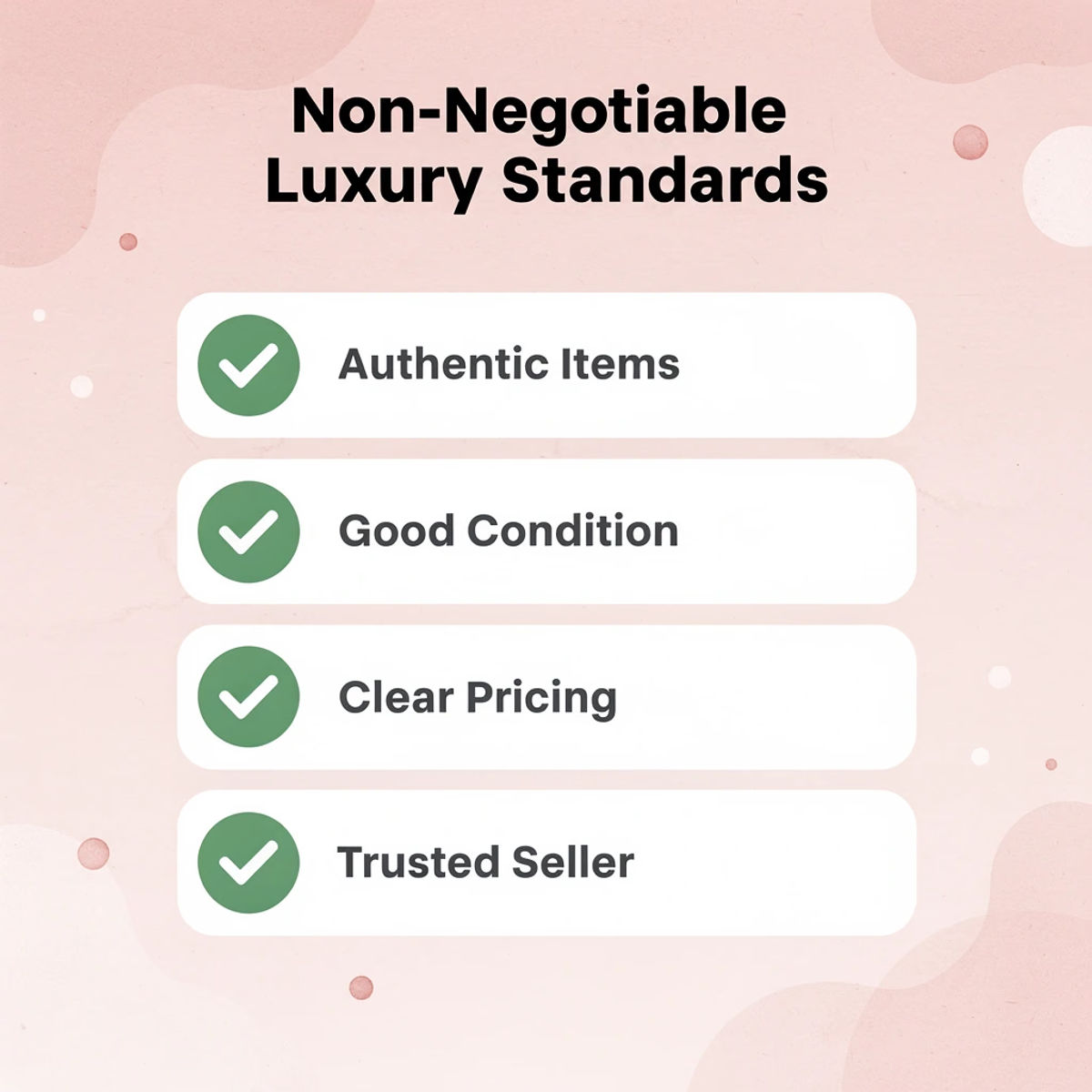
Being authentic , in good condition , having clear prices , and using a platform that stands behind what it sells distinguish a satisfying purchase from a regrettable one. These non-negotiable standards separate a trustworthy luxury resale experience from a disappointing one, and savvy secondhand shoppers should demand them before spending money.
"The difference between a purchase you're happy with and one you regret comes down to authenticity , condition , transparent pricing , and a platform that stands behind its products ." — PickUpPoint
🎯 Key Point: When shopping pre-loved luxury , verify authenticity guarantees , item grading , and seller accountability before committing to a purchase.
⚠️ Warning: Skipping these four quality checks —authenticity, condition, pricing clarity, and platform trust—is the most common mistake luxury resale shoppers make.
Pick Up Point offers pre-loved designer bags and fashion pieces that are carefully graded and priced below retail , with worldwide shipping and a vintage selection built for buyers looking for something truly unique. Choosing secondhand here is intentional — it works for your personal style , actively reduces fashion waste , and makes quality luxury affordable for more people.
💡 Tip: Use code PUPFIRST on your first order and browse the Vintage Designer Bags collection to unlock exclusive savings on your next luxury find .
What PickUpPoint Offers | Why It Matters |
|---|---|
Pre-loved designer bags | Access luxury at below-retail prices |
Graded item condition | Shop with full transparency on quality |
Worldwide shipping | Reach buyers anywhere across the globe |
Vintage selection | Find one-of-a-kind pieces you won't see elsewhere |
Code PUPFIRST | Instant savings on your very first order |
✅ Best Practice: Browse the Vintage Designer Bags collection first — these curated pieces offer the best combination of uniqueness, value, and sustainable fashion impact .