


Luxury Bag Authentication: 10 Ways Buyers Can Spot Fakes
Luxury bag authentication made simple. Pick Up Point reveals 10 expert ways to spot fakes before you buy. Don't get fooled.
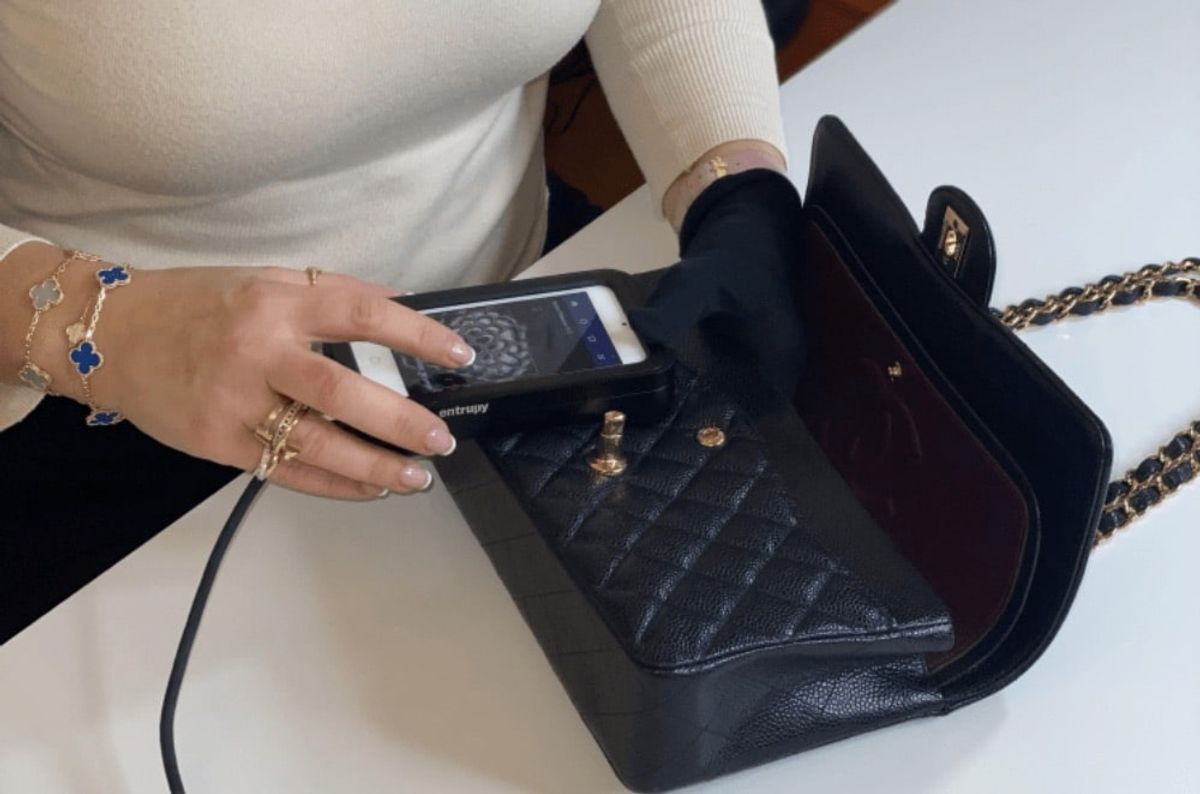
Counterfeit luxury bags are becoming harder to detect, and even experienced buyers can be caught off guard. Knowing what to look for, from stitching consistency and hardware weight to serial numbers and dust bag details, makes the difference between a confident purchase and an expensive mistake.
For those who want to skip the guesswork entirely, Pick Up Point offers a curated second hand designer platform where every bag undergoes a careful authentication review before listing.
Table of Contents
What Is Luxury Bag Authentication, and Why Does It Matter?
Can a Serial Number Prove a Luxury Bag Is Authentic?
Can You Authenticate a Luxury Bag From Photos?
10 Ways Buyers Can Spot Fake Luxury Bags
How to Evaluate a Seller Before Buying a Pre-Owned Luxury Bag
Why PICKUPPOINT Is a More Confident Choice for Authenticated Designer Bags
Get your Next Luxury Purchase from PICKUPPOINT
Summary
Counterfeit luxury bags have become significantly harder to detect, and the gap between a convincing replica and a genuine piece is no longer visible to the naked eye. The Wall Street Journal's July 2025 investigation found that copies priced between $500 and $5,000 were indistinguishable by eye, and that trained luxury brand staff failed to separate originals from fakes during in-person inspection. The replica market has moved upmarket to the point where photo-based trust alone leaves buyers exposed.
Serial numbers are widely treated as proof of authenticity, but counterfeit workshops are often the first to replicate them. Each brand's coding system was designed for internal production tracking, not consumer verification, meaning a matching code only confirms that someone knew the correct format for that era. The more reliable use of a serial number is negative confirmation, catching an era mismatch that ends the purchase immediately rather than treating a matching code as a complete answer.
Photo review can eliminate obvious fakes but cannot confirm a genuine bag. Leather grain, hardware weight, and stitch tension are sensory details that no camera captures, and sellers control which angles appear in a listing. Entrupy's 2026 State of the Fake report found that Louis Vuitton monogram canvas alone accounted for more than $37 million in detected counterfeits from physical goods submitted for authentication checks in 2025, inventory that circulated first as listings that looked convincing.
The consequences of buying a counterfeit extend beyond the purchase price. A bag confirmed as fake has no honest resale path, cannot be serviced by the brand, and cannot be insured as the model it was sold as. U.S. Customs and Border Protection seized over five million counterfeit handbags and wallets in fiscal year 2024, representing more than one billion dollars in manufacturer's suggested retail price, making it the highest-volume seized product category that year.
The secondhand luxury market is growing fast enough that buyer risk is rising alongside it. The market is projected to reach $70 billion by 2025, which means more inventory, more sellers, and more listings with varying degrees of scrutiny behind them. The European Union Intellectual Property Office's 2023 study found that 39 percent of Europeans have doubted the authenticity of something they already purchased, and 15 percent confirmed they were misled into buying a fake, figures that reflect post-purchase doubt following photo reviews that felt sufficient at the time.
Professional authentication tools reach a 99.1 percent accuracy rate according to SoHo Luxury Exchange, a figure that reflects how much precision the process demands when done properly. Authentication is not a simplified photo check. It uses metal composition testing, ultraviolet light, embedded chip readers, and physical inspection of stitch tension, hardware finish, and interior materials, none of which a listing can replicate.
PICKUPPOINT's second hand designer platform addresses this by running every listed bag through in-house physical inspection before it reaches the catalog, refusing pieces with uncertain origin rather than passing that uncertainty on to the buyer.
What Is Luxury Bag Authentication, and Why Does It Matter?
Luxury bag authentication is a structured expert inspection that confirms whether a bag is genuine. It is not a condition assessment — a worn, well-traveled bag can pass, while a pristine fake will fail every time.
"A worn, well-traveled bag can pass authentication. A pristine fake will fail every time." — Core Principle of Luxury Authentication
🎯 Key Point: Authentication is exclusively about genuineness — not appearance, not condition, not age. The only question that matters is: real or fake?
Factor | Affects Authentication? | Why |
|---|---|---|
Wear & tear | ❌ No | Condition is irrelevant to genuineness |
Age of bag | ❌ No | Vintage pieces can still be authenticated |
Pristine condition | ❌ No | A perfect-looking fake still fails |
Genuine craftsmanship | ✅ Yes | The only factor that matters |
⚠️ Warning: Never confuse authentication with a condition report. Sellers and buyers often make this mistake — assuming a like-new appearance guarantees a pass. It does not.

What does luxury bag authentication actually examine?
The inspection checks leather grain, canvas weight, edge finish, stitch tension, hardware engraving depth, interior heat-stamp typography, and serial or date code formats. These details form a cohesive picture: fake copies can replicate the shape convincingly but often fail on the small, factory-specific habits that genuine pieces share across consistent production lines. One misaligned detail closes the case.
Why are today's replicas so difficult to spot without luxury bag authentication?
Today's high-end fake bags use real leather, careful stitching, accurate hardware weight, and packaging that closely mimics the original. Buyers who discover they've purchased a fake often express genuine shock at how narrow the gap between "looks right" and "is right" has become. Authentication exists to close that gap.
Why is photo-based trust no longer enough when buying pre-owned luxury bags?
Most shoppers buy used luxury items by trusting listing photos, seller reputation, and dust bags or cards. As counterfeiters source comparable raw materials and produce bags that enter the secondary market with convincing paperwork, photo-based trust alone leaves buyers exposed. Platforms that include authentication review in every listing eliminate that exposure before purchase, transforming the decision from a calculated guess into a verified one.
Why authentication protects more than your wallet
A failed authentication result carries consequences beyond the purchase itself. A bag confirmed as counterfeit has no honest resale path, cannot be serviced by the brand, and cannot be insured as the model it was sold as. U.S. Customs and Border Protection seized over five million counterfeit handbags and wallets in fiscal year 2024, representing more than one billion dollars in manufacturer's suggested retail price, making it the highest-volume seized product category that year. The fake-bag trade targets the same search terms you use when shopping.
How does luxury bag authentication support the circular economy?
Authentication protects the circular economy that makes pre-owned luxury meaningful. Buying a verified, pre-loved bag keeps a well-made object in use, reduces demand for new production, and passes on genuine craftsmanship. A fake corrupts the whole idea. Verification is the trust layer that makes conscious, circular fashion credible. But one piece of the authentication puzzle surprises almost every buyer who examines it closely.
Can a Serial Number Prove a Luxury Bag Is Authentic?
Serial numbers feel like proof. They sit in a specific spot, follow a recognizable format, and match what you find in every authentication guide online. But a number that looks right only proves that someone knew what a right-looking number looks like.
"A number that looks right only proves that someone knew what a right-looking number looks like: counterfeiters study the same guides you do."
⚠️ Warning: Relying on a serial number alone is one of the most common and costly mistakes luxury bag buyers make.
Serial numbers alone cannot prove authenticity because counterfeit workshops copy serial number formats with enough precision to pass a visual check. Counterfeiters practice this detail first since it's what buyers check most — making it the single easiest detail to fake convincingly.
💡 Tip: Always pair serial number verification with a multi-point authentication check — including hardware, stitching, material quality, and provenance documentation.
🔑 Takeaway: A matching serial number is a starting point, not a conclusion. It narrows the field — it does not close the case.
Authentication Signal | Can Counterfeiters Replicate It? | Reliability Level |
|---|---|---|
Serial Number Format | ✅ Yes — easily | 🔴 Low |
Hardware Weight & Finish | ⚠️ Partially | 🟡 Medium |
Stitching Consistency | ⚠️ Partially | 🟡 Medium |
Material Smell & Texture | ❌ Rarely | 🟢 High |
Provenance & Receipt | ❌ Very Rarely | 🟢 High |
What a code actually tells you
Each brand's coding system was designed for internal tracking, not consumer verification. A Louis Vuitton date code marks a factory and production window shared across every bag from that run. A Chanel serial sticker, used until around 2021, was unique per piece but paired with a card now sold blank and printed to order. Hermès uses a blind stamp for year and craftsperson, not a public identifier. None were built to authenticate a specific bag—only whether a code fits the format for the claimed era.
Why does luxury bag authentication go beyond checking a code?
A buyer who finds a matching code and stops there has confirmed one surface detail while leaving leather quality, hardware weight, stitch tension, heat-stamp depth, and lining material unchecked. Those are the elements a skilled authenticator reads. The code is the first thing a counterfeiter solves, precisely because it is the first thing buyers look for.
The era mismatch that ends the purchase immediately
The most reliable use of a serial number or date code is negative confirmation: catching what should not be there. Louis Vuitton moved away from visible date codes around March 2021 and switched to embedded microchips. A bag presented as current production that carries a letter-and-number tab is already wrong, even if the format matches. A Chanel piece dated 2022 that arrives with a hologram sticker and a paper authenticity card uses a system the house retired. These are not minor inconsistencies; they end the purchase before it begins.
What are the legal and financial consequences of buying a counterfeit bag?
You cannot take a counterfeit bag to the brand for repair or list it as authentic without breaking the law under 18 U.S.C. § 2320, which sets first-offense penalties of up to 10 years in prison and fines up to $2 million for knowingly selling counterfeit goods. The Fashion Law's review of CBP luxury-fashion seizure announcements from January 1 to June 30, 2026, found products with a combined suggested retail value of nearly $38 million if authentic, with Louis Vuitton and Chanel appearing repeatedly. The bag becomes dead stock, and you lose your entire investment.
Why does luxury bag authentication require more than a serial number check?
Most buyers caught by this trap describe the same emotional sequence: they checked the code, the number fit, and the confidence that followed proved to be the most expensive part of the transaction. This false security stems from treating one data point as a complete answer. The number is a consistency check; the bag is the evidence. Platforms built on circular fashion, like second hand designer, exist because responsible resale requires physical verification that keeps genuine craftsmanship moving forward rather than letting a convincing number carry a counterfeit into someone's wardrobe. Yet even with all this knowledge about serial numbers, one authentication challenge catches careful buyers off guard.
Related Reading
Can You Authenticate a Luxury Bag From Photos?
A photo cannot prove that a luxury bag is real. It can help rule out obvious fake bags, but it cannot confirm that a bag is authentic.
"A photo can eliminate obvious fakes, but it can never confirm a bag is genuine. Authentication requires physical inspection by a trained expert." — Industry Authentication Standard
⚠️ Warning: Never rely on photos alone to verify the authenticity of a luxury bag. Even high-resolution images miss the tactile details, hardware weight, and stitching quality that experts use to make a definitive determination.
💡 Tip: Use photo-based screening as a first filter only. Always follow up with in-person authentication from a certified professional before making any purchase.

What the camera physically cannot capture
The failure point is sensory, not visual. Leather grain compresses differently under a fingernail than it appears under studio light. Hardware weight tells you whether you're holding solid brass or a plated alloy shell. Stitch tension, felt between thumb and forefinger, reveals whether a machine calibrated to brand specifications pulled the thread or a cheaper process approximated it. A JPEG captures none of that. The Wall Street Journal's July 2025 investigation into superfakes found that copies priced between $500 and $5,000 were indistinguishable by eye, and that trained luxury brand staff failed to separate originals from fakes during in-person inspection. A buyer reviewing seller-curated photos on a phone screen has far less information than an expert holding the bag.
The seller controls what you see
Counterfeit makers study the same official product photography you do. They copy clasp angles, stamp placement, and lighting conditions from boutique reference images, then omit the shots that reveal flaws: the interior corner seam, the raw edge paint, the zipper tape underside, the base feet. The listing is not a window into the bag—it is a carefully constructed argument for it. Entrupy's 2026 State of the Fake report, covered by Women's Wear Daily, found that Louis Vuitton monogram canvas alone accounted for more than $37 million in detected counterfeits from physical goods submitted for authentication checks in 2025. That volume circulated first as convincing listings.
Does requesting more photos solve the luxury bag authentication problem?
Asking sellers for more photos—interior shots, hardware close-ups, base corners in daylight—reduces obvious misses but does not change the fundamental constraint: you are still evaluating a surface the seller prepared. Platforms like Pick Up Point address this differently because authentication happens before the item reaches a buyer, not after a photo exchange.
Where photo review still earns its place
A photo is a useful first step, not a final answer. Refuse any listing showing only a front-facing hero shot without interior views, hardware detail, or base. Request unedited daylight images and compare stamp typography and stitch path against a verified reference for that exact model and production year. If anything looks inconsistent, decline the purchase. The European Union Intellectual Property Office's 2023 Intellectual Property Perception Study found that 39 percent of Europeans have doubted the authenticity of something they already purchased, and 15 percent confirmed they were misled into buying a fake. Photo review as a first filter prevents the worst outcomes; treating it as proof creates the conditions for those statistics.
What authentication actually requires
Physical verification uses tools and methods that no photo can replicate. Metal composition testing distinguishes plated alloy from solid brass. Ultraviolet light reveals adhesive repairs and lining replacements invisible in natural light. Internal chips embedded in newer pieces from several major houses require readers that cameras cannot replace. The Entrupy report flagged 8.1 percent of authenticated luxury goods in 2025 as unidentified, meaning even machine-plus-expert physical checks cannot reach definitive conclusions on every item. A photo review without these tools is not a simplified version of authentication: it is a different activity entirely, one that answers whether the bag looks right, not whether it is right. But knowing what photos cannot do leaves one question open: the most consequential one.
Related Reading
9 Ways Buyers Can Spot Fake Luxury Bags
Fake bags now copy the shape, logo, and dust bag with convincing accuracy. The way to tell a fake is rarely one big, obvious error — instead, it's a bunch of small mismatches in materials, stitch work, metal, stamps, and papers. Use the ten checks below before you send money.
"The difference between a real luxury bag and a convincing fake is never one glaring flaw — it's the accumulation of small imperfections that trained eyes learn to spot across materials, hardware, stitching, and documentation." — Luxury Authentication Experts
What to Check | On a Real Bag | Red Flag on a Fake |
|---|---|---|
Stitching | Even, tight, consistent count | Uneven spacing, loose threads |
Hardware & Metal | Heavy, engraved, tarnish-resistant | Light, stamped, discolors quickly |
Logo & Stamps | Crisp, centered, correct font | Blurry, off-center, wrong typeface |
Materials & Leather | Structured, distinct smell, ages well | Flimsy, plasticky, chemical odor |
Dust Bag & Papers | Correct font, quality fabric, serial match | Wrong logo, cheap material, no match |
💡 Tip: Never evaluate a luxury bag on one single detail alone — authentic authentication requires cross-checking all ten indicators together for a reliable verdict.
⚠️ Warning: Sellers of fake bags are increasingly sophisticated — a convincing dust bag, shape, and logo can fool even experienced buyers who skip the small-detail checks on stitching, metal weight, and serial documentation.

1. Treat a “too good” listing as a warning, not a win
A designer bag has a market price range. A seller charging significantly below that range and refusing to show clear close-ups of stamps, hardware, and the interior is hiding something. Request sharp photos of every side, the bottom, the lining, heat stamps, serial or chip area, zipper pulls, and any receipt. Genuine sellers provide these shots; fake sellers stall, crop, or send blurry images. Walk away when the price and photo quality don't match the bag you're buying.
2. Smell and feel the leather or canvas
Full-grain leather has a warm, natural hide scent and slight grain variation, while bonded leather and synthetics smell like glue, vinyl, or plastic and look uniformly printed. Real coated canvas feels firm and cloth-like when flexed; cheap copies feel stiff, then crackly. Check edges and handles: factory-finished luxury edges are smooth and even, while raw, sticky, or peeling edges indicate rushed work.
3. Read the stitching like a map
Luxury houses maintain consistent stitch length, spacing, and tension along seams, handles, and corners. Thread matches the leather or follows a known house color, such as the mustard-yellow contrast thread on classic Louis Vuitton monogram trim. Fakes display wavy lines, skipped stitches, loose tails, knots on the outside, and mismatched thread. Check both sides of seams and where handles meet the body, as stress points expose sloppy work first.
4. Weigh the hardware and study the engraving
Zippers, turn locks, feet, rings, and plaque plates on real bags feel heavy and cool. Fake hardware is light, hollow, or painted over cheap metal that chips away over time. Engravings on real pulls and locks are sharp, centered, and deep enough to catch light; fakes look stamped, painted, or smeared. Open and close every zipper the full length: a real zipper glides while a fake catches, grinds, or wobbles. Flip a ring or clasp: real metal is finished on the hidden side, while copies leave that side rough.
5. Line up logos, quilting, and monograms
House patterns follow factory rules. Chanel quilting should meet cleanly at seams and remain even across the flap. Louis Vuitton monogram flowers and letters should align at panel joins, not get randomly cut in half. Logo fonts have set spacing and stroke weight. "CHANNEL," fat letters, crooked interlocking Cs, or a monogram drifting off a seam is enough to stop the deal. Compare the listing to official product photos of the same model and year, not to another reseller's bag.
6. Study heat stamps and interior fonts
Inside stamps are a common problem area. Real heat stamps have consistent depth, sharp, thin lettering, and correct spacing. Copies press too deep, too shallow, or use the wrong typeface. Check "Made in" wording against that model's production specifications. A stamp that looks melted, off-center, or misspelled is a hard no. One clean stamp doesn't prove authenticity, but a bad stamp is still a strong reason to reject the bag.
7. Match date codes and chips to the production year
Louis Vuitton used interior date codes for decades, then moved many bags to hidden microchips around 2021—so a recent LV without a visible date code isn't proof of a fake. Chanel used hologram serial stickers paired with a matching card for years, then shifted newer bags to an embedded NFC chip in a small metal plate and dropped the old card-and-sticker pair. A recent Chanel with both a sticker and a chip is a red flag. Hermès doesn't issue authenticity cards, so a "Hermès card" in the box is a warning sign. Codes and chips must match the claimed year and align with the bag's other details.
8. Open the bag and inspect the inside
Copy makers spend money on the outside and save on the inside. Look for raw edges, glue stains, crooked pockets, loose threads, and a lining pattern that doesn't sit square. Zippers on inside pockets should run as smoothly as the main zip. Smell the inside: a heavy chemical odor that lingers after airing is a common sign of a fake. The inside should look like it came from the same factory as the outside.
9. Do not trust papers, boxes, or dust bags alone
Receipts, boxes, ribbons, and dust bags get copied and mixed with fake bags. A receipt unconnected to the specific bag is decoration. A dust bag with sloppy print or the wrong font doesn't make a real bag fake, and a perfect dust bag doesn't make a fake one real. Hermès guarantees authenticity only for purchases through Hermes.com, an Hermès store, or an authorized distributor, and will not verify items bought elsewhere. Papers help when they match the object, but never replace it.
Get a specialist opinion before you pay luxury money
Your own checklist catches obvious copies, but convincing fakes still fool eager buyers. The safer approach is to buy only after a trained team has inspected the bag.
How does professional luxury bag authentication protect you from superfakes?
Pick Up Point runs authentication checks before listing. Founded by Kathryn and Rainbow, both with long careers in luxury retail, the company sources pieces from fashion collectors after seasonal closet edits. Every item undergoes house inspection: hardware finish, stitching, serial numbers or date codes, materials, and supporting papers. Conditions are graded from excellent to fair. If a piece's origin is in doubt, Pick Up Point doesn't list it. This process guarantees authenticity, with worldwide shipping once the bag clears review.
How to Evaluate a Seller Before Buying a Pre-Owned Luxury Bag
The bag is only half the purchase. A real seller answers hard questions, shows the exact bag in hand, and gives you a way back if the listing was wrong. A weak seller hides photos, rushes payment, and leaves you with no proof and no refund. Check out the seller first. Then look at the bag.
"The condition of the seller matters as much as the condition of the bag — a trustworthy transaction starts with verifiable accountability, not just pretty listing photos." — Pre-Owned Luxury Market Best Practices
Seller Trait | Strong Seller ✅ | Weak Seller ⚠️ |
|---|---|---|
Photo Transparency | Shows exact bag, all angles | Stock photos or hidden details |
Hard Questions | Answers clearly and promptly | Deflects or goes silent |
Payment Terms | Secure, traceable methods | Rushes to cash/wire transfer |
Return Policy | Clear refund path if listing is wrong | No recourse, no proof |
🎯 Key Point: A seller who rushes payment or refuses detailed photos is a major red flag — no matter how good the bag looks in the listing.
⚠️ Warning: Never finalize payment before confirming the seller can show you the exact bag you're buying. Generic stock images are one of the most common tactics used in pre-owned luxury scams.

Confirm who you are actually buying from
Ask whether you are dealing with a private owner, a reseller, or a business that checks stock before listing. A real business has a name, contact information, and published terms. Private sellers can be honest, but you assume more risk if the bag is misdescribed. Before paying, check the seller's contact details, refund rules, and dispute resolution process. If you cannot identify the seller or reach them in writing, stop.
Read the track record, not the star rating
A high score with three generic comments is not history. Look for repeated notes about condition accuracy, authenticity, shipping, and dispute resolution. Scan recent reviews, not just the oldest five-star ratings. New accounts, copied praise, and silence after complaints are warning signs. Cross-check the seller name across multiple sites when possible. Consistency over time beats a polished bio.
Demand a clear authentication process
"100% authentic" is a claim, not a method. Ask who checked the bag, what they examined, and what happens if another expert disagrees. Good sellers explain the hardware, stitching, stamps or chips, materials, and papers in clear language. Bad sellers demand trust or refuse extra photos of serial numbers and interiors. Buy only when someone verifies it before payment, or budget for your own expert assessment.
Judge the listing by the photos and the condition notes
A serious seller photographs the bag from multiple angles: front, back, bottom, inside, corners, handles, hardware close-ups, stamps, and signs of wear. Stock photos from boutiques, heavy filters, and pictures lacking interior views can hide damage or suggest the seller doesn't possess the item. The condition words in the description must match the pictures. "Excellent" condition with rubbed corners and a stained lining reflects a seller problem, not a lighting issue. Ask for one more picture of the weakest spot. If the seller refuses, that tells you something important.
Compare the asking price to recent sales of the same bag
Look up the same model, size, leather, hardware, and condition using active listings and completed sales. A price far below market range signals copies, stolen goods, or bags that won't pass authentication. A price far above range needs justification: rare color, full set, or documented service. If the seller can't explain the premium, the price itself is the red flag.
Pay only through a method you can dispute
Wire transfers, gift cards, crypto, and peer-to-peer apps offer almost no recourse if items don't arrive or are fake. Credit cards and checkout systems on trusted websites provide a purchase record and the ability to dispute charges. The FTC advises using safe payment methods and keeping written records. Anyone asking you to pay off the website "to save fees" is removing your protection.
Read the return and authenticity terms before you click buy
Find the return window, who pays return shipping, and whether failed authentication triggers a full refund. "Final sale" on a four-figure bag means you own every error in the listing. Note the exact promise: how many days you have to inspect, what proof you must send, and how refunds are issued. If those rules are missing, treat the sale as as-is and decide whether that risk is worth the purchase.
Test how the seller handles real questions
Ask about the year it was made, the type of leather, the finish of the hardware, any repairs, odors, and what items come with it (such as the strap, lock, keys, dust bag, box, or receipt). A prepared seller will answer with specific details and send extra photos. A risky seller might give unclear answers, seem annoyed, or rush you. Slow replies on expensive items signal how the seller will handle problems later. Keep every answer in writing—these messages are your proof if the bag does not match the listing.
Walk away from pressure and gaps you cannot close
Rush language, off-app payment, stock photos, no returns, no stamps shown, and a story that doesn't match the codes on the bag are red flags. One refusal to document the piece is enough. The right seller makes the bag easier to verify; the wrong seller makes you feel rushed. Slow down. The bag you skip today costs less than the fake bag you cannot return.
Why PICKUPPOINT Is a More Confident Choice for Authenticated Designer Bags
The most important question when buying used luxury items is not whether a bag looks authentic. It is whether the process behind the listing was designed to verify it.
"The real test of authenticity isn't what a bag looks like: it's what verification system stood behind it before it reached you." — PICKUPPOINT
🎯 Key Point: A bag that looks authentic and a bag that is authenticated are two entirely different things. The difference can cost you hundreds or thousands of dollars.

Most buyers search broadly, compare prices, read seller notes, and hope photos tell the story. That approach works until condition grades seem too good to be true, origin stories become unclear, and return windows close faster than doubt sets in. When it fails, it fails expensively.
⚠️ Warning: Relying on photos alone is one of the most common — and costly — mistakes in the pre-owned luxury market. By the time doubt sets in, your return window may already be closed.
Buyer Approach | Risk Level | Outcome |
|---|---|---|
Browse photos, trust seller notes | 🔴 High | No recourse if inauthentic |
Check return window, read reviews | 🟡 Medium | Limited protection |
Platform with verified authentication | 🟢 Low | Confident, protected purchase |
✅ Best Practice: Always choose a platform where authentication is built into the listing process — not something you have to verify yourself after the fact.
Why does platform scale make luxury bag authentication harder to trust?
The secondhand luxury market is expected to reach $70 billion by 2025, bringing more inventory, sellers, and listings with inconsistent quality-control standards. More volume doesn't make open platforms more honest; it makes them less so. When listings proliferate, and quality standards remain optional, buyers assume the risk that platforms decline to manage.
How does PICKUPPOINT's sourcing and luxury bag authentication process work?
Pick Up Point was built by founders with luxury retail experience who understood the associated risks. Items come through a closed network of fashion collectors who carefully curate seasonal wardrobes, not from unknown sellers. We check every piece in-house for hardware finish, stitch tension, date codes, serials, materials, and documentation. We reject pieces with unclear origins and don't list them. This structural difference delivers what the buyer receives: a verified item, not a promising photo.
What grading actually changes
Authentication confirms where something comes from. Grading describes what it's like. Most platforms try only one thing; Pick Up Point treats condition reporting as part of authentication, giving clear grades such as New, Excellent, and Great Condition based on the same physical inspection that checks hardware and stitching. The grade appears alongside the object, so price reflects something real rather than seller optimism. Professional authentication tools reach 99.1% accuracy, showing how much work proper grading requires.
How does luxury bag authentication make circular fashion a defensible promise?
Buying pre-owned luxury means something beyond the transaction. Pick Up Point frames its work around three values: fashion, environment, and people. Consignors hand over authenticated pieces; the platform handles inspection, valuation, photography, and buyer communication, then ships worldwide in recycled cartons. Authentication safeguards your money and builds the trust that makes circular luxury fashion worth embracing, turning "pre-loved" from marketing language into a defensible promise. The confidence you feel at checkout extends beyond the bag itself.
Get your Next Luxury Purchase from PICKUPPOINT
That confidence at checkout reflects something real: you chose to care about where the bag came from, who verified it, and what happens next in its life. This is a deliberate decision to invest in authenticity, transparency, and the long-term value of a piece that has already proven itself.
💡 Tip: Choosing a verified pre-owned luxury piece isn't settling—it's smarter shopping. You get full provenance, authenticated quality, and a clear conscience with every purchase.
"The confidence at checkout isn't accidental—it's the result of every verification step, every sourcing decision, and every standard upheld before the bag ever reaches you." — Pick Up Point Philosophy

Pick Up Point sources pre-owned designer pieces from a carefully limited group of sellers, authenticates every item before listing, and skips anything with unclear origins. Studio appointments are available for in-person viewing, and worldwide shipping brings the curated selection to shoppers outside Macau. Start with a selection that has already cleared verification, and spend your energy choosing the bag you love rather than proving it is real.
🎯 Key Point: Pick Up Point's process is built on three non-negotiable pillars — limited trusted sellers, pre-listing authentication, and zero tolerance for unclear origins.
Feature | What It Means for You |
|---|---|
Curated Seller Network | Only vetted sources — no random listings |
Pre-Listing Authentication | Every item verified before you ever see it |
Studio Appointments | In-person viewing for total peace of mind |
Worldwide Shipping | Global access to Macau's curated luxury selection |
✅ Best Practice: Book a studio appointment to see your shortlisted piece in person before committing — because luxury deserves to be experienced, not just described.