


How to Authenticate Louis Vuitton Shoes: 10 Tips for Buyers
How to authenticate Louis Vuitton shoes with 10 expert tips from Pick Up Point. Spot fakes fast before you buy.
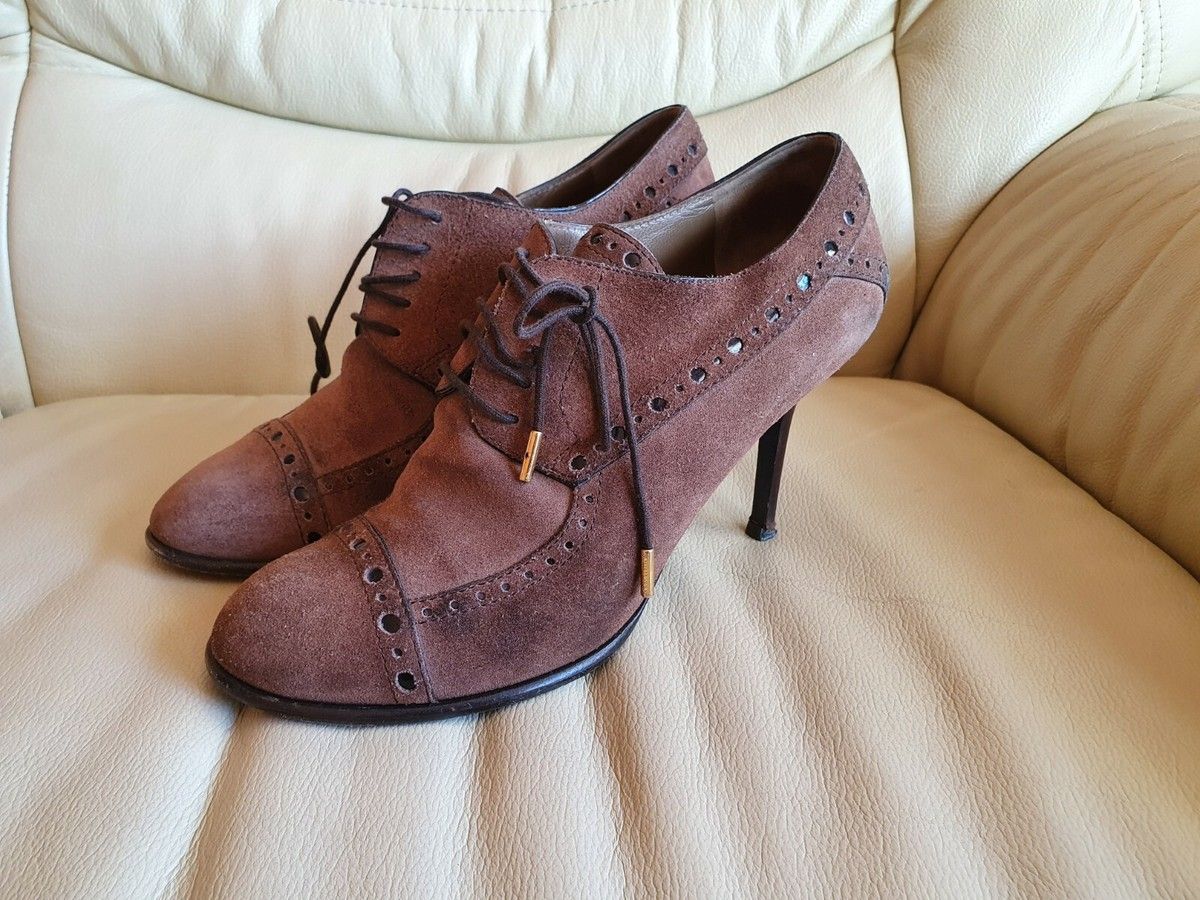
Buying Louis Vuitton shoes secondhand is exciting until a fake lands at the door. Whether someone is asking if Fashionphile is legit or vetting any other resale source, the concern is the same: spending serious money on something that turns out to be counterfeit. Knowing what to check, from stitching quality and hardware markings to date codes and sole construction, makes it far easier to shop with confidence.
For those who prefer a more straightforward route to authenticity, every item in the second hand designer selection at Pick Up Point goes through a careful verification process, removing the guesswork entirely.
Table of Contents
What Makes Louis Vuitton Shoes So Frequently Counterfeited?
Why Is It Important to Authenticate Louis Vuitton Shoes?
What Makes Authentic Louis Vuitton Shoes Different From Counterfeits?
10 Tips to Authenticate Louis Vuitton Shoes
Common Signs of Fake Louis Vuitton Shoes
How PICKUPPOINT Ensures Every Louis Vuitton Shoe Is Authenticated
Get Your Next Luxury Purchase from PICKUPPOINT
Summary
Louis Vuitton ranked as the number one most counterfeited luxury brand globally in 2024 and again in 2025, according to Entrupy's State of the Fake report. The brand's visual identity, particularly its repeating monogram canvas and immediately recognizable silhouettes, makes surface-level copying viable without replicating any actual craftsmanship. Counterfeiters do not need to match quality. They only need to match recognition.
The financial and physical consequences of buying a fake are permanent. Counterfeit footwear carries no resale value, no return channel, and no warranty. Structural failures including sole separation, toe box collapse, and heel lining deterioration appear predictably after regular wear. An American Apparel and Footwear Association study found that 41 percent of counterfeit products tested failed US and international safety standards, with some samples containing phthalates at more than 650 times the regulatory limit.
Authentic Louis Vuitton footwear is built to measurable construction standards that counterfeits cannot replicate through surface finishing alone. Genuine uppers hold 8 to 10 stitches per centimeter on visible seams, compared to 5 to 6 on counterfeit pairs, a difference that determines whether the upper holds for years or separates at high-wear areas within months. Certain models require upward of 250 separate production operations at Louis Vuitton's primary facility in Fiesso d'Artico, Italy, a process that counterfeits compress into a fraction of the steps.
Material composition is where fakes fall furthest behind, and it is also the hardest gap to close visually. Authentic soles use a natural rubber compound that rebounds cleanly under pressure, while counterfeits substitute synthetic EVA foam that compresses permanently and retains chemical odors. Independent AI scent sensors trained on genuine versus counterfeit sneakers have distinguished between the two with greater than 95 percent accuracy based on chemical signatures alone.
Scarcity on the legitimate market accelerates the counterfeit problem. When limited releases like the LV Trainer sell through quickly or command steep resale premiums, counterfeit producers track demand signals and move into production timed to peak interest. The result is that the most desirable pairs are also the ones most likely to have convincing fakes in circulation, making authentication skills most critical precisely where buyers are most motivated to find a deal.
Platform-level authentication produces pattern recognition that individual buyers cannot replicate. Authenticators who inspect thousands of pairs develop calibration that goes beyond standard checklists, recognizing production inconsistencies, batch-specific hardware variations, and seasonal material changes that counterfeiters consistently lag behind on. PICKUPPOINT's second hand designer selection applies this kind of upstream verification to every piece before it reaches a buyer, shifting the question from whether an item is real to whether it is the right fit.
What Makes Louis Vuitton Shoes So Frequently Counterfeited?
Louis Vuitton shoes sit at the center of a perfect storm. The brand has instant global recognition, commands prices that create enormous profit margins for counterfeiters, and produces shoe styles so visually distinctive that even a surface-level copy reads as aspirational from across a room.
"The combination of instant brand recognition and high retail prices makes Louis Vuitton one of the most irresistible targets for counterfeiters worldwide."
🎯 Key Point: Counterfeiters target Louis Vuitton for the perfect combination of global prestige, visual distinctiveness, and massive profit potential.
⚠️ Warning: Even a low-quality fake can pass as aspirational at a glance, which is what counterfeiters exploit.

According to the Entrupy State of the Fake 2025 Report , Louis Vuitton topped the 2024 list as the number one most counterfeited luxury brand globally . The monogram canvas , LV initials , and signature trainer silhouettes are bold, repeating, and immediately readable . Counterfeiters don't need to replicate craftsmanship — they need to replicate recognition , which is the easiest part to copy.
What Counterfeiters Target | Why It's Easy to Fake |
|---|---|
Monogram canvas pattern | Bold, repeating, visually simple to reproduce |
LV initials | High recognition from any distance |
Signature trainer silhouettes | Distinctive shape with no fine detail required |
🔑 Takeaway: Recognition — not craftsmanship — is the real target of counterfeiters. Because LV's identity is so visually dominant , fakers only need to approximate the look to make a sale.
What makes the financial incentive so extreme?
Real Louis Vuitton sneakers typically cost more than $1,000, with limited versions commanding even higher prices on the resale market. The gap between retail price and manufacturing cost generates profits that fund the entire production process. Buyers purchasing counterfeit sneakers sustain supply and demand for counterfeits in a precarious balance.
Most buyers examine visual details—logo placement, color, shape—but high-quality fakes pass this test. Shoppers who use second hand designer platforms like Pick Up Point that verify each item before listing avoid this problem, since items are checked before purchase rather than after.
Why do limited releases accelerate the problem?
When authentic styles like the LV Trainer sell out quickly or command high resale premiums , counterfeiters respond swiftly. They monitor consumer demand, produce copies, and sell them online when interest peaks.
The most wanted pairs—the ones buyers seek at a good price—are also the most likely to have fake versions available. Buyers must know how to check the stitching quality, hardware stamps, sole construction, and date codes on those specific models to ensure authenticity.
How does scale make it harder to authenticate Louis Vuitton shoes today?
According to FashionUnited's coverage of the Entrupy Report , Louis Vuitton is the most counterfeited luxury brand as of 2025. Global manufacturing networks, particularly across Asia, adapt quickly to trending designs and distribute through digital platforms at scale, outpacing enforcement efforts.
Related Reading
Why Is It Important to Authenticate Louis Vuitton Shoes?
Checking if Louis Vuitton shoes are real matters because the results last forever . You cannot get back money you spent on fake shoes , undo exposure to harmful chemicals , or recover resale value once counterfeits are found. Every single risk falls entirely on the buyer .
"You cannot get back money spent on fake shoes, undo exposure to harmful chemicals, or recover resale value once counterfeits are found — every risk falls entirely on the buyer ."
Risk Factor | What You Lose | Reversible? |
|---|---|---|
Financial Loss | Full purchase price on fake shoes | ❌ No |
Health Exposure | Contact with harmful chemicals | ❌ No |
Resale Value | Market value once fakes are identified | ❌ No |
🚨 Warning: Unlike many purchases, buying a counterfeit Louis Vuitton item offers zero recourse — there are no refunds , no exchanges , and no recovery once the money is gone.
🔑 Takeaway: Authentication is not optional — it is the only protection a buyer has before a permanent financial and personal loss occurs.

What financial loss actually looks like
The failure point is usually invisible until it's too late. A counterfeit pair has zero recoverable value: no warranty, no legitimate return channel, no secondary market willing to touch it. In one federal case, a single Atlanta flea market operation had over 72,000 items bearing Louis Vuitton trademarks, and the court awarded $584 million in statutory damages . Individual buyers absorb their share of that ecosystem quietly, one purchase at a time, with no court date and no refund.
Why do counterfeit shoes cause physical harm to nobody photographs?
Fake shoes fail predictably: the sole separates, the toe box deteriorates, and the heel lining tears within weeks of normal use. An American Apparel and Footwear Association study of 39 counterfeit products found that 41 percent failed US and international safety standards, with some samples containing phthalates at more than 650 times the allowed limit. Authentic Louis Vuitton shoes are manufactured without these harmful chemicals.
How does knowing how to authenticate Louis Vuitton shoes protect conscious buyers?
Most shoppers choosing pre-owned luxury prioritize quality over volume and sustainability over fast fashion. Platforms like second hand designer serve buyers who want authentic pieces and understand that secondhand purchasing is a smarter, more intentional path. Our Pick Up Point marketplace enables this by taking authentication seriously. A fake slipping through erodes the trust that makes conscious consumption viable at scale.
Legal exposure that most buyers underestimate
The legal side surprises people. In France, buyers face fines up to twice the product's value. US federal law treats counterfeit trafficking as a serious offense, with fines reaching millions and prison terms up to ten years. Even packages for personal use face customs seizure: you lose both the item and payment with no recourse. Authentication eliminates the risk of unknowingly importing infringing goods, a concern that grows with cross-border purchasing.
Why resale value disappears the moment a fake is identified
Real Louis Vuitton shoes retain their value with proper care. Counterfeit ones cannot be resold, insured, or traded in. Once discovered as fake, they become worthless with no recourse for recovery. A buyer who fails to authenticate loses money and gains nothing of value.
Once you know what you could lose, the next question is: how do you tell the real thing from a fake?
What Makes Authentic Louis Vuitton Shoes Different From Counterfeits?
Real Louis Vuitton shoes meet exceptionally high construction standards that fake ones simply cannot copy. You can see clear differences in how tight the stitches are , the quality of the materials , how well the shoe is shaped , and the careful craftsmanship that goes into making each pair.
"The difference between authentic luxury and a counterfeit isn't just a logo — it's every stitch, material, and finishing detail working together at the highest level." — Luxury Authentication Experts
Feature | Authentic Louis Vuitton | Counterfeit |
|---|---|---|
Stitching | Tight, even, flawless | Loose, uneven, inconsistent |
Materials | Premium leather & canvas | Low-grade synthetic substitutes |
Shape & Structure | Precisely molded, holds form | Poorly shaped, collapses over time |
Finishing Details | Meticulous, hand-inspected | Rushed, visibly imperfect |
🎯 Key Point: The most reliable way to spot a fake is to examine stitching quality up close — counterfeiters consistently fail to replicate Louis Vuitton's precision thread work.
⚠️ Warning: Never judge authenticity by price alone. Some high-end counterfeits are sold at near-authentic prices, making material and construction inspection essential before any purchase.

Where the gap actually shows up
Louis Vuitton's main shoe factory in Fiesco d'Artico , Italy, employs over 500 specialized artisans. Some models require more than 250 separate operations, each a point where quality is enforced or compromised. Counterfeits compress that process into a fraction of the steps, substituting approximate tooling for trained hands. The result is a shoe whose internal structure, last shape, and edge finishing never achieve the same balance, even when the exterior looks convincing.
What does stitch density reveal when you authenticate Louis Vuitton shoes?
Stitch density is one of the clearest measurable signals. Authentic uppers hold 8 to 10 stitches per centimeter on visible seams, each equidistant with consistent penetration depth and zero tension variation. Counterfeit pairs average 5 to 6 stitches per centimeter with irregular spacing that creates structural weak points under flex, determining whether the upper separates at high-wear areas after six months or holds for years.
What your hands and nose can tell you
Material composition is where fakes fall furthest behind. Authentic soles use a natural rubber compound blended with vulcanized cotton fiber that yields under pressure and rebounds cleanly, while counterfeits substitute synthetic EVA foam that compresses permanently and retains chemical odors. Independent AI scent sensors trained on authentic versus counterfeit sneakers have distinguished the two with greater than 95 percent accuracy by analyzing chemical signatures from adhesives, base materials, and finishing treatments. You cannot see that difference in a listing photo, but you can feel it underfoot within a week of wear.
Why does how to authenticate Louis Vuitton shoes go beyond a surface checklist?
Most buyers check for authenticity using a simple checklist: logo, hardware, box. This focuses on the features counterfeiters spend the most time copying. Over 10 percent of luxury goods sold worldwide are fake , making convincing counterfeits common on resale markets. Platforms like second hand designer verify items as part of the buying process, so buyers not rely solely on surface details need that sophisticated fakes are designed to pass. This shift from buyer-beware to verified-before-purchase makes conscious resale shopping truly sustainable.
Pattern alignment as a precision test
On monogram styles, the LV motif lines up continuously across seams and curved surfaces, with the L and V crossing at the exact center of each diamond without compression or shift. Authentic lasts follow hand-shaped wooden forms that produce consistent volume and toe-box geometry across every pair in a production run.
Why does pattern distortion reveal a fake when learning how to authenticate Louis Vuitton shoes?
Counterfeits distort the pattern near stress points by 1 to 2 millimeters and rely on generic lasts that alter the internal shape in ways noticeable only after wearing them. According to a 2025 Entrupy report covered by FashionUnited , Louis Vuitton is the most counterfeited luxury brand in the world, making pattern alignment on LV footwear a primary authentication method.
Knowing what separates genuine from counterfeit is empowering. It transforms authentication into an informed choice and makes pre-owned luxury shopping feel intentional rather than risky.
What happens when those markers get verified by someone who does this professionally at scale before the shoes reach your door?
Related Reading
10 Tips to Authenticate Louis Vuitton Shoes
Checking if Louis Vuitton shoes are real means looking at how well they are made , what materials are used, and the small details that fake makers have trouble copying. The tips below will help you make sure shoes are authentic before you buy them.
"The devil is in the details — authentic Louis Vuitton shoes reveal their legitimacy through precise craftsmanship , flawless stitching , and premium materials that counterfeiters consistently fail to replicate."
💡 Tip: Before spending hundreds or thousands of dollars on a pair of Louis Vuitton shoes, always run through every authentication check on this list — a few extra minutes of scrutiny can save you from a costly mistake .
Authentication Area | What to Check | Red Flag |
|---|---|---|
Craftsmanship | Stitching consistency & precision | Uneven or loose threads |
Materials | Premium leather texture & finish | Cheap, plastic-like feel |
Small Details | Logos, monograms & hardware | Misaligned or blurry prints |
Construction | Sole attachment & overall build | Glue residue or gaps |
⚠️ Warning: Never skip the material and detail checks just because a price seems close to retail — sophisticated fakes are increasingly difficult to spot without a thorough inspection .
🎯 Key Point: Authentic Louis Vuitton shoes are defined by exceptional attention to detail — from perfectly aligned monograms to hand-finished edges — making a systematic authentication approach your most powerful tool against counterfeits.

1. Confirm Seamless Monogram Alignment Across Seams
On authentic monogram styles, the LV initials and interlocking designs line up continuously from panel to panel and around curved areas like the toe box. The L and V meet exactly at the center of each diamond shape with no stretching, compression, or shift. Fake versions often distort the pattern near stress points or seams because the canvas is cut and applied without the pattern-matching discipline used in the ateliers. Hold the shoe under even light and trace the repeat with your eye or a straight edge; any break or warping signals a reproduction.
2. Count Stitch Density and Examine Tension
Real Louis Vuitton shoes have eight to ten stitches per centimeter on visible seams like the quarter and collar edges, with perfectly spaced stitches that pass through the material evenly, with no thread pulling or loose ends. Fake shoes typically have only five or six stitches per centimeter with uneven spacing and inconsistent tension that creates weak spots when the shoe bends. Run your fingernail along the seam and compare both shoes in the pair: authentic workmanship produces the same dense, even pattern on the left and right shoe, while counterfeits show skips or bunching.
3. Test Sole Material, Rebound, and Embossing
Real soles use natural rubber mixed with vulcanized cotton fiber. Press firmly with a fingernail: the surface gives slightly before bouncing back cleanly without leaving a permanent dent or chemical smell. The outsole LV embossing looks sharp, balanced, and pressed in rather than shallow or stamped. Fake soles use synthetic EVA foam that feels spongy, retains dents, and smells of plastics or adhesives.
4. Inspect Insole Printing, Font, and Orientation
Real Louis Vuitton shoes feature clear, bold "Louis Vuitton" text with precise letter shapes, even spacing, and sharp edges. The copyright symbol and letters maintain correct proportions, and indent patterns follow a specific direction. Counterfeit shoes often display thinner or lighter lettering, incorrect spacing, or misaligned indent directions. Verify that both shoes match exactly in text placement and clarity upon close inspection.
5. Verify Country-of-Origin Stamps and Label Placement
Real Louis Vuitton shoes bear "Made in Italy" or "Made in France" stamps on the tongue or inside lining, with sharp, thin letters in the correct font. The brand manufactures exclusively in these European countries. Stamps indicating China, Vietnam, or other origins, or those appearing thick, blurry, or misaligned, indicate counterfeits. Evaluate the stamp against the overall construction quality rather than in isolation.
6. Examine the Lining Material and Interior Finish
Real Louis Vuitton shoes have linings made entirely from leather, such as calf or lambskin, with minimal seams and neatly folded, stitched edges. The inside feels smooth and consistent throughout, with no synthetic mesh or polyester. Counterfeit shoes use thin linings that resemble plastic, often featuring visible glue residue, uneven seams, or deteriorating edges. Examine where the tongue and collar connect to the shoe, checking for perfectly matched thread and ensuring no glue has seen beyond its intended boundaries.
7. Scrutinize Heel and Midsole Construction Details
On sneakers and many loafers, authentic heel counters and midsoles display crisp vertical lines, evenly spaced holes or flower designs, and precise logo outlines without gaps or thick petals. Real midsole gaps include subtle dents that counterfeit shoes commonly omit, while heel piping maintains consistent spacing from nearby materials. Fake shoes often show blurry or oversized parts, missing continuity stitch around curves, and uneven sole gaps. Compare both shoes side by side under bright light to confirm identical shaping and depth of detail.
8. Evaluate Hardware, Eyelets, and Engravings
Real metal parts—eyelets, buckles, hardware—feel solid and cool to the touch with substantial weight. Engravings of the LV logo or brand name are deep, crisp, and even, without rounded edges or shallow marks. Fake hardware is typically lighter zinc-alloy with a thin coating that chips easily and poorly defined stamps. Test the weight difference between shoes and run your fingernail across engravings to check depth and sharpness.
9. Review Production Tags and Date Codes When Present
Many Louis Vuitton shoes made after 2017 have a small leather or fabric tag sewn inside the tongue with a factory code: two letters followed by four digits indicating the production week and year. The stamping should be clear, evenly pressed, and free of bleeding or misalignment. Earlier shoes or certain styles may lack a visible code, so a missing code alone doesn't indicate counterfeiting. Counterfeits often display incorrect placement, wrong format, or thick, blurry printing. Compare the code style with overall construction quality rather than relying on it as sole proof.
10. Restrict Purchases to Authorized Channels
Buy Louis Vuitton shoes through Louis Vuitton boutiques, the official website, or verified pre-owned specialists. This keeps transactions within controlled supply chains and minimizes counterfeit risk. For pre-owned options, platforms like Pick Up Point offer authenticated designer goods through their consignment process.
When you use these ten checks together, they provide a reliable framework based on the brand's documented manufacturing standards. Consistent results across stitching density, material behavior, alignment, and finishing distinguish genuine Louis Vuitton footwear from counterfeits.
Common Signs of Fake Louis Vuitton Shoes
Fake Louis Vuitton shoes have clear flaws that real pairs do not have. Looking closely at how they are made, what materials are used, the brand markings, and how they are put together can show you critical warning signs before you buy them.
"The difference between authentic and counterfeit luxury shoes often comes down to four key areas: construction quality, materials, brand markings, and assembly precision." — Luxury Authentication Experts
⚠️ Warning: Even small details like stitching inconsistencies, off-center logos, or low-quality materials are immediate red flags that signal a fake pair.
Authentication Area | What to Check | Red Flag on Fakes |
|---|---|---|
Construction | Stitching evenness and density | Uneven, loose, or fraying stitches |
Materials | Leather texture and canvas quality | Cheap feel, strong chemical smell |
Brand Markings | Logo placement and font accuracy | Blurry print, wrong spacing |
Assembly | Sole attachment and lining finish | Glue residue, misaligned panels |
💡 Tip: Always inspect all four areas together — most convincing fakes will pass one or two checks but rarely pass all of them.
🔑 Takeaway: Knowing the warning signs across construction, materials, markings, and assembly is your most reliable defense against purchasing a counterfeit Louis Vuitton pair.

Irregular or Incomplete Stitching
Real Louis Vuitton shoes have tight, even stitching that runs continuously around logos, curves, and seams without skips or breaks. Fake shoes often have missing stitches, especially where lines curve across the top or around the LV print, along with uneven spacing and inconsistent stitching. Counterfeit manufacturers prioritize speed over the careful stitch density that real workshops achieve, leaving visible gaps and weak spots.
Distorted Monogram Pattern Alignment
On authentic monogram styles, the LV initials and designs align smoothly across seams and around the toe box. The L and V cross exactly at the center of each diamond shape. Counterfeits squeeze, stretch, or shift the pattern near curved areas and stress points because fake canvas is cut and applied without the careful pattern-matching process used on genuine pairs, creating breaks or warping that real construction prevents.
Spongy Sole Material and Weak Embossing
Shoe soles made from natural rubber compress when pressed and spring back without permanent marks or chemical odors. Fake soles feel soft and squishy, retain fingernail dents, and smell of artificial foam. On counterfeit shoes, the LV design stamped on the bottom appears shallow, uneven, or blurry rather than sharp and deeply pressed.
Flawed Insole Printing and Typography
Real insoles feature bold, evenly spaced text with correct letter sizes, proper copyright symbol placement, and consistent font depth. Fake insoles show thinner letters, uneven spacing (especially in "LOUIS VUITTON" or "PARIS"), incorrect symbol positioning, and fainter or misshapen printing, resulting from approximate tooling that fails to match real production standards.
Incorrect Heel and Midsole Detailing
Real heels and midsoles have clean vertical lines, properly sized designs or flower elements, and small indents within sole gaps. Fake ones show oversized or thick petals, missing or poorly defined lines, wrong spacing from leather piping, and sole gaps without the expected indent. These differences become clear when comparing the two shoes side by side under good light.
Poor Country-of-Origin Stamps and Labels
Real Louis Vuitton shoes display clear "Made in Italy" or "Made in France" markings in the correct thin font and exact placement on the tongue or lining. Counterfeit shoes often have thick, blurry, or misaligned text, wrong country references, or stamps that don't match the shoe's overall quality. Authentic production stays limited to specific European facilities, so any change in stamp quality or content signals a counterfeit.
Visible Glue Residue and Uneven Finishing
Real pairs show clean, finished edges with no extra glue around the sole attachment or seams. Fake ones often display glue residue, rough or uneven edge paint, and mismatched finishing between shoes, since they're made quickly without the careful hand-finishing steps used on genuine footwear.
These signs work best when checked together rather than in isolation. Consistent problems across stitching, pattern alignment, sole behavior, printing, and finishing provide reliable proof that a pair does not meet Louis Vuitton's production standards.
How PICKUPPOINT Ensures Every Louis Vuitton Shoe Is Authenticated
PICKUPPOINT applies an ironclad authenticity guarantee to every Louis Vuitton shoe listed on the platform. This shifts the authentication burden away from the individual shopper entirely, which matters most when the physical markers of a genuine pair — stitch density, sole composition, and hardware finishing — require trained judgment to assess accurately.
"The physical markers of a genuine pair — stitch density, sole composition, and hardware finishing — require trained judgment to assess accurately." — PICKUPPOINT Authentication Standard
🔑 Takeaway: PICKUPPOINT's authenticity guarantee means you never have to second-guess whether a Louis Vuitton shoe is real — every listing is verified before it reaches you.
✅ Best Practice: When shopping for luxury footwear, always prioritize platforms that offer a platform-level authentication guarantee rather than relying on seller-provided photos or descriptions alone.
Authentication Marker | What Experts Assess |
|---|---|
Stitch Density | Uniformity, spacing, and thread quality |
Sole Composition | Material authenticity and construction method |
Hardware Finishing | Weight, engraving precision, and surface coating |
Why do open marketplaces fail buyers trying to authenticate Louis Vuitton shoes?
The main problem in most used luxury item sales is the gap between seller claims and what buyers can verify themselves. Open marketplaces amplify this gap. Even a shopper who knows every detail from insole stamp placement to the exact weight of a Damier Ebène outsole faces a fundamental challenge: they rely on photographs and seller descriptions against a counterfeiting industry with decades of experience making fakes look authentic. This is a structural problem, not a skills problem.
How does PICKUPPOINT convert authentication into a proactive guarantee?
Pick Up Point solves this problem by verifying items before shipment. Our platform transforms the typical process: instead of buyers requesting refunds after receiving counterfeit goods, we authenticate everything upfront. For shoppers intentionally choosing pre-owned luxury items to reduce environmental impact and avoid fast fashion, our early verification makes their choice feel confident rather than risky.
How does scale change the quality of authentication?
The critical difference between platform-level authentication and individual verification is volume. According to POIZON's authentication data, over 600 million items have been authenticated through their process, producing pattern recognition no single buyer can replicate. Authenticators inspecting thousands of pairs recognize production inconsistencies, batch-specific hardware variations, and seasonal material changes that counterfeiters lag behind on, exposing individual buyers cannot match.
Why does catalog depth matter when you authenticate Louis Vuitton shoes?
Scale matters for catalog depth. POIZON reports 1.5 million-plus products across 400-plus globally sourced brands, requiring authentication systems that handle varying construction standards across models and years. Authenticating a Louis Vuitton Archlight from 2019 demands different information than a Run Away sneaker from 2022. Platforms build organized reference libraries, while individual buyers rely on general guidelines that ignore production dates.
Choosing pre-owned luxury with an authenticity guarantee provides the confidence of buying new without the environmental cost of first production.
Related Reading
Get your Next Luxury Purchase from PICKUPPOINT
Authenticating Louis Vuitton shoes requires knowledge of genuine construction, accurate branding, and quality soles. Confidence matters when entering the secondhand luxury market, where the difference between an authentic piece and a convincing fake can be nearly impossible to spot without expertise.
💡 Tip: Before purchasing secondhand luxury items, verify construction quality , branding accuracy , and sole integrity —the three non-negotiable pillars of LV authentication .
"The secondhand luxury market demands knowledge of genuine construction and accurate branding—confidence is everything when the stakes are this high."
✅ Best Practice: Treat authentication knowledge as your essential first step, not an afterthought, before committing to any luxury resale purchase .

Pick Up Point is a Macau-based consignment and collection service that completely eliminates authentication uncertainty . Every piece is curated and authenticated before reaching you, shifting your decision from "is this real?" to "is this the right pair for me?" Pick Up Point also handles consignment and wardrobe cleanup for unworn designer pieces, making it a full-service luxury solution . Choosing secondhand here is a thoughtful move toward well-made, responsibly sourced fashion —luxury done right .
🎯 Key Point: With Pick Up Point , every item is pre-authenticated —so you shop with complete confidence, not guesswork.
Feature | Pick Up Point | Typical Resale Market |
|---|---|---|
Authentication | ✅ Curated & verified | ❌ Buyer beware |
Consignment Service | ✅ Full wardrobe cleanup | ❌ Rarely offered |
Peace of Mind | ✅ Guaranteed | ❌ Uncertain |
Sourcing Ethics | ✅ Responsibly sourced | ⚠️ Varies widely |