


Is Fashionphile Legit? 10 Best Alternatives in 2026
Is Fashionphile legit? Pick Up Point breaks down its authenticity process and reveals 10 top alternatives for 2026.

Spending hundreds or thousands of dollars on a pre-owned Louis Vuitton or Chanel bag raises fair questions about authenticity, return policies, and platform reliability. Fashionphile is one of the more recognized names in luxury consignment, but whether it actually delivers on its promises is worth examining before committing to a purchase.
For shoppers who want a straightforward alternative backed by verified, curated pieces, Pick Up Point offers a dependable option for anyone exploring second hand designer goods with confidence.
Table of Contents
Is Fashionphile Legit? Pros, Cons, and Buyer Experience
Why Do Some Luxury Shoppers Look Beyond Fashionphile?
What Should You Look for in a Luxury Resale Platform?
10 Best Fashionphile Alternatives in 2026
How to Choose the Best Fashionphile Alternative for Authentic Designer Consignment
Why PICKUPPOINT Is a Trusted Choice for Authentic Designer Consignment
Get Your Next Luxury Purchase from PICKUPPOINT
Summary
The pre-owned luxury market is expanding at a rate that makes platform credibility more consequential than ever. The Simon-Kucher Global Luxury Consumer Trends Study 2025 projects annual growth of 10 to 15 percent through 2025, and pre-owned luxury is already growing three times faster than new luxury according to Constancy Researchers. That acceleration means more buyers are entering the space with higher expectations, and the platforms serving them are setting standards at scale.
Authentication quality more than most buyers realize before their first high-value purchase. Rigorous platforms run items through brand-specific experts vary checking construction details, date codes, hardware, serial numbers, and materials, then issue digital certificates with unique identifiers. This matters because 41 percent of resale buyers still carry wariness about counterfeits, and a generic "authenticated" stamp does little to close that gap for someone spending thousands of dollars on a single piece.
Condition grading is where many platforms quietly create friction. Vague descriptors without high-resolution photos, documented disclosure of repairs, and wear produce an information gap that only closes when the item arrives at the buyer's door. Platforms that have deployed AI-assisted authentication tools alongside human brand experts report an estimated 18 percent reduction in return rates between 2023 and 2025, which suggests that measurable operational investment, not promises, is what actually moves the needle.
Seller economics reveal which direction a platform's incentives actually run. Industry averages show sellers recovering only 35 to 55 percent of original retail after fees ranging from 15 to 38 percent. When a platform's pricing team controls the final listing price rather than the individual consignor, the misalignment affects both sides of the transaction: buyers receive no meaningful discount while sellers still receive a fraction of the sale.
Sustainability has become a structural factor in resale platform choice, not just a marketing overlay. A J.P. Morgan consumer survey across the U.S. and Europe found that 60 percent of consumers use resale platforms to purchase secondhand luxury goods, with a growing share citing environmental reasoning alongside value. Over 50 percent of luxury shoppers consider sustainability an important factor in purchasing decisions, which means a delayed refund or a condition mismatch does not just cost money. It breaks the story a buyer was telling themselves about making a responsible choice.
Trust signals worth evaluating before committing to a platform include independent credibility markers such as B Corp certification, physical locations for in-person authentication, and documented return rate improvements tied to specific operational investments. The luxury resale platforms market is worth USD 41.6 billion in 2026 and is projected to reach USD 104.5 billion by 2036, according to Future Market Insights. This means the gap between platforms that invest in standards and those that scale on convenience will become more visible, not less, as the market grows.
PICKUPPOINT's second hand designer marketplace addresses the trust gap by combining verified authentication with precise condition ratings and global shipping, removing the interpretive friction that drives most post-purchase disputes in luxury resale.
Is Fashionphile Legit? Pros, Cons, and Buyer Experience
FASHIONPHILE is a real, legitimate luxury resale company — and the numbers back it up. It holds an A rating with the Better Business Bureau, earns a remarkable 4.75 out of 5 average across 885+ BBB reviews, and guarantees that every single purchase is authenticated before it reaches your hands.
"FASHIONPHILE holds an A rating with the Better Business Bureau and a 4.75 out of 5 average across 885+ verified reviews — making it one of the most trusted names in luxury resale." — BBB Consumer Data
💡 Tip: Always check a resale platform's BBB rating and review count before buying — a high volume of reviews combined with a strong score is a much more reliable trust signal than a perfect score with only a handful of ratings.
✅ Best Practice: Look for platforms like FASHIONPHILE that offer an authenticity guarantee — this is your most critical protection when buying pre-owned luxury goods online.
Trust Metric | FASHIONPHILE Score |
|---|---|
BBB Rating | A |
Average Review Score | 4.75 out of 5 |
Number of BBB Reviews | 885+ |
Authenticity Guarantee | Yes — every item |
What makes the authentication process trustworthy?
Every item on FASHIONPHILE goes through internal authentication specialists before reaching buyers. The company rejects pieces that fail its standards, giving the process real enforcement rather than symbolic value. Nearly 5,000 Trustpilot reviewers consistently cite accurate product photos, secure packaging, and items arriving in condition that matches or exceeds their listings as evidence that authentication works in practice.
Where does the experience get complicated?
The failure point is usually condition grading, not authenticity. Luxury wear is subjective . A corner scuff that one specialist grades as "good" another buyer reads as "fair," creating friction. Negative BBB reviews cluster around this tension and slower customer service response times during disputes or returns: signs of a scaling business where human judgment and high volume occasionally collide, not fraud.
What happens when buyer trust breaks down in resale?
Most buyers approach luxury resale by finding a reputable platform, trusting listing photos, and hoping customer service responds if something goes wrong. This works until it doesn't, which can erode confidence in secondhand shopping. Platforms like Pick Up Point combine curation with a values-driven model that treats the buyer, seller, and environmental impact as equally important.
Is the price worth it?
FASHIONPHILE charges more than peer-to-peer marketplaces because you're paying for certainty: authentication, a return window, and accountability from a BBB-accredited business, not the bag itself. Buyers seeking the lowest price will find cheaper listings elsewhere. Those wanting confidence in authenticity will find the higher price reasonable.
Why do seller payouts feel lower than expected?
Sellers feel the gap most sharply. Buyout offers are calculated to preserve resale margin, not reflect retail value. That's not a flaw: it's the honest math of a business that must authenticate, store, photograph, and resell items while absorbing inventory risk.
What does understanding Fashionphile's limits reveal?
Once you understand what FASHIONPHILE does well and where it leaves room for doubt, a more interesting question emerges.
Related Reading
Why Do Some Luxury Shoppers Look Beyond Fashionphile?
Luxury shoppers look beyond Fashionphile when the gap between what they expect and what they actually get becomes too expensive to ignore . The complaints are documented and financially specific : returns stalled for weeks , condition ratings that don't match what arrives, and payouts disappearing into dispute cycles . When a single transaction involves thousands of dollars , trust is the entire product .
"When a single transaction involves thousands of dollars , trust isn't just a feature — it's the entire product." — Core insight driving luxury resale platform switching behavior
💡 Tip: If you've experienced a condition mismatch or a stalled return , you're not alone — these are the most commonly cited reasons luxury buyers and sellers begin exploring Fashionphile alternatives .
⚠️ Warning: A payout dispute on a high-value item doesn't just cost money — it costs weeks of back-and-forth communication, making platform trust the single most critical factor in the luxury resale decision .
Pain Point | Impact on Shopper | Risk Level |
|---|---|---|
Returns stalled for weeks | Cash tied up, item unavailable | 🔴 High |
Condition ratings mismatched | Item received doesn't match listing | 🔴 High |
Payouts lost in dispute cycles | Seller income delayed or denied | 🔴 High |
Eroded platform trust | Drives shoppers to competitors | 🟠 Medium-High |
🔑 Takeaway: The decision to look beyond Fashionphile is rarely impulsive — it's the result of financially painful experiences that make platform reliability non-negotiable for luxury resale shoppers.
What structural friction makes buyers question if Fashionphile is legit?
The pattern across formal complaints is structural friction. A buyer who returns a bag on May 20 and lacks both the item and the refund by June 24 experiences a system in which the burden of proof falls on the customer, not the platform. In luxury resale, stakes are higher, items irreplaceable, and the emotional weight real. Condition grading compounds this friction. When a listing reads "Excellent" but arrives with tarnished hardware or visible creasing, the buyer faces a time-pressured choice: initiate a return within 15 days and absorb shipping costs and the uncertainty of approval, or keep a misrepresented item. The 249 formal BBB complaints over three years, with 132 closed in the most recent 12-month period, demonstrate this is not uncommon.
How does a growing resale market raise the stakes for platform trust?
The pre-owned luxury market is growing fast. According to the Simon-Kucher Global Luxury Consumer Trends Study 2025, the market is expected to grow 10 to 15 percent annually through 2025. Over 50% of luxury shoppers prioritize sustainability, choosing resale platforms for their values, not price alone. A delayed refund or inaccurate condition grade undermines the responsible choice buyers believe they're making. Most shoppers research before committing: reading Trustpilot reviews, checking BBB complaint histories, and asking in resale communities. This reveals a hidden cost: the research burden falls entirely on the buyer or seller, not the platform. Platforms like Pick Up Point build the trust layer into the experience itself rather than leaving shoppers to dig through complaint databases.
When do seller payouts signal that platform incentives have diverged?
Sellers who treat resale as an ongoing business feel this most acutely. When a payout near $15,500 is held back long enough for a seller to file formal complaints with the FTC, state DOJ offices, and the BBB, the platform's incentives and the seller's interests have diverged. Once that trust breaks, it rarely repairs itself. Knowing what goes wrong is useful, but knowing what to look for in a platform that gets it right changes the decision.
What Should You Look for in a Luxury Resale Platform?
The real difference between a platform you can trust and one that loses your trust is the gap between what a company promises and what it actually delivers across thousands of transactions.
"The gap between what a company promises and what it actually delivers consistently, across thousands of transactions, is the true measure of a platform worth trusting."
🎯 Key Point: When evaluating a luxury resale platform, examine the track record of consistent, verified delivery across real transactions rather than marketing claims.
💡 Tip: Before committing to any resale platform, research buyer and seller reviews across multiple sources to verify whether the platform's promises hold up at scale.
What Platforms Promise | What to Verify |
|---|---|
Authenticity guarantees | Independent verification process & dispute resolution |
Competitive pricing | Actual sold prices vs. listed prices |
Seller trustworthiness | Seller ratings across multiple completed transactions |
Fast, secure shipping | Real delivery timelines & packaging standards |
Buyer protection | Refund and return policy in practice, not just in print |
Authentication depth matters more than authentication claims
Strict platforms check every item through brand experts who examine construction, date codes, hardware, serial numbers, and materials against manufacturer specifications. They verify provenance, employ multiple trained reviewers per item, and use supporting technology for eligible pieces before issuing a digital certificate with a unique identifier. This matters because 41 percent of resale buyers worry about counterfeits—a single reviewer or generic "authenticated" stamp cannot address this concern. Platforms closing this gap treat authentication as a repeatable system, not a marketing claim.
Why does condition grading cause so many problems on resale platforms?
The failure point is usually specificity. Platforms using vague descriptors like "good used condition" without high-resolution photos from multiple angles, written disclosure of repairs, and documented wear create an information gap that closes only upon delivery. In categories like handbags, this gap drives return rates well above what careful grading would produce. Buyers who spend near-retail prices on resale items and discover condition mismatches absorb return shipping costs, lost time, and frustration.
How does grading infrastructure affect buyer trust at scale?
Most shoppers rely on brand reputation alone, trusting platforms to grade accurately. As transaction volume scales without proportional investment in grading infrastructure, condition inconsistencies multiply. Platforms like Pick Up Point combine authenticated condition documentation with a values-driven model built around transparency for both buyers and sellers.
Seller economics reveal who the platform actually serves
According to Future Market Insights, the luxury resale platforms market is worth USD 41.6 billion in 2026 and is projected to reach USD 104.5 billion by 2036. This growth pressures platforms to increase volume quickly, widening commission structures. Industry averages show sellers receive only 35 to 55 percent of the original retail price after fees ranging from 15 to 38 percent. When platforms control final listing prices and keep them near full retail, the incentive problem becomes clear: buyers receive no meaningful discount, and sellers receive only a fraction of the sale price.
Trust signals worth taking seriously
Independent credibility markers carry more weight than self-reported quality claims. B Corp certification, physical flagship locations for in-person authentication, and documented return rate improvements tied to specific operational investments reflect genuine alignment between what a platform says and how it operates. Platforms deploying AI-assisted authentication tools alongside human brand experts report an estimated 18 percent reduction in return rates between 2023 and 2025, a measurable outcome worth requesting before committing high-value items to any platform. The platform you choose next reflects what you believe resale should stand for.
Related Reading
10 Best Fashionphile Alternatives in 2026
The best Fashionphile alternative depends on what matters most to you: strict authentication, better prices, rare Hermès or Chanel pieces, faster customer service, or integrated buying and selling. Below are the best Fashionphile competitors, starting with a marketplace that combines authenticated luxury resale with sustainable fashion services.
"The right resale platform can mean the difference between overpaying and unlocking serious savings — or between waiting weeks and finding your dream piece today." — Luxury Resale Industry Insight
💡 Tip: Before committing to any platform, always compare authentication processes, seller fees, and return policies — these three factors will determine your overall experience.
Factor | Why It Matters |
|---|---|
Authentication | Protects you from counterfeit luxury goods |
Pricing | Determines real value vs. market rate |
Rare Inventory | Access to Hermès , Chanel , and hard-to-find pieces |
Customer Service | Impacts resolution speed and overall satisfaction |
Buy & Sell Integration | Enables seamless trading in one place |
🎯 Key Point: No single platform wins on every dimension — the best Fashionphile competitor for you is the one that aligns with your specific priorities, whether that's price , selection , or trust .
1. Pickuppoint
Pickuppoint is a second-hand shopping website focused on recycling fashion with an explicit authenticity guarantee for pre-owned items. It offers buyers a curated selection of luxury handbags and bags from numerous designer brands, presented with clear percentage-based condition ratings, such as 95%, 90%, or 85% new. The platform supports global shipping, offers currency options in MOP or USD, and includes an introductory 10% discount on first-time purchases with code PUPFIRST , along with organized categories for easy browsing of bags and related items.
Key features
Explicit authenticity guarantee — It is a second-hand shopping website with an authenticity guarantee. This upfront commitment gives buyers immediate confidence in legitimacy without needing to dig through separate policy pages, offering clearer assurance than platforms where authentication details may be less prominently stated on the main site.
Percentage-based condition grading system — Items are rated with specific percentages such as 90% new, 95% new, 85% new, or 80% new. This granular, standardized system provides more precise expectations about wear and quality than vaguer descriptions on some competing sites, helping buyers avoid surprises with item condition upon arrival.
Extensive selection of luxury brands — The platform carries pre-owned bags from a broad range of designers including Hermes, Chanel, Louis Vuitton, Gucci, Celine, Dior, Valentino, Givenchy, MIU MIU, Saint Laurent, Prada, Fendi, Burberry, Bottega Veneta, Chloe, Loewe, and many others. This wide variety increases the chances of finding specific or rare models compared to more limited inventories on some platforms.
Global shipping— Explicitly supports worldwide shipping, making pre-owned luxury bags accessible to international buyers without geographic restrictions that may apply elsewhere. This expands options for collectors outside primary markets and provides a straightforward path for cross-border purchases.
First-purchase 10% discount with code PUPFIRST — New buyers receive 10% off their initial order using this code. This immediate value incentive lowers the entry cost for trying verified pre-owned luxury pieces, offering better upfront savings than platforms without prominent new-customer promotions.
Dual currency support (MOP and USD) — Shoppers can view and transact in either MOP or USD. This flexibility reduces friction for buyers in different regions compared to single-currency platforms that may require manual conversions or additional fees.
Organized categories for targeted browsing — Products are categorized clearly (eg, all bags, small leather goods), allowing efficient searches for specific types of pre-owned luxury handbags. This structured navigation helps buyers quickly locate relevant items without sifting through unrelated fashion categories.
Clear product examples with condition and pricing — Listings include specific details like priced in MOP. These transparent, example-driven listings give concrete references for quality and value, supporting more informed decisions than platforms with less consistent item-level detail.
Emphasis on recycling and second-hand fashion — The platform positions itself around recycling fashion while maintaining quality standards. This focus highlights the circular-economy benefits of pre-owned luxury bags, appealing to buyers who value sustainability alongside authenticity in ways that may be less central on other sites.
Online-first accessibility with buyer-friendly promotions — The entire experience is built around an easy-to-navigate website with visible discounts and guarantees. This streamlined digital approach can feel more welcoming for new or international buyers seeking pre-owned luxury bags without complex processes.
Pros
Strong, upfront authenticity guarantee builds immediate buyer trust.
Precise percentage-based condition ratings offer superior transparency on item quality.
A broad brand selection and clear categorization improve the discovery of desired luxury bags.
Global shipping and dual-currency options enhance accessibility for international shoppers.
First-purchase discount provides tangible savings and encourages trying the platform.
Focus on recycling adds an appealing sustainability angle to pre-owned purchases.
Cons
Pricing and examples are shown primarily in MOP, which may involve conversion for some international users.
Accessibility
Pickuppoint is accessible entirely through its official website at https://pickuppoint.mo/ , with global shipping options that support purchases from most locations. Buyers can browse categories, view condition-rated items, select currency (MOP or USD), and apply the PUPFIRST discount code directly on the site. No physical retail locations or mobile app are mentioned, making it a straightforward web-based experience optimized for online discovery and international delivery of pre-owned luxury bags.
2. The RealReal
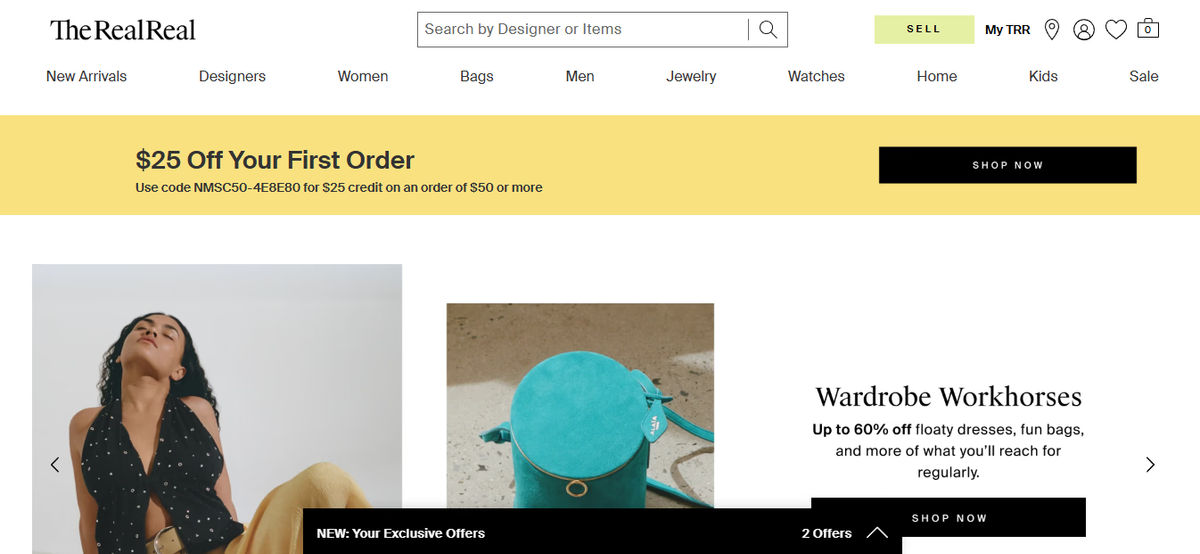
The RealReal stands as a leading authenticated pre-owned luxury consignment and resale platform with a robust selection of designer handbags and accessories. It combines online convenience with physical retail presence and expert verification processes, offering buyers a reliable path to high-quality pre-loved pieces while emphasizing transparency in condition and pricing.
Features
In-house team of authentication experts who inspect every item for authenticity and quality.
Detailed condition reporting and high-resolution photography for accurate buyer expectations.
Extensive inventory spans Hermes, Chanel, Louis Vuitton, Gucci, and many other luxury brands.
Integration of online shopping with physical store locations in major US cities for in-person viewing or pickup options.
Transparent pricing with frequent sales and value-focused edits on pre-owned bags.
Mobile app for convenient browsing, purchasing, and account management on the go.
Established return policy supporting buyer confidence in online luxury purchases.
Pros
Rigorous in-house authentication and detailed condition details help eliminate doubts about legitimacy or hidden flaws.
The combination of an online platform and physical stores provides flexible options to inspect bags before committing.
Wide selection and regular promotions deliver strong value, addressing concerns about overpaying for pre-owned items.
App and user-friendly interface streamline the buying process for busy shoppers.
A proven track record with authenticated luxury goods builds trust, leading to repeat purchases of specific designer models.
Cons
Primarily US-focused physical presence may limit in-person access for international buyers.
Consignment model can sometimes result in variable inventory turnover for the most sought-after pieces.
Pricing, while competitive during sales, may sit higher than peer-to-peer marketplaces for comparable items.
3. Rebag

Rebag specializes in expertly vetted pre-owned luxury handbags, watches, and accessories with a focus on transparent pricing and quality assurance. It provides buyers with a streamlined experience for authenticated designer pieces, often highlighting value through clear condition assessments and reliable service standards.
Features
Expert vetting and authentication process for every pre-owned luxury bag.
Clear condition descriptions paired with professional photography to set accurate expectations.
Curated selection of iconic brands such as Chanel, Hermes, Louis Vuitton, and Gucci.
Pricing transparency tools that help buyers compare value against retail or market rates.
Options for both online shopping and select physical retail partnerships (eg, Bloomingdale's locations).
Emphasis on quality control to minimize issues with authenticity or condition upon arrival.
Support for international considerations through shipping and platform accessibility.
Pros
Strong vetting and transparent condition reporting directly reduce risks of receiving items that don't match descriptions.
Focus on value and pricing clarity helps buyers secure fair deals on desired luxury bags without hidden surprises.
Physical retail touchpoints in partner stores provide convenience for those who prefer to see items in person.
Streamlined platform experience supports quick browsing and confident purchasing decisions.
Specialization in bags and accessories makes it efficient for targeted luxury handbag searches.
Cons
Selection can vary and may emphasize more popular or current models over extremely rare vintage pieces.
Pricing, while transparent, sometimes reflects premium positioning compared to broader marketplaces.
Physical locations are limited to select US partnerships rather than widespread standalone stores.
4. Vestiaire Collective

Vestiaire Collective operates as a global authenticated marketplace for pre-owned luxury fashion, with a strong emphasis on handbags and accessories from leading designers. It connects buyers with verified sellers worldwide while maintaining quality standards that support confident online purchases of pre-loved luxury items.
Features
Authentication process applied to listed pre-owned luxury bags to protect buyers.
Detailed seller-provided descriptions and photos, often supplemented by platform standards.
Vast international selection including Hermes, Chanel, Louis Vuitton, Gucci, and emerging designers.
Community-driven marketplace model with options for both fixed-price and negotiation-style buying.
Global shipping network that facilitates purchases across borders.
Focus on sustainability and circular fashion through pre-owned luxury offerings.
Tools for filtering by brand, condition, price, and style to refine searches efficiently.
Pros
Authentication and platform standards help address authenticity concerns common in pre-owned luxury buying.
An extensive global inventory increases the chances of finding specific or hard-to-locate bag models.
International shipping and community aspects provide broader access and potentially competitive pricing.
Filtering and discovery tools make it easier to locate well-described items matching buyer criteria.
Emphasis on pre-owned luxury supports value-driven purchases with environmental considerations.
Cons
Peer-to-peer elements can lead to variability in seller responsiveness or in the exact presentation of the item.
Authentication standards, while present, may differ slightly from fully in-house expert models on some items.
Shipping times and costs vary by seller location and can add complexity for urgent needs.
5. Yoogi's Closet

Yoogi's Closet focuses on authenticated pre-owned luxury handbags, watches, and accessories with an emphasis on quality verification and buyer-friendly processes. It serves as a specialized destination for those reliable pre-loved designer pieces with attention to detail in presentation and service.
Features
Dedicated authentication emphasis to verify pre-owned luxury bags before listing.
Thorough condition assessments and supporting imagery for transparent buyer information.
Targeted inventory of luxury handbag brands including Chanel, Hermes, Louis Vuitton, and Gucci.
Streamlined online shopping experience optimized for discovering specific styles and models.
Commitment to quality control that supports consistent standards across listings.
Options for secure purchasing with attention to packaging and delivery reliability.
Platform design that highlights both popular and select harder-to-find pre-owned items.
Pros
Authentication focus and detailed condition information help prevent issues with misrepresented items.
A specialized handbag and accessory focus makes searching for specific luxury models more efficient.
Quality-oriented approach contributes to higher buyer confidence in the pre-owned luxury segment.
User-friendly site supports easy navigation and informed decision-making on high-value purchases.
Attention to presentation and service details addresses common frustrations with inconsistent online luxury experiences.
Cons
Inventory size may be more curated than massive general marketplaces, potentially limiting ultra-rare finds at times.
Pricing tends to reflect authenticated luxury positioning rather than the lowest possible peer-to-peer rates.
Primarily online model with limited or no widespread physical retail locations for in-person inspection.
6. What Goes Around Comes Around

What Goes Around Comes Around (WGACA) is a premier destination for authenticated pre-owned luxury fashion, with a notable emphasis on handbags and accessories from iconic designers. It blends online accessibility with physical retail experiences, offering buyers carefully curated, verified pieces that emphasize quality and heritage in the secondary luxury market .
Features
Professional authentication for all pre-owned luxury bags listed on the platform.
Detailed condition assessments accompanied by professional photography and descriptions.
Strong selection of heritage brands including Chanel, Hermes, Louis Vuitton, and Gucci.
Availability through both online shopping and physical boutique locations for in-person evaluation.
Emphasis on vintage and rare pieces alongside contemporary luxury handbags.
Secure packaging and shipping protocols designed for high-value items.
A platform that highlights provenance and story behind select pre-owned bags.
Pros
Physical stores allow buyers to inspect bags in person, reducing the risk of online-only condition surprises.
Rigorous authentication and heritage focus provide confidence in legitimacy and quality for investment-level pieces.
A curated selection helps locate specific or vintage models that address availability gaps elsewhere.
Professional presentation and packaging minimize shipping-related damage or disappointment.
Blend of online and offline options supports flexible buying experiences tailored to buyer preferences.
Cons
Pricing can reflect the premium positioning and physical retail overhead, sometimes higher than pure online alternatives.
Inventory may lean toward curated or higher-end pieces, limiting options for more budget-conscious luxury buyers.
Availability of in-person locations is concentrated in select cities, primarily benefiting U.S. or travel-ready shoppers.
7. ReKlaim
ReKlaim positions itself as a technology-driven marketplace dedicated to authenticated pre-owned luxury handbags and accessories. It appeals to buyers seeking modern, conscious luxury shopping with emphasis on verification technology, transparent processes, and a curated approach to pre-loved designer items.
Features
Advanced technology-supported authentication for pre-owned luxury bags.
Clear condition transparency through detailed listings and visuals.
Focused inventory of designer handbags from major luxury houses like Chanel, Hermes, and Louis Vuitton.
Emphasis on conscious luxury and sustainability in the resale model.
Streamlined online platform optimized for discovery and purchasing.
Secure transaction and shipping practices for valuable items.
Tools or features that highlight value and provenance in listings.
Pros
Technology-enhanced authentication addresses longstanding concerns about counterfeit risks in the pre-owned luxury market.
Curated and transparent listings help buyers avoid condition mismatches and make informed choices.
A sustainability focus adds appeal to buyers who value circular fashion alongside quality pieces.
Modern platform design supports efficient searching for specific bag models or styles.
Conscious luxury positioning sets it apart for buyers who prioritize ethical resale practices.
Cons
As a more specialized or emerging platform, inventory depth for ultra-rare pieces may not match that of larger, established sites.
Technology focus might appeal more to digitally native buyers, with less emphasis on widespread physical retail.
Newer positioning could mean fewer user reviews or a shorter track record than veterans in the space.
8. 1stDibs

1stDibs functions as a high-end online marketplace for luxury pre-owned and vintage items, including an impressive collection of designer handbags and accessories. It caters to buyers seeking unique, authenticated pieces with a focus on quality, provenance, and the prestige of exceptional secondary market finds.
Features
Dealer-vetted and authenticated pre-owned luxury handbags from reputable sellers.
In-depth item descriptions, history, and high-quality imagery for thorough evaluation.
Selection spanning rare vintage and contemporary luxury brands such as Hermes, Chanel, and Louis Vuitton.
Platform tools for searching by designer, era, condition, or specific attributes.
Secure purchasing with attention to luxury packaging and delivery standards.
Emphasis on provenance and authenticity documentation for higher-value pieces.
Global reach with shipping options suitable for international collectors.
Pros
Strong provenance and detailed descriptions help resolve uncertainties about an item's history and condition.
A curated high-end selection excels at finding rare or investment-grade luxury bags.
Dealer vetting and platform standards provide layers of trust in authentication.
Advanced search capabilities make locating specific models or styles straightforward.
Prestige-oriented marketplace supports confident purchases of exceptional pre-owned pieces.
Cons
Pricing often reflects the premium, collector-focused inventory, which may exceed budgets for entry-level luxury.
Marketplace model can introduce variability depending on individual dealers or sellers.
Focus on higher-end or vintage items may limit options for more everyday or current-season designer bags.
9. Poshmark
Poshmark is a social, peer-to-peer marketplace where buyers can discover and purchase pre-owned luxury handbags, along with a wide range of fashion items. Its community-driven model emphasizes social discovery, negotiation, and access to diverse listings from individual sellers, often with authentication options for higher-value pieces.
Features
Social shopping experience with live shows and community interactions for luxury bag discovery.
Listings frequently include seller-provided authentication details or receipts for pre-owned luxury items.
Vast user-generated inventory covering brands like Chanel, Louis Vuitton, Gucci, and Hermes.
Built-in tools for offers, negotiations, and direct seller communication.
Shipping protections and tracking through the platform's system.
Mobile app that supports on-the-go browsing, purchasing, and social engagement.
Filtering options by brand, price, condition, and seller ratings.
Pros
Social and negotiation features can lead to better deals and direct communication for specific bag requests.
A large community inventory increases the chances of finding unique or hard-to-locate pre-owned models.
App and live elements make the shopping experience engaging and convenient for modern buyers.
Seller ratings and platform protections help build trust around condition and authenticity claims.
Flexible pricing through offers addresses value concerns in pre-owned luxury purchases.
Cons
The peer-to-peer nature introduces greater variability in authentication consistency and condition accuracy than fully curated platforms.
Reliance on individual sellers can lead to longer response times or shipping variations.
Higher volume of listings requires more buyer diligence to filter for verified luxury items.
10. eBay
eBay's Authenticated Luxury program offers buyers a dedicated pathway to verified pre-owned designer handbags through partnered authentication services. It combines the platform's vast marketplace reach with added safeguards for high-value luxury items, making it suitable for those seeking broad selection and competitive pricing.
Features
Authentication through eBay's partnered program for eligible pre-owned luxury bags.
Detailed seller listings with photos, condition notes, and authenticity documentation.
Massive selection spanning thousands of listings for brands like Louis Vuitton, Chanel, Hermes, and more.
Buyer protection programs and payment security for luxury transactions.
Advanced search filters by brand, model, condition, price, and seller metrics.
Global shipping options through eBay's international network.
Integration of reviews, seller ratings, and dispute resolution tools.
Pros
An authenticated program adds verification layers that mitigate counterfeit risks in a large marketplace.
Enormous inventory volume improves odds of finding specific or rare bag models at competitive prices.
Buyer protections and dispute tools provide recourse for condition or authenticity issues.
Flexible searching and global reach support targeted international purchases.
Established platform infrastructure ensures reliable payment and tracking for luxury buys.
Cons
Even with authentication, the broader marketplace can include non-authenticated listings that require careful filtering.
Variable seller quality means buyers must review ratings and details diligently.
Shipping and handling can vary significantly depending on the individual seller.
How to Choose the Best Fashionphile Alternative for Authentic Designer Consignment
Luxury resale platforms differ significantly in how carefully they authenticate items , how fast they pay sellers , what fees they charge , and which designers they carry . Before you trust a company with your luxury items — or spend thousands of dollars on pre-owned pieces — you must check how well each platform protects both buyers and sellers .
"The best Fashionphile alternative isn't just about price — it's about authentication rigor , seller protections , and platform transparency working together to safeguard every transaction." — Luxury Resale Industry Insight
Factor | Why It Matters | What to Look For |
|---|---|---|
Authentication Process | Protects buyers from fakes | Multi-step expert verification |
Seller Payout Speed | Impacts your cash flow | Clear timelines, fast transfers |
Fee Structure | Affects your net return | Transparent, competitive rates |
Designer Coverage | Limits or expands your options | Wide brand catalog |
💡 Tip: Always request a full breakdown of fees before committing to a platform — hidden charges can quietly reduce your net payout by a significant margin.
⚠️ Warning: Never skip reviewing a platform's buyer and seller protection policies. A lack of clear guarantees is a major red flag that could cost you thousands on a single transaction.

Prioritize Rigorous Authentication Processes
A strong platform checks every designer piece against brand-specific standards before market release, examining stitching quality, hardware weight and finish, material quality, logo placement, date codes or serial numbers, and inside construction details. Platforms that combine human expertise with supporting technology and offer clear money-back or lifetime authenticity guarantees provide the highest level of confidence, removing the primary risk of buying pre-owned luxury goods.
Demand Detailed Condition Reporting and Transparent Photography
Reliable consignment services provide multiple high-resolution images from every angle with precise written notes on wear, repairs, odors, or missing accessories. Condition ratings (excellent, very good, shows wear) must match the photos exactly, enabling buyers to make informed decisions and reducing post-delivery disappointment.
Review Return Windows and Buyer Protection Policies
Good platforms have a clear return policy specifying how many days after delivery you have to return items that don't match the listing or appear counterfeit. The policy should require tags remain attached, the item stays in original condition, and refunds process quickly upon return. Strong buyer protections also include shipping insurance and dispute resolution mechanisms, giving shoppers recourse if something goes wrong with an expensive purchase.
Examine Seller Terms, Fees, and Payout Structures
If you're consigning items, look for clear commission rates, straightforward payment timelines, and options such as outright buyouts versus longer consignment periods. Platforms that handle professional photography, listing management, and secure transactions while showing all costs upfront help sellers maximize returns without surprise deductions. Understanding these terms ensures the arrangement fits your needs for speed or higher payouts.
Check Independent Reputation and Customer Feedback
Ratings from trusted review sites and accreditation groups provide insight into how companies actually perform. These ratings assess authentication accuracy, shipping reliability, and customer support responsiveness. Consistent positive feedback across multiple customers indicates sustained quality standards, while unresolved complaints signal ongoing problems. Checking several independent sources reveals a company's long-term reliability far more clearly than marketing claims alone.
Confirm Shipping Practices and Insurance Coverage
High-value designer pieces require careful packaging, tracked delivery, and insurance covering their full value. Platforms that include these protections as standard and clearly explain international duties reduce risk for both domestic and cross-border transactions. Reliable handling from pickup to delivery builds essential trust.
Evaluate Customer Support Accessibility and Responsiveness
Support channels that are easy to reach and answer detailed questions about listings, authentication, or order status demonstrate the platform's commitment to service. Platforms that respond quickly and resolve problems fairly build trust, particularly for expensive or unique designer pieces. Knowledgeable staff about brands make the consignment experience more secure and efficient. Using these criteria systematically creates a platform that prioritizes authenticity, transparency, and protection throughout the designer consignment process. Checking each element against current policies and independent feedback results in safer transactions and greater satisfaction.
Why PICKUPPOINT Is a Trusted Choice for Authentic Designer Consignment
The platform you choose shows what you believe in. Where you spend your money signals what kind of market you want to exist. Every purchase is a vote for transparency, for accountability, or for convenience at any cost.
🎯 Key Point: Your buying decisions don't just reflect personal taste; they shape the entire resale ecosystem that comes after you.
The pre-owned luxury space is no longer niche. According to Constancy Researchers, pre-owned luxury is growing at three times the rate of new luxury. When a market grows that quickly, the difference between a platform built on convenience and one built on conviction becomes visible immediately. Shortcuts that worked at low volume collapse under pressure.
"Pre-owned luxury is growing three times faster than new luxury. When a market scales that rapidly, platforms built on shortcuts are the first to break." — Constancy Researchers
💡 Tip: As the resale market accelerates, prioritize platforms with verified authentication processes and a proven track record, not ones that scaled quickest.
🔑 Takeaway: 3x growth is a structural shift in how consumers value ownership, sustainability, and trust. Platforms that survive this surge will be built on conviction, not convenience.
What makes a resale platform actually trustworthy when authenticity is on the line?
The failure point in most resale platforms is not dramatic fraud but quiet erosion: condition descriptions that drift from reality, authentication processes that vary by item price, and customer service that slows during disputes. Buyers shopping for a verified Hermès or Celine piece are purchasing confidence that the object is exactly what it claims to be, handled by people who understand what that means. Pick Up Point addresses this differently, operating as a curated second-hand designer destination where every listed piece passes verification before reaching a buyer, paired with precise condition ratings that eliminate interpretive gaps. Global shipping removes geographic barriers to quality and authenticity.
How does sustainability factor into choosing a legitimate luxury consignment platform?
What separates a values-driven resale platform from a transactional one is sustainability built into the model, not added as marketing. According to a J.P. Morgan consumer survey, 60 percent of consumers use resale platforms to purchase secondhand luxury goods, with a growing share citing environmental reasons. Every verified Louis Vuitton or Gucci piece that finds a second owner eliminates the need for new materials, labor, and factory shipping. Resale platforms worth trusting treat authenticity, condition transparency, and sustainability as structural commitments rather than selling points. First-time buyers can apply the discount code PUPFIRST at Pick Up Point to get 10% off their first order. Once you understand what a platform built on those commitments feels like to buy from, the next question becomes surprisingly personal.
Get your Next Luxury Purchase from PICKUPPOINT
When comparing luxury resale platforms , four things matter: authenticity confidence , condition , selection depth , and global access . Pick Up Point meets all four , with verified pieces from Chanel , Louis Vuitton , Hermès , and more, precise condition ratings , worldwide shipping , and a first-order discount of 10% using code PUPFIRST .
What Matters | What Pick Up Point Delivers |
|---|---|
Authenticity Confidence | Verified, authenticated luxury pieces |
Condition Honesty | Precise, transparent condition ratings |
Selection Depth | Chanel, Louis Vuitton, Hermès & more |
Global Access | Worldwide shipping available |
💡 Tip: Use code PUPFIRST at checkout to unlock your 10% first-order discount — the smartest way to start your luxury resale journey.
"When it comes to pre-owned luxury, the four pillars of a trustworthy platform are authenticity , condition transparency , selection , and global reach — and the best platforms deliver on all of them ."

Buying pre-owned luxury extends the life of something already made, reduces demand for new production , and connects you to a piece with real history : fashion , environment , and people all in the same transaction .
🎯 Key Point: Pre-owned luxury is a sustainable, conscious decision that gives iconic pieces a second life while reducing the environmental footprint of new production .
⚠️ Warning: Not all resale platforms are created equal. Always prioritize verified authentication and honest condition ratings before committing to a high-value purchase.