


Chanel Authenticity Card: 9 Ways to Spot a Fake in Seconds
Chanel Authenticity Card decoded: Pick Up Point reveals 9 fast ways to spot a fake before you buy or consign.
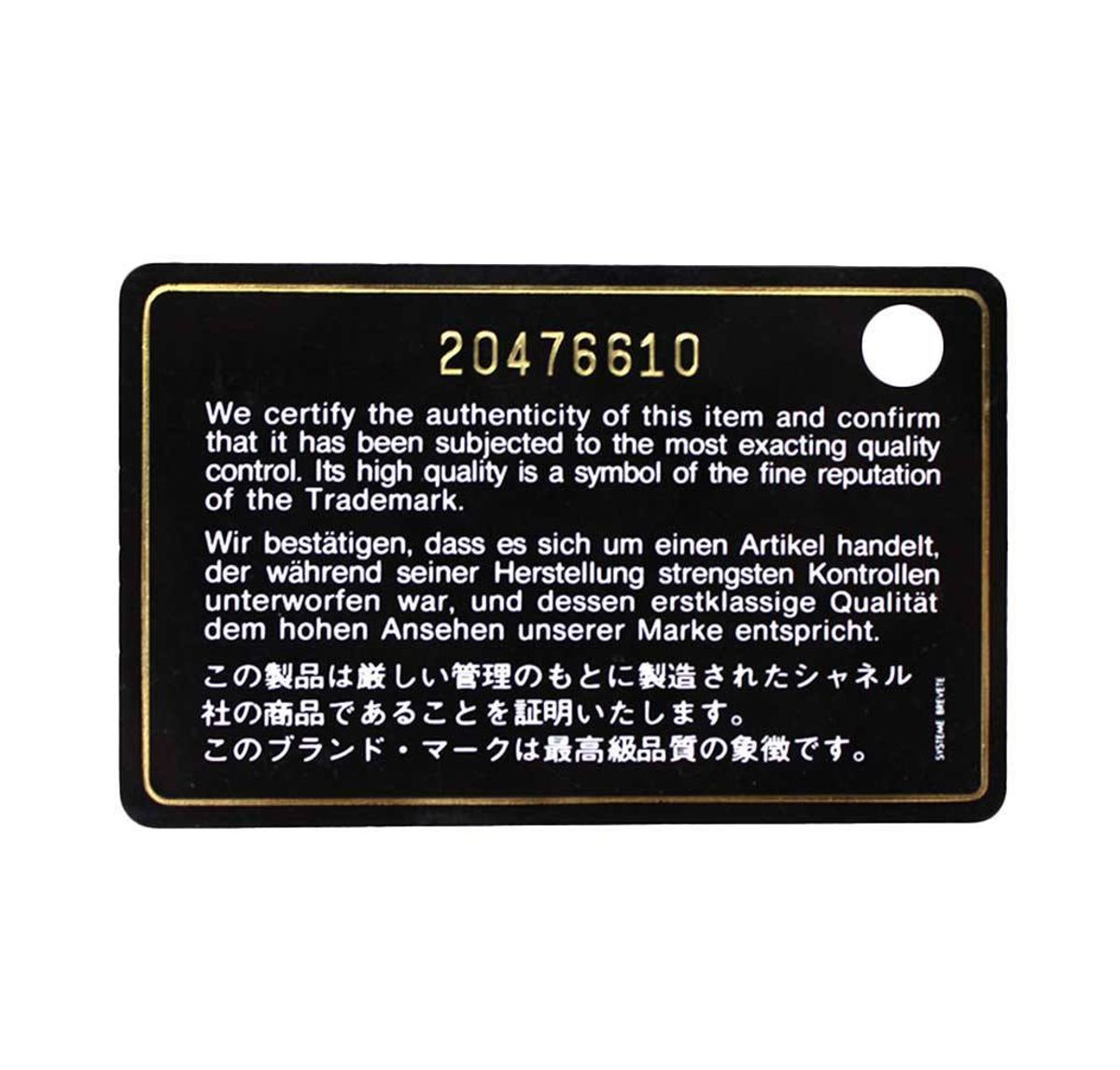
Buying a pre-owned Chanel bag should feel exciting, not stressful. Yet one small detail, the authenticity card, can be the difference between a genuine purchase and a costly mistake. Knowing what a real Chanel card looks like, from the serial number format to the hologram sticker, helps buyers move quickly and confidently.
That confidence is easier to find when every piece has already been carefully verified before it reaches the buyer. Pick Up Point puts each bag through a thorough authentication process, checking the card, font, stitching, and matching dust bag, so nothing is left to guesswork. Shoppers looking for quality they can trust will find a strong selection of second hand designer pieces ready to browse.
Table of Contents
What Is a Chanel Authenticity Card and Why Is It Important??
Does Every Chanel Bag Come With an Authenticity Card?
Does a Chanel Authenticity Card Guarantee That a Bag Is Authentic?
9 Ways to Spot a Fake Chanel Authenticity Card in Seconds
How to Use the Chanel Authenticity Card Effectively When Buying or Selling
Why PICKUPPOINT Is a Trusted Place to Buy and Sell Authentic Chanel Bags
Get your Next Luxury Purchase from PICKUPPOINT
Summary
Chanel began issuing authenticity cards with serial codes in 1986, and for decades, this card served as the primary paper trail for pre-owned buyers. A genuine card carries sharp, evenly weighted gold lettering, a non-flexible thickness, and a hologram that shifts cleanly under light without rainbow borders. Post-2005 cards added a gray circle in the upper-right corner, providing buyers with a timeline-specific checkpoint that counterfeit versions consistently fail to replicate accurately.
In 2021, Chanel replaced physical authenticity cards with embedded NFC microchips, starting with the 21A collection, splitting the pre-owned market into two distinct authentication eras. This shift created persistent confusion: buyers regularly reject legitimate post-2021 pieces for lacking a card, while overpaying for older stock where a card exists but cannot be independently verified as original. Knowing which production era a bag belongs to is now a prerequisite for knowing what documentation to expect at all.
A Chanel authenticity card does not confirm that a bag is genuine. Counterfeit operations routinely produce fake bags paired with copied or stolen cards, with serial numbers that match precisely because most buyers stop their verification there. One widely documented example is serial number 10218184, which appears across numerous counterfeit cards attached to different fake bags, illustrating how card-matching alone fails as a safeguard.
According to authentication specialists, there are 7 distinct verification points used to assess a Chanel Classic bag, and the card accounts for only one of them. The remaining checks are evident in the physical object: stitching tension, hardware weight, leather grain, interior labeling, heat-stamp depth, and lining quality. Buyers who skip these physical checks after seeing a card absorb a risk that the card itself was never designed to eliminate.
Missing or mismatched documentation consistently reduces a pre-owned Chanel bag's perceived resale value by 20 to 30 percent, according to community data across luxury resale forums. At the same time, Chanel bags have increased in value by over 70 percent over the last 10 years, meaning the financial consequences of unverified purchases have grown proportionally. Condition, documentation, and accurate pricing remain the top three factors influencing buyer confidence and resale speed.
Authentication is what makes secondhand luxury viable with integrity rather than guesswork, because a verified pre-owned piece extends the life of something already made and resourced without transferring risk to the buyer. PICKUPPOINT addresses this by building multi-point authentication into every listing before a buyer ever sees it, checking serial numbers, hologram integrity, construction quality, and documentation as a complete set rather than treating the card as the final word.
What Is a Chanel Authenticity Card and Why Is It Important??
A Chanel authenticity card is a black, credit-card-sized document that comes with select Chanel handbags and leather goods. It contains a unique serial number that precisely matches a sticker sewn inside the bag. This pairing creates a traceable link between the card and item, confirming that both came from the same production run — making it one of the most critical proof-of-authenticity tools in the luxury resale market.
"The serial number pairing between a Chanel authenticity card and its interior sticker is the single most important verification checkpoint for confirming a bag's genuine origin."
💡 Example: If a seller offers a Chanel Classic Flap but cannot produce a card whose serial number exactly matches the interior sticker, that is an immediate red flag for a potential counterfeit.
⚠️ Warning: A Chanel authenticity card alone does not guarantee authenticity. Counterfeiters frequently reproduce cards — the matching serial number between the card and the interior sticker is what truly matters.
Component | What It Is | Why It Matters |
|---|---|---|
Authenticity Card | Black, credit-card-sized document | Serves as the primary proof of purchase and origin |
Serial Number | Unique code printed on the card | Must exactly match the interior sticker |
Interior Sticker | Label sewn inside the bag | Confirms the item and card share the same production run |

What the card actually tells you
According to LegitApp's Chanel Authentication Guide, Chanel began using laser-etched serial codes in 1986. Authentic cards feature sharp, evenly weighted gold lettering, sturdy non-flexible thickness, and a hologram that shifts cleanly under light without rainbow borders. After 2005, cards included a gray circle in the upper right corner. Counterfeit cards consistently fail these checks: the font appears inconsistent, the cardboard feels flimsy, or the holograms don't shift properly.
Why authentication evolved beyond paper
Chanel introduced microchip-based authenticity cards in 2021, replacing traditional paper cards used for over 30 years, according to Reetzy's 2025 Visual Guide. This matters for pre-owned bag buyers, as bags now fall into two categories: those with classic hologram sticker cards and those with embedded chip cards. Identifying your bag's era determines what paperwork to expect.
Can a Chanel authenticity card alone confirm a bag is genuine?
Most buyers treat the card as the final word on authenticity, but cards can be sourced separately, swapped between pieces, or copied with enough precision to pass casual inspection. The card is a starting point, not a final answer. Platforms like Pick Up Point address this by checking the card, internal sticker, hologram, and dust bag as a complete set rather than leaving buyers to verify components alone. This closes the gap between a card that looks right and a bag that is right.
How does a missing Chanel authenticity card affect resale value?
Missing or mismatched documentation reduces a bag's perceived value by 20 to 30 percent across luxury resale forums, and buyers often abandon listings where the card cannot be verified. Keeping the card with the bag protects both the investment and the piece's resale value.
Does Every Chanel Bag Come With an Authenticity Card?
Not every Chanel bag comes with an authenticity card. According to Xupes' Ultimate Guide to Chanel Date Codes, bags made before 2021 included a hologram sticker and an authenticity card. Bags made after 2021 use embedded NFC microchips instead, so new bags straight from the store no longer include the classic black card.
"Bags made before 2021 included a hologram sticker and authenticity card — bags made after 2021 use embedded NFC microchips instead." — Xupes' Ultimate Guide to Chanel Date Codes
Era | Authentication Method |
|---|---|
Pre-2021 Bags | Hologram sticker + authenticity card |
Post-2021 Bags | Embedded NFC microchip (no card) |
🔑 Takeaway: If you're buying a pre-owned Chanel bag, the absence of an authenticity card doesn't automatically mean it's fake — it may simply be a post-2021 piece using NFC technology instead.
⚠️ Warning: Never use the presence or absence of a black authenticity card alone to verify a bag's legitimacy. Authentication methods changed entirely in 2021, making this a common mistake among buyers.

What changed after 2021, and why does it confuse buyers
A buyer who purchases a newer Chanel piece from an authorized retailer receives an authentic bag without a physical card. Yet when reselling months later, that same buyer often faces doubt from secondhand shoppers who expect the card as proof. The gap between how authentication works today and what buyers expect creates problems at every resale point.
Why does the Chanel authenticity card still drive resale decisions?
A common pattern emerges: buyers reject authentic pieces made after 2021 because no card exists, then overpay for older stock where a card is present but cannot be verified as original. The card's presence has become a trust signal, even though it no longer reflects Chanel's current authentication practices.
How does the Chanel authenticity card break down across different production eras?
Most buyers treat the card as the main proof point, which made sense for years but breaks down at both ends of the timeline: pieces made before 1986 never had cards, and pieces made after 2021 deliberately moved past them. Platforms like second hand designer address this by sourcing pre-owned pieces through multi-point verification rather than relying on any single document, allowing buyers to engage with items assessed against the full picture of authentication across different production eras.
Why does the serial number still anchor everything?
For bags made between 1986 and 2021, the serial number is the key connection between the inside sticker and the authenticity card. When those two numbers match and the card's physical details align with known production standards for that period, the combination confirms the bag is authentic. When they don't match, no additional paperwork can resolve the issue. The serial number is the primary verification tool that all other indicators either support or contradict.
When did Chanel switch away from serial stickers entirely?
According to Madison Avenue Couture, Chanel switched from serial stickers to microchips with the 21A collection. A 2021 bag could have either system depending on its production date. Many buyers mistake this uncertainty for inauthenticity, leading to costly errors.
Does the presence of a Chanel Authenticity Card actually confirm anything?
But here is the part that stops most people: knowing a card exists and knowing it is genuine are two different things.
Related Reading
Does a Chanel Authenticity Card Guarantee That a Bag Is Authentic?
A Chanel authenticity card does not guarantee that a bag is genuine. It is one piece of a larger puzzle, and treating it as the final word is where buyers consistently lose money.
"An authenticity card is a starting point for verification — never the final proof of a bag's legitimacy." — Luxury Authentication Experts
⚠️ Warning: Counterfeiters have become highly sophisticated at replicating authenticity cards, serial numbers, and packaging — never rely on the card alone as proof of a genuine purchase.
🔑 Takeaway: A Chanel authenticity card should be treated as one signal among many — always pair it with a holistic authentication process that includes hardware, stitching, leather quality, and professional verification.
Verification Method | Reliability Level | Why It Matters |
|---|---|---|
Authenticity Card | Low–Medium | Easily replicated by counterfeiters |
Serial Number Check | Medium | Must match the card and bag interior |
Hardware & Stitching Inspection | High | Difficult to fake at premium quality |
Professional Authentication | Very High | Gold standard for buyer confidence |

Why can't a Chanel authenticity card be trusted on its own?
The card's design prioritizes brand presentation over forensic security, making it vulnerable to tampering. Counterfeit operations exploit this directly by creating batches of fake bags paired with copied or stolen genuine cards, matching serial numbers to pass casual inspection. One widely documented example is the serial number 10218184, which appears across numerous counterfeit cards attached to different fake bags.
A buyer receives a bag with a full card, dust bag, and box, scans what appears to be a legitimate QR code, and feels reassured. That confidence is the product that counterfeiters are selling. According to Bam Luxury Store's authentication guide, there are 7 foolproof verification points for authenticating a Chanel Classic bag, and the card is only one of them. The remaining six live entirely in the physical object: stitching tension, hardware weight, leather grain, interior labeling, heat stamp depth, and lining quality.
How do counterfeiters exploit Chanel authenticity card verification gaps?
The same pattern appears across resale platforms and private sales: buyers relying on the card alone still receive counterfeits. The card and platform verification badges confirm documentation, not the physical bag. A seller can photograph a genuine bag to obtain a verified badge, then ship a fake.
Buying secondhand luxury is a meaningful choice, environmentally and ethically, but only when what you receive matches what you paid for. Platforms like Pick Up Point build authentication rigor into the resale process itself, allowing buyers to act on their values without absorbing the risk that card-only verification leaves open.
What checks actually verify a Chanel bag beyond the authenticity card?
Cross-referencing the serial number against the interior sticker, examining the hardware for weight and finish consistency, checking stitching uniformity across stress points, and verifying NFC chip data on post-2021 pieces are checks that counterfeiters cannot easily replicate at scale. The card is a starting point, not a finish line.
Related Reading
9 Ways to Spot a Fake Chanel Authenticity Card in Seconds
Fake Chanel authenticity cards look convincing at first glance, but counterfeiters rarely copy every security detail correctly. Learning a few quick visual checks helps you spot red flags before spending thousands of dollars on a handbag.
"Counterfeit luxury goods account for billions in losses annually — and authentication cards are among the most commonly forged details on fake designer handbags." — Luxury Authentication Industry Reports
⚠️ Warning: Even experienced buyers can be fooled by high-quality fakes. Never skip the authentication card check — it's one of the fastest ways to catch a counterfeit before it's too late.
What Fakes Get Wrong | What Authentic Cards Show |
|---|---|
Blurry or uneven fonts | Crisp, precisely spaced typography |
Incorrect card thickness | Specific weighted cardstock |
Missing holographic elements | Genuine security holograms |
Misaligned serial numbers | Perfectly centered numbering |
Faded or off-color printing | Rich, consistent ink saturation |
💡 Tip: Always cross-reference the serial number on the authenticity card with the one stitched inside the handbag — a mismatch is an immediate red flag.
🎯 Key Point: Mastering visual authentication checks takes only a few minutes but can save you from a costly counterfeit purchase worth thousands of dollars.

1. Check the Card's Thickness and Sturdiness
Run your fingers across the card and feel for a stiff, credit-card-like density that resists bending. Real cards maintain a consistent thickness and high-quality plastic construction, while fake versions often appear thinner, more flexible, or cardboard-like, failing to meet Chanel's material standards when pressed.
2. Examine the Gold Border for Color and Effect
Check the border for an even, metallic gold finish that reflects light cleanly without color shifting. Real borders show steady gold that aligns with the printed words, while fake ones often display rainbow or iridescent effects from different angles due to lower-quality foil.
3. Verify the Correct Number of Digits in the Serial
Count the digits in the serial number and confirm it matches the expected length: six digits for early examples, seven digits through 2004, or eight digits from 2005 onward. Chanel never issued cards with nine or more digits. A mismatched count indicates a counterfeit card.
4. Analyze Font Style, Weight, and Spacing
Look for crisp, evenly weighted gold lettering with precise spacing between numbers and letters. Real Chanel cards have sharp, professional typography without blurring or inconsistencies. Fake ones often show thinner strokes, irregular gaps, or slightly off proportions that disrupt clean alignment.
5. Assess the Hologram Element's Clarity and Placement
Tilt the card to examine the hologram, which should display a clear, high-quality CC logo or pattern with smooth light interaction. Genuine holograms maintain sharp definition and proper positioning, such as in the upper right for certain series. Blurry, faded, or misplaced holograms signal a counterfeit. This dynamic test reveals security feature failures that static photos often miss.
6. Look for the Gray Circle on Post-2005 Cards
Look in the upper-right corner for a light grey circle on cards from bags made after 2005. Authentic cards display this mark in the correct color and position. Earlier cards lack it entirely; if you spot it on an older card or miss it on a newer one, something is amiss. Counterfeit cards often omit this detail or reproduce it poorly.
7. Inspect Overall Print Alignment and Crispness
Hold the card at eye level to check alignment, bleeding, and fuzziness. Genuine printing appears sharp, centered, and professional on both sides. Misaligned numbers, off-center logos, or blurry edges indicate counterfeit production. This visual inspection catches manufacturing flaws that undermine credibility.
8. Evaluate the Back Side Details and Consistency
Flip the card and check that the back has the same high-quality gold printing, even spacing, and crisp finish as the front. Real cards show uniform detail across all surfaces with no differences in texture or color. Fake cards often display duller text or uneven application.
9. Test the Overall Shine and Reflective Quality
Watch how light moves across the card's surface. Genuine cards reflect light with a lustrous, high-quality finish that enhances the gold elements without appearing cheap or plastic. Counterfeit cards often display a flat, artificial shine or dull spots due to inferior materials. This shine check confirms the card's authenticity and premium quality.
How to Use the Chanel Authenticity Card Effectively When Buying or Selling
Using a Chanel authenticity card in a smart way when you buy or sell helps protect your position and keeps the value of your luxury item safe.
"The presence of a matching Chanel authenticity card can be the deciding factor between a successful sale and a lost deal in the luxury resale market." — Luxury Resale Industry Insight
💡 Tip: Always cross-reference the authenticity card's serial number with the bag's interior stamp before completing any transaction — this is the single most important verification step you can take.
⚠️ Warning: A Chanel authenticity card alone does not guarantee authenticity — counterfeiters frequently replicate cards. Always verify the card alongside the hologram sticker, stitching quality, and hardware finish.
Action | Why It Matters | When to Do It |
|---|---|---|
Match serial numbers | Confirms the card belongs to the bag | Before every purchase |
Inspect the card material | Authentic cards have a distinct texture | At the point of sale |
Photograph the card | Creates a verifiable ownership record | Immediately after buying |
Store card safely | Preserves resale value significantly | Always — ongoing |
🔑 Takeaway: Treating your Chanel authenticity card as a critical asset — not just an accessory — is the smartest move any buyer or seller can make to safeguard long-term value.

Verify the Card Matches the Bag Completely
Start every transaction by verifying that the serial number on the authenticity card matches the sticker inside the bag. Check the number of digits, font style, spacing, and all visual details for consistency. Any discrepancy warrants immediate investigation or rejection of the deal.
Inspect Physical and Security Features Thoroughly
Look at the card's thickness, the evenness of the gold border, the hologram's clarity, and the print quality under bright lighting. Feel for credit-card sturdiness, then tilt it to test its reflective properties. For cards made after 2005, find the gray circle in the upper right. These hands-on and visual checks help you spot obvious fakes before any money changes hands.
Request Supporting Documentation Alongside the Card
Ask for the original receipt, dust bag, and packaging when making a purchase. When selling, present the full set of materials to demonstrate complete ownership history. The card has the most impact when paired with these items, as buyers and appraisers respond better to complete records.
Leverage the Card to Negotiate with Confidence
Use a verified card and matching details to support your asking price when selling, or push for lower prices if issues arise during the buying process. Documentation reduces authentication risks for the other party, making transactions on private sales and resale platforms more equitable.
Store and Maintain the Card for Long-Term Value
Keep the authenticity card in a protective sleeve away from direct sunlight, moisture, and bending. Store it with the bag's accessories in a dedicated place. Proper care preserves its condition and helps maintain or increase the piece's value for future resale or appraisal.
Combine the Card with Professional Authentication
Submit the card and bag together to reputable authentication services like Pick Up Point for expert review, particularly for high-value transactions. Professionals cross-check the card against deeper physical and historical indicators, providing definitive assurance beyond self-inspection.
Understand Limitations and Evolving Channel Practices
The card serves as supporting evidence only and does not replace full authentication, particularly as Chanel transitions to NFC microchips for newer items. For pieces made after 2021, prioritize chip verification where available.
Why PICKUPPOINT Is a Trusted Place to Buy and Sell Authentic Chanel Bags
Pick Up Point earns trust by being specific. Every Chanel bag listed goes through expert review before a buyer ever sees it. Serial numbers, physical construction, and documentation are checked against strict brand standards — a process that removes the burden from the buyer and places it with people who know exactly what to look for.
"Every Chanel bag listed goes through expert review — serial numbers, physical construction, and documentation are all verified against brand standards before a buyer sees it." — PICKUPPOINT Authentication Process
🔑 Takeaway: PICKUPPOINT's multi-point authentication process means buyers never have to second-guess the legitimacy of a Chanel bag — the hard work is done before the listing goes live.
✅ Best Practice: When buying a pre-owned Chanel bag, always look for platforms that verify serial numbers, hardware construction, and original documentation as non-negotiable steps — not optional add-ons.
Authentication Check | What It Verifies |
|---|---|
Serial Numbers | Matches brand records and production era |
Physical Construction | Stitching, hardware, and material integrity |
Documentation | Authenticity cards, receipts, and provenance |

What makes a confident Chanel purchase possible on a resale platform?
Confident purchases depend on three things: condition, documentation, and accurate pricing. According to Rome Station, these are the top influences on buyer confidence and resale speed. Pick Up Point incorporates all three into every listing through detailed condition grading, transparent photography of authenticity features, and fair market pricing informed by real resale data.
Most private resale platforms treat authentication as the buyer's problem: the seller posts photos, the buyer cross-references hologram patterns and stitching counts, and when it fails, the financial cost falls entirely on the buyer. Second-hand designer platforms like Pick Up Point restructure that dynamic. Authentication is completed before listing, condition is graded by trained reviewers, and buyers receive documentation that reflects the actual bag in their hands.
Why does a Chanel authenticity card matter more as investment value rises?
This matters because Chanel's investment value is growing. A Vintage Splendor reports that Chanel bags have increased in value by over 70% in the last 10 years. This means every unverified transaction carries proportionally higher financial risk. A trusted platform is not a convenience at this price point; it is a requirement.
How does authentication support the ethics of secondhand luxury buying?
When you buy a verified pre-owned Chanel bag through a structured resale platform, you participate in a system that extends the life of something already made and resourced. Authentication makes this possible with integrity. Without it, the circular economy in luxury goods collapses into guesswork. Knowing what you are buying is inseparable from buying well, and buying well makes secondhand luxury both smart and ethical.
Get your Next Luxury Purchase from PICKUPPOINT
Pick Up Point checks items before listing them by comparing serial numbers, hologram quality, construction quality, and paperwork against brand specifications. Buyers get condition reports and complete information upfront, turning the nine checks explained earlier in this guide from guesswork into proof.
💡 Tip: When shopping secondhand luxury, always choose a platform that provides documented verification — not just a seller's word. Pick Up Point's pre-listing inspection process means every item is backed by evidence, not assumptions.
"Turning the nine checks from guessing into proof — that's the difference between a platform that lists items and one that stands behind them." — Pick Up Point Verification Standard
Verification Check | What It Confirms |
|---|---|
Serial Numbers | Authenticity against brand records |
Hologram Quality | Genuine brand security features |
Construction Quality | Craftsmanship meets brand standards |
Paperwork | Documentation matches the item |

Buying secondhand luxury items is a choice about your values. Picking a platform that checks items carefully, prices fairly, and sees every purchase as part of a longer chain of responsible ownership means your item arrives in good condition. Visit Pick Up Point to browse checked Chanel items and shop knowing that every detail has been verified.
🎯 Key Point: Secondhand luxury supports conscious, values-driven decision-making that promotes responsible ownership and sustainable consumption.
⚠️ Warning: Not all resale platforms offer the same level of scrutiny. Choosing a platform without rigorous pre-listing checks puts your investment and confidence at risk.